Congressman hosts discussion on poor options for rural internet
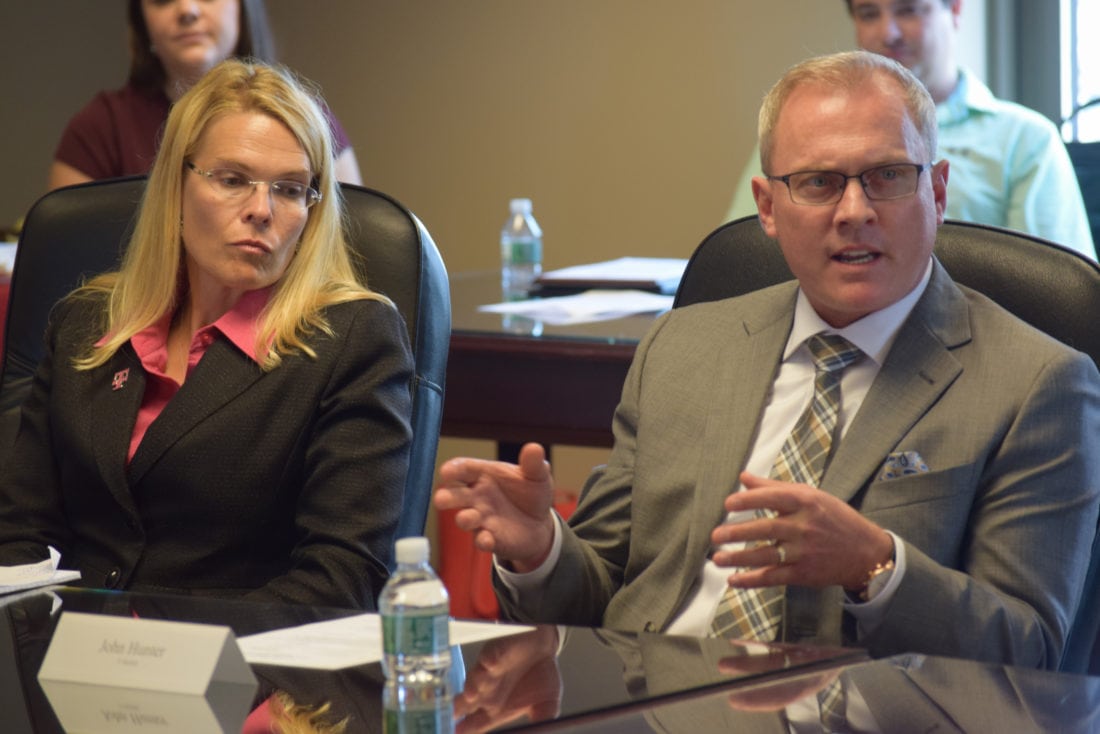
IOANNIS PASHAKIS/ Sun-Gazette John Hunter and Christine Kurth of T-Mobile talk to a roundtable of individuals invited by Congressman Tom Marino to speak on the issue of rural broadband internet.
IOANNIS PASHAKIS/ Sun-Gazette
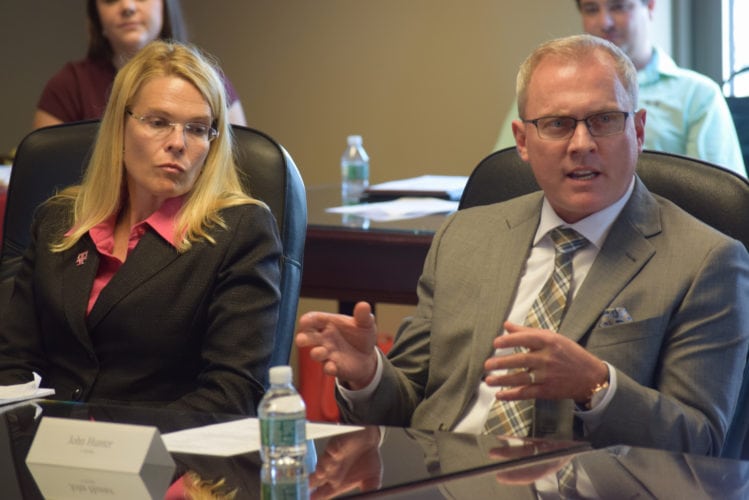
John Hunter and Christine Kurth of T-Mobile talk to a roundtable of individuals invited by Congressman Tom Marino to speak on the issue of rural broadband internet.
MANSFIELD — Residents don’t have to live more than a few miles from a populated community in Pennsylvania before a low broadband internet signal can keep them from performing simple tasks on the internet.
Those individuals living in rural areas in the state who are dealing with weak broadband signals are missing out on opportunities that are increasingly reliant on the internet, according to members of a roundtable discussion hosted by state Rep. Tom Marino, R-Cogan Station, on Thursday.
Marino hosted the discussion on the topic of rural broadband internet at Mansfield University with officials from the state Department of Agriculture, the governor’s office, state health care services and more, weighing in on what they said was a problem that can have far reaching consequences.
“Would you consider buying a home or moving to a home that doesn’t have broadband? I would not,” Ronald Cowan, vice president of Geisinger’s IT department, said, telling the group that recruiting professionals to health care organizations has proven more and more difficult. “It is a quality of life issue.”
Cowan also stated that Geisinger won’t buy a clinic or a hospital where there is no broadband internet and its clinics have come to rely on patients having internet for communication purposes.
Farmers in the county also have felt the effects of slow internet speeds as agricultural technology has continued to improve.
Chris Huffman, vice president of the state farm borough, told Marino and the roundtable that internet speeds are vital for technologies that are helping keep state farmers above water.
“To our farmers, this is a huge issue. In today’s agriculture, we are no longer sitting on a John Deere,” Huffman said. “Everything is run by computers. We are a place where data is more important. Farmers are struggling to have the connectivity for the machines they run.”
Gov. Tom Wolf weighed in on his opinion of the issue in March when he announced an initiative by the state to deliver a 100 megabyte service across the commonwealth, Mark Smith, executive director of broadband initiatives for Wolf’s office, said.
“We got a lot of criticism because it was so high, but his basic belief is that we aren’t going to invest state dollars in networks of today or yesterday,” Smith said. “We are building them for the future.”
Solutions aren’t only being sought after at the state level. Curt Coccodrilli, director of the state Department of Agriculture, offered the example of Bradford County, which he said has done “nothing short of magical” with a plan to provide broadband to the county’s residents.
If completed, Coccodrilli said the plan would connect a 92-mile loop and a 210-mile loop within the county which would provide every town in the county with the option to connect to broadband.
Marino was happy with the progress the roundtable made in pinpointing what the problems are with broadband locally and where officials should look to finding a solution, but said more conversations will need to happen before a decision can be made on what to do.
“We are going to start getting the agencies and departments that have a dog in the hunt and, if not, meet with them as a group, meet with them one at a time and tell them what we are attempting to do in my district,” Marino said. “One of the first things we have to agree on is the model so no one is making a Chevy part that won’t go on a Ford part.”
Top News
Residents work on removing 2 Muncy Township supervisors
Chamber of Commerce to help City of Williamsport pay for Major League security
The City of Williamsport is being assisted with an expense that just a few years ago was placed at over $20,000 to ...

Lycoming Career and Technology Center’s ‘Student of the Year’ shares memories

Lycoming Career and Technology Center’s Class of 2026 crosses commencement stage

Williamsport Chamber contributes to safety expense of MLB Little League Classic