
Reflections in Nature: Leeks grow wild throughout northern Pennsylvania
Trending
My diary entry for April 16: "Stopped to check on skunk cabbage plants and found several of the plant's mottled hoods. Later, I also checked on the leeks."
I marked a reminder on my desk calendar to check on the progress of the leeks in a few weeks. The best time to dig leeks is in the early spring, but leeks can still be dug well into the fall. The bulbs have a much stronger taste as summer progresses. Leeks grow in colonies and are easily dug.
A part of the colony should always be left intact for future digging.
It is necessary to dig under the roots of the leek plant with a shovel or knife to pry them loose. Leeks grow on steep wooded hillsides and at times appear to grow from the rocks. Leeks also grow along the moist stream bottoms, where they are much easier to dig.
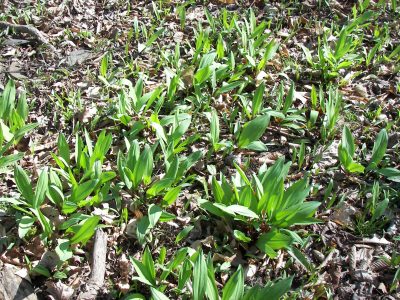
Leeks, which are also known as ramps or wild onions, grow wild throughout northern Pennsylvania. The plant is a perennial with flat leaves that are lance-shaped, smooth and an un-toothed margin. All parts of the plant have a distinct onion odor.
While both the leaves and the bulb are edible, most people use the bulbs rather than the leaves. Later in the summer the leaves will die back and, by mid-summer, the plant flowers. The fruit, which is a three-lobed capsule containing three hard black oval seeds, appears in the fall.
The wild leek Allium tricoccum belongs to the lily family. I once read that in ancient times a tame leek Allium porrum had been cultivated in the Mediterranean Region. The tame leek does not form a round bulb like the wild leek but rather grows thicker along the stem. Of course, leeks are related to onions, garlic and chives.
When leeks are eaten raw, they are dynamite and some say they will remain on your breath for days. It was a known fact that country boys often ate large amounts of leeks before going to school, hoping that they would be sent home and told not to return until their breaths were freshened.
The Welsh people enjoy leeks. At one time, the leek appeared on the national emblem of Wales. Many Welshmen wear a leek sprig on Saint David's Day, which is the first of March.
Saint David (Saint Dewi), the Patron Saint of Wales, is perhaps the most celebrated of British Saints. He was born on Saint Non (March 3), in about 520. More than 50 pre-reformation churches in South Wales are known to have been dedicated in his honor. Although leeks are associated with Saint David, there is no mention of leeks in his biography.
In Shakespeare's Henry V, an allusion is made to the practice of Welshmen wearing leeks on Saint David's Day.
The antibiotic allicin has been isolated from allium and can account for some of the medicinal value associated with the genus Allium. Experiments conducted at universities in India show that at least some common members of the Allium genus when combined with other foods reduce cholesterol levels. Farmers curse Allium species, particularly wild garlic. If wild garlic invades the farmer's fields, the plants are eaten by the cows, causing the milk to have a garlic taste.
There are more than 20 varieties of onions that grow wild across the North American continent, and the following (wild and tame) all belong to the genus Allium: leeks, garlic, onions and shallots.
Garlic was once thought to possess magical powers against evil and was widely used in charms and spells. The Egyptians swore on a clove of garlic when taking a solemn oath. An old European legend says that if a man chews on a garlic bulb during a foot race, no one will be able to get ahead of him. Perhaps no one would want to.
Many legends surround garlic, with most having to do with strength, speed and endurance. Egyptian slaves ate garlic as they built the pyramids; the Israelites nibbled on it before their escape from Egypt, and the Romans ate it before going into battle. Pliney, the Roman scholar, said garlic would remedy over 60 ailments.
Tame onions Allium cepa are often depicted in Egyptian tomb paintings. For medicinal purposes, onions contain smaller doses of garlic's antibacterial and antifungal components.
Here are a few unproven folkloric medicinal practices:
• To cure baldness, rub a little onion juice on your head and lie out in the sun
• Lay slices of salted onions on burns
• To erase freckles, mix onion juice with vinegar and rub on freckles, age spots or warts.
In this country, the wild garlic was well known to Native Americans, however, the domestic varieties were brought over by the settlers. The pioneers were said to have placed garlic in their horses' nostrils to counteract the effects of high altitude.
Leeks are not hard to identify. Although the poisonous hellebore plant appears somewhat similar to leeks, it does not have the onion smell. So, if you decide to dig leeks, just make sure that what you're digging smells like an onion.
Here is Mary Alice's recipe for leek pie:
For the crust: two cups of all-purpose flour, 1 stick of unsalted butter, one large egg, half a teaspoon of salt and a third cup of ice-cold water. Knead and refrigerate for one hour. Roll out and place in a quiche pan, bake in a preheated 400-degree oven for 10 minutes and remove.
Then in a frying pan, put two tablespoons of unsalted butter and saute four large leeks (using only the white and light green parts) that have been washed and sliced into one-inch pieces. Do not brown.
Add salt and freshly ground pepper to taste. Remove from the pan and set aside. Add three slices of diced bacon to the pan and fry. Drain. Spread sauteed leeks and fried bacon over pie crust.
Lightly beat three large eggs and add one cup of half and half. Pour over leeks. Sprinkle one ounce of grated Gruyere cheese over the mixture. Add a pinch of freshly grated nutmeg.
Reduce oven heat to 350 degrees. Bake quiche for 20-25 minutes until the knife inserted comes out clean. Let the pie sit for a few minutes before serving.
I'm not a fan of leeks, but I really like Mary Alice's leek pie.
If you are having a leek supper you'll need to get rid of the bad breath. The following folklore will help: chew on a sprig of parsley immediately after eating, eat a strawberry or take a long bath in very warm water.
Bill Bower is a retired Pennsylvania Game Commission Wildlife Officer. Read his blog and listen to his podcasts on the outdoors at www.onemaningreen.com.