
Ard’s Farm Market shares pumpkin tips, talks harvest
Trending
LEWISBURG -- A true sign of autumn, pumpkins are ripe for the picking at this time of year.
Botanically speaking, pumpkin fruits are a type of berry known as a pepo. They are generally large, 9 to 18 pounds or more, though some varieties are very small. The largest pumpkins ever grown have exceeded 2,000 pounds.
When you think of a pumpkin, you think of the typical orange, globe shaped ornament used for jack-o-lanterns at this time of year. But not to "squash" your expectations, pumpkins can come in all sorts of colors, from orange and yellow, to gray-green and white.
Pumpkins are one of the oldest domesticated plants, having been used in Central America as early as 7000 to 5500 BC. They were also believed to be part of the first Thanksgiving meal.
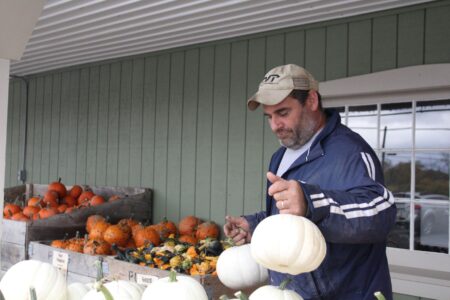
Alan Ard, of Ard's Farm Market in Union County, said the farm has been busy harvesting and getting the pumpkins ready for sale. Ard's has been in business since 1991, with its famous corn maze opening in 2001.
Ard said he will start in November to search for seed for the 2023 crop.
"We grow all our pumpkins from seed whereas some farmers might buy pumpkin plants to put in the ground," Ard said.
Ard said he had a hard time getting some of the 25 to 30 varieties he usually plants because of crop failures at the seed company. The seeds are purchased by the hundreds or thousands.
On top of the usual varieties he plants, Ard said the seed companies will send experimental new varieties.
"It's usually two or three new varieties and then we report back to the seed companies how the crop performed," said Ard.
He said the business raises all the pumpkins, squash and gourds they sell as 18 acres of the 129-acre farm are dedicated just for growing the annual crop.
Ard starts planting the seed in mid-June.
"We are strictly a no-till farm," said Ard. "We use cover crops like barley to ensure the soil is enriched and the straw from the barley acts as a natural mulch. It also keeps the developing pumpkins off the bare ground where harmful fungus can destroy them.
"You need to consider, plant spacing and seed-to-soil depth," he said, adding that seed depth when planting is important because if the seed isn't planted deep enough it fall victim to predators.
Ard said several years ago he lost a whole filed of pumpkins to the seed not being planted deep enough, and mice destroying the crop.
Drip irrigation lines are laid so that the young plants get the right amount of water and nutrients.
Each week, Ard said they spray the leaves with fertilizer.
Leaf testing is done throughout the season to determine the health of the plants. Ard likened it to a blood test for humans to diagnose or determine their health. The leaf sap is sent to a lab which then tests it and determines the health of the crop.
The pumpkins are also planted with other crops in the same field. Ard said not only can you harvest several crops from the same field, but the other crops often act as pollinator plants to attract bees to the pumpkin blossoms. Turnips, radishes and mustard have all been used beside the pumpkins.
"It's a constant battle," said Ard, when referring to the challenges he faces each year in producing a crop of pumpkins.
The weather this year was a real challenge with drought conditions and high heat, "the pumpkins didn't really take off till later in the season," Ard said.
"We only had 1 inch of rain between Memorial Day and the first week of August," he said. "Even though we put down irrigation lines, there's no replacement for rain."
He said the high heat also stressed the pumpkin vines, which didn't perk up until the temperatures dropped.
"I probably lost 50% of this year's crop," Ard said, attributing it to the weather conditions.
He usually sells about 40% of his crop wholesale to area businesses. This year, he's had to adjust wholesale items to meet the demand for pumpkins at the farm market, where he sells about 60% of his annual harvest.
To combat insects, Ard plants trap crops that insects are more interested in than the pumpkin plants. He plants a type of blue hubbard squash near his pumpkin crop as that variety is know to attract all sorts of insects. He then sprays insecticide on the trap crop, eliminating the need to spray the pumpkin crop.
When harvest season rolls around, all the pumpkins are harvested by hand, and graded by size, color and shape.
Ard said tips for keeping your pumpkin viable for decorative purposes are:
• Wash them as soon as you get them home with a cap full of bleach to a gallon of water. This gets rid of any harmful fungus or bacteria that will degrade your pumpkin.
• Do not place your pumpkins on the ground directly, but put a barrier between the ground and the pumpkin.
• To make them shine, seal the pumpkins with a non-stick cooking spray and then wipe the excess off.
After the holidays, pumpkins are on their last leg and should be composted.
Any unsold or unused pumpkins from the business are placed back in the field, to return the nutrients to the ground.
Ard also says pumpkins are a great livestock feed, especially for cattle and hogs.
"Pumpkins are natural de-worming agents," and are great for livestock feed. Some farmers will take used pumpkins for their herds.
Ard said almost all pumpkins can be eaten, with some varieties being better than others. Some are more preferred for decoration.
Pumpkin seeds, also known as pepitas, are edible. They can be taken from the inside of the fruit and roasted in the oven for a nutrient-rich snack. Per ounce serving, pumpkin seeds are a good source of protein, magnesium, copper and zinc. The flowers of the plant can also be stuffed and fried as a side vegetable.
This time of year is special at Ards, with the corn maze open to the public. The maze will be open until Oct. 30.
Ard invites visitors to spend the day at the farm. Hayrides and pumpkin picking are available.
"This year's maze theme is Alice in Wonderland," said Ard.
The maze park includes a large corn maze, kids corn maze, combine slides, bike track, pig races, tile maze, basketball throw, and a maze mountain slide. Plus kids can visit the petting zoo and feed the animals.