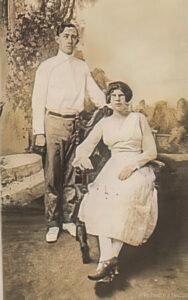
Life after Russian roulette
Mike Kaminski, of Dalmatia, has lived a life that many could never imagine experiencing, and if they did, the likelihood of them living to tell it is even slimmer.
“Life After Russian Roulette: Game Over” is Kaminski’s story of his life, beginning as a police officer and undercover detective in Baltimore, Maryland. Kaminski worked in the dangerous world of drug cartels and organized crime, a lot of times living with the criminals he was setting up.
The tumultuous plot is a story Kaminski was never supposed to tell. “When I left the police department in 1979, I was told never to write about what was in this book,” Kaminski said.
In fact, Kaminski said he never set out to be a writer either. After his wife Sharon died in 2005, Kaminski wanted to keep her memory alive by creating a memorial fund. He raised funds first by starting a magazine called “The One,” where he wrote articles about art and entertainment in the area.
“I did all the interviews and editorials, that definitely sharpened my writing skills,” he said. Kaminski also authored a children’s book about the Sikh faith, yet still never thought of writing a book about his life.
In 1991, Kaminski finally decided to put his story to paper.
“I had to change the names, except my own name and my partner’s name, who is now dead. All the cops, bad guys – they all have different names,” Kaminski said.
Most of “Life After Russian Roulette” is based in the drug and organized crime world in Baltimore, detailing how as an undercover detective, Kaminski disguised himself as part of these groups, living with them with different government issued identifications, including being “quality control” for a drug ring and running around with a motorcycle gang.
As exciting as the world of undercover work seems and was, Kaminski still felt empty from his job.
“I hated myself so much for what I did in that book. I mean, they were bad guys, doing illegal things. The way I worked was that I lived with them all. I knew their families – the wife, the kids. You learn everything about them. They became my friends,” Kaminski said. With the excitement of the tales in the book, Kaminski also describes the dark part as well – his battle with depression, alcoholism and contemplating suicide.
“Every time I’d set up a group and take them down, every time an investigation was over, I’d go into this church any time of the night, all by myself, and just talk to God and ask him to take my life. Just kill me, get me outta this,” he said.
With contracts out on his life from the drug cartels and people he helped put in jail, Kaminski left Baltimore in 1985, coming to the tiny town of Dalmatia, just outside of Sunbury, where his parents were originally from.
He was still battling his demons, even though he was away from the city where he felt so much guilt for what he did.
“I didn’t care about police, I didn’t care about the law. I just really liked the game,” Kaminski said of the process. “My thing wasn’t about going to court and getting the bad guys, because I lived with these people. I didn’t have to defend that in court. I lived with the thought of ‘I’m gonna die today,’ every day. I became addicted to the game, who was gonna win. That was my climax, my excitement came when I knew I had you.”
Now an ordained minister (although not in parish ministry anymore) – a far cry from his past life of delving into the criminal world undercover – Kaminski said his book ends when he found Sharon, the peace he was looking for in his life.
He said they met through a personal ad in the paper, and he knew she had battled eating disorders and traumatic abuse from past relationships.
“After all this violence, I finally found love,” Kaminski said of his relationship with Sharon. “Love is not a physical and sexual thing, it’s an emotion. It wasn’t what Sharon could give to me, it was how I felt about her. But I loved her with a passion more than anybody else in my life. When I found Sharon, I didn’t feel like playing the game anymore.”
Now, with the proceeds from the book, Kaminski is still keeping that love alive with the memorial fund he created that raises awareness for domestic violence with community education and awareness workshop.
With a screenplay in the works, and more books on the way, including a book about Sharon’s story, Kaminski is now reaping the benefits of putting his story out there.
“Life After Russian Roulette: Game Over” can be found on Amazon.com. A book signing with Kaminski will be held from 5 to 8 p.m. during First Friday, Dec. 5, at the Community Arts Center, 220 W. Fourth St.
Lifestyle News
Auxiliary members log 37,160 volunteer hours

M&T Charitable Foundation provides grant to Greater Lycoming Habitat for Humanity
Library to tout financial literacy month in April
The James V. Brown Library, 19 E. Fourth St., is celebrating Financial Literacy Month this April with 5 different ...
Bluegrass band coming to Wellsboro
Anti-trafficking group receives grant
Fierce Love 4 Good recently announced that it has received a generous grant from the Century Fund for Human ...