
Bug for a snack? Program converts some at area Grange
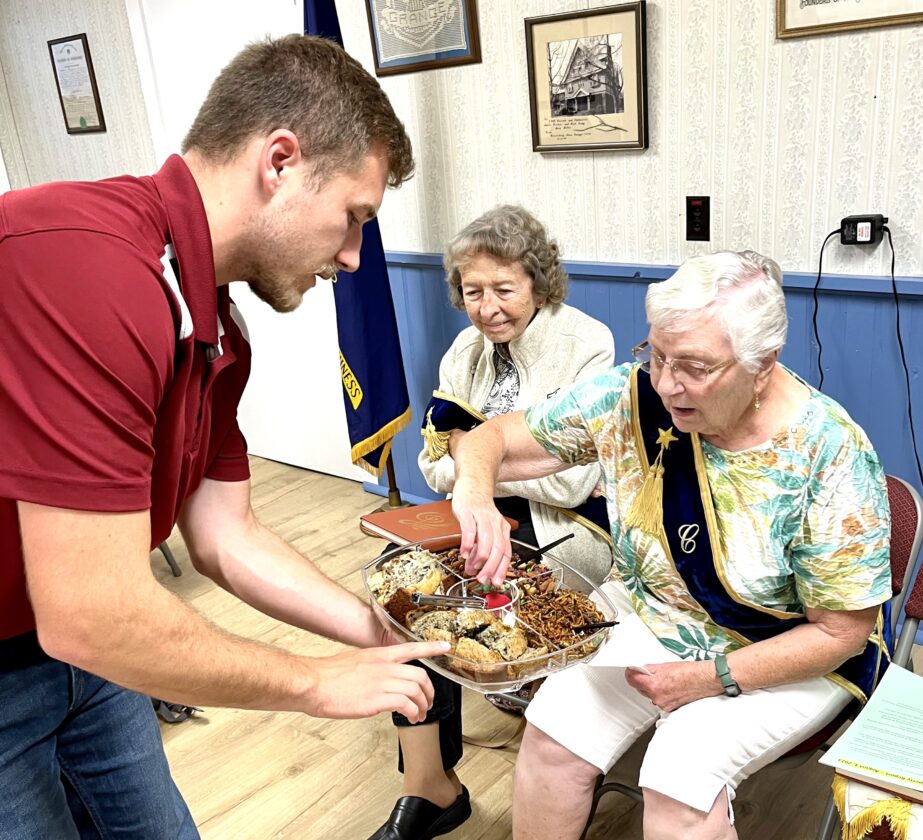
“Come on, try some healthy bug snacks,” urged Nate Moyer, left, during a recent program on entomophagy he presented at Eagle Grange #1, Montgomery. Moyer of Selinsgrove, an agriculture and industrial arts teacher and FFA adviser in Perry County’s Greenwood School District, spoke about insects for food and offered samples to Elizabeth Green of Northumberland, center, who declined to try them, and to Joann Murray of Milton, right, who found the blueberry bread made with cricket flour to be quite tasty. PHOTO PROVIDED
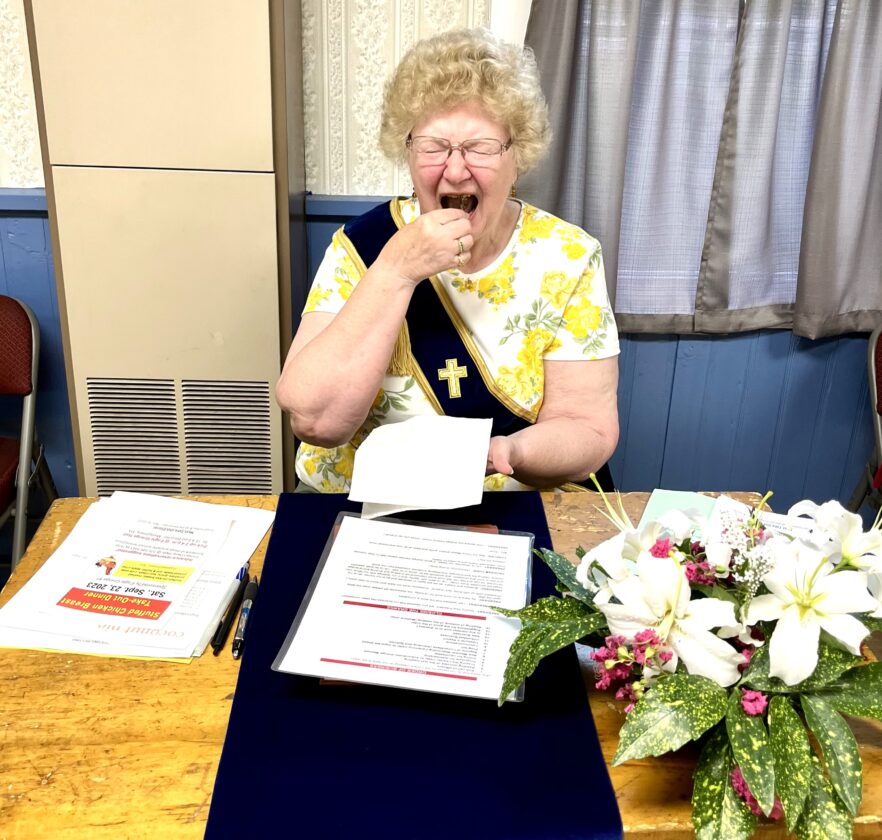
Janet Reynolds of Watsontown, who initially raised her hand to indicate she would never eat an insect during entomophagy program at Eagle Grange, Montgomery, changed her mind. Convinced to sample a roasted grasshopper, Reynolds closed her eyes and with a grimace popped the whole crispy bug into her mouth. After some careful chewing, she declared “tastes like potato chips!” PHOTO PROVIDED
“Come on, try some healthy bug snacks,” urged Nate Moyer, left, during a recent program on entomophagy he presented at Eagle Grange #1, Montgomery. Moyer of Selinsgrove, an agriculture and industrial arts teacher and FFA adviser in Perry County’s Greenwood School District, spoke about insects for food and offered samples to Elizabeth Green of Northumberland, center, who declined to try them, and to Joann Murray of Milton, right, who found the blueberry bread made with cricket flour to be quite tasty. PHOTO PROVIDED
Janet Reynolds of Watsontown, who initially raised her hand to indicate she would never eat an insect during entomophagy program at Eagle Grange, Montgomery, changed her mind. Convinced to sample a roasted grasshopper, Reynolds closed her eyes and with a grimace popped the whole crispy bug into her mouth. After some careful chewing, she declared “tastes like potato chips!” PHOTO PROVIDED
Trending
MONTGOMERY - When speaker Nate Moyer asked at a recent meeting of Eagle Grange how many of those present would never consider eating an insect, about half of the audience raised their hands amid snickers and comments of "yuck". But by the end of Nate's presentation on entomophagy (insects for food) that evening, many of those who earlier had raised their hands were enticed to try edible insects, albeit doing so with some trepidation and nervous laughter. Most who sampled were surprised at the tastiness of the bug snacks.
Moyer of Selisgrove, is an agriculture and industrial arts teacher and FFA advisor at the Greenwood High School in Perry County.
A past state president of the Pennsylvania FFA, Nate first became interested in insects when he cared for a number of lizards from an animal rescue. The lizards ate crickets and he eventually decided to raise the crickets rather than pestering his mother to go out frequently to purchase them. Later, he explored the topic of insects for food in a high school science project that eventually landed him in a national FFA speaking competition. His interest in entomophagy eventually earned him the nickname of "bug boy.”
Insects as food is practiced worldwide but is not widely embraced in the United States. Moyer said mass insect production is a cost effective and nutritious way to ease the world's food shortages. The program at Pennsylvania's first Grange, founded in 1871, outlined three reasons why insects should be eaten. First, related to wellness, insects are an excellent source of protein, healthy omega fats and fiber. Second, insects are a sustainable food source, their culture requiring less room and less feed to raise a pound of cockroaches or crickets than a pound of beef. Third, there is a quicker return on investment since it take only weeks to raise a pound of insects but more than a year to raise a standard steer for beef.
According to Moyer, insects can be consumed raw, boiled, baked or fried and can be eaten by themselves, combined with other foods or ground into flour for baking. A particularly interesting fact that amazed the audience was that individuals unknowingly ingest 1 to 2 pounds of insects per year on average. Federal safe food guidelines actually provide certain allowances for insects in most food products.
Highlighting the program was an opportunity for attendees to sample foods containing insects. Program director Doug Bonsall of Dauphin, who arranged the program, was the first volunteer to sample the treats - a fruit bread with whole crickets in it that gave it a nutty crunch. Joann Murray of Milton, a member of Eagle Grange for 70 years, sampled blueberry bug bread made with cricket flour and reported "it tastes good". Although initially determined she would never eat an insect, Janet Reynolds of Watsontown bravely popped a roasted grasshopper in her mouth and after chewing it slowly, declared 'tastes like potato chips". Other treats included trail mix consisting of almonds, chocolates and grasshoppers and another mixture of fly larvae, mealworms and grasshoppers flavored with barbecue seasoning.
Although Moyer concluded his presentation saying that insects are a healthy, sustainable and versatile food source to be enjoyed, he did point out that insects are closely related to crustaceans and shellfish like shrimp so persons with food allergies should exercise caution. He left an initially skeptical audience with a much broader appreciation, perhaps even acceptance, of insects for food. A few converts even used the word "yummy" in describing the unique treats they sampled!