
Blooming Grove Historical Society to host volunteer day March 2
Trending
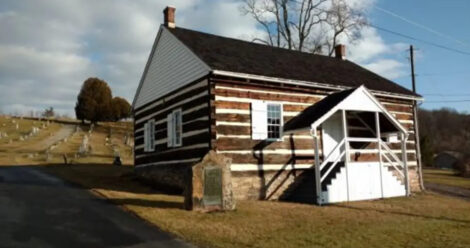
It is a day for history lovers, non-history lovers and anyone with a love for service. The Blooming Grove HIstorical Society will be hosting a Volunteer Day on March 2 at 9 a.m.The society is located in a museum and an old fashioned meeting house at 397 Dunkard Church Road, Cogan Station.
"We are welcoming anyone who wishes to come and help," Greg Thomas, a member of the society, said.
He added that this is a chance for the Blooming Grove Society to show what it has to offer to history lovers and non-history lovers.
"You don't have a love history to help," Thomas said. "We need all the help we can get. However, there is usually something that will spark interest or grab the attention of everyone."
Thomas said the purpose of the Volunteer Day is to bring out some of the items in storage and rotate out others that have been on display.
"Doing this lets the exhibits rest," Thomas said. He explained that over time and in the open air some of the exhibits will deteriorate in subtle ways, such as colors fading. Putting the artifacts in storage helps protect them.
Thomas said that volunteers will have a chance to see a Bible from the 1700s that was brought over by the original German immigrants that came to the Lycoming County area. He said also on display are cups used in communion services.
However one of the latest treasures to reach Blooming Grove was a loom that was donated to the Society recently.
"A loom was donated by a lady from the Harrisburg area who contacted us and asked, 'Would you want it?' and we said yes. She said the loom actually came from the Hepburn area and we were happy to see it return to its area of origin," Thomas said.
The loom is a wooden frame about six feet tall, wide enough to fit a person in a seated position, and about four feet long. Thread is weaved together into cloth and tapestries which could be used to make clothes and other fabrics.
"If there is an expert on how a loom works, we would not be adverse to having someone come in and use it," Thomas said.
Thomas said that one trait that has made Lycoming County residents stand out is their love of preserving history. Thanks to that affection, so much from the past has been saved and cared for that the next generation of Lycoming County residents can see "where their grandparents' grandparents came from."
"It is a testament of the people around here that they still love the area and love where they come from and still feel like they have a connection with the people and the community, " Thomas said.
The settlers of the Blooming Grove area were a group of German Baptists known as "Dunkards." According to the Dunkard Brethren Church's website, "The term 'Dunkard' is a derivative of the German word 'tunker' meaning to immerse.
Mark Roller, another member of the society, said, in a "Family Favorites" cookbook, said the Dunkards "would not go to war or take any oath, and were modest in clothing, plain speaking but very hospitable."
Members of the Dukards from Moehringen, Germany (now part of Stuttgart) refused to fight in the war with Napoleon. After a year, they emigrated to Lycoming County. Upon settling the Hepburn area, it was called "Blumengrofe" which is German for "flowers in the woods."
In 1828 the meeting house was built. The interior is an open floor concept and the women entered up one side of the steps and sat on one side of the building, while the men entered on the other. The benches were backless and wooden and in the center was a stove to help keep the building warm in the winter months.
Joseph McMinn, historian, wrote in his 1901 history of the Dunkards of Blooming Grove the Meeting Hall was "thirty feet wide, forty feet long, and twelve feet high, to the square. It is built of flat-hewn logs, with joints 'chunked and daubed.' The girders are counter-hewn, and the lumber all worked out by hand. The building is yet in a good state of preservation [in 1901]…"
McMinn explained that "interior, however, has been preserved unchanged, even to the table used by [former elder Rev. Doctor Conrad Holler] in his ministries. Such splendid pine trees [were] afforded these logs extending the entire length of the building, with their broad hewn surfaces, polished by time, are unknown to the present generation."
Meetings could last several hours as the elders of the fellowship would stand up and speak a sermon as the Spirit moved, Thomas said.
McMinn explained that parishioners sat on "long plain benches without back supports testify to a race, at once vigorous and robust, and who scorned any show of comfort or ease, such as we find required in modern churches."
"We would love to have their help on March 2nd. We look forward to sharing our love of history with everyone,' said Thomas.
For more information, visit the Blooming Grove Historical Society's site at www.https://bloominggrovehistorical.com.