
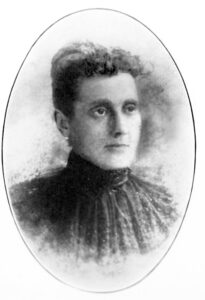
Rose Morgan: The last bloom of a generation
Trending
The gentlemen walked solemnly in unison. They hoped that they had timed this final walk from her home to finish shortly after the last member of the society had been seated along the main aisle, surrounding Rose like a shield of honor . . . but, as usual, there were latecomers!
Rose Morgan was by now held in the highest esteem throughout the county medical society, and sitting together was the highest memorial tribute its members could pay one another. Reflecting back 40 years, it was sad to recall a time when male physicians in Williamsport were reluctant to work with their female counterparts--even those who were well trained at Woman's Medical College in Philadelphia.
A number of the Woman's faculty were prominent Quaker physicians from the area, who were longtime champions of a woman's right to study medicine. Unfortunately, opinion makers of society countered that any woman who valued the reputation of her "feminine gentility" wouldn't want it tarnished by talk that she had attended lectures where venereal-diseased men's organs were displayed and discussed.
Born at the old Eagle Hotel
Rose Morgan began life at Williamsport's old Eagle Hotel on September 7, 1856, at a time when a deadly civil war seemed inevitable between states that considered slavery a necessity to keep the Southern economy profitable and those that considered it an abomination. While Pennsylvanians were clearly in the Northern camp, some of the state's prominent citizens, like Samuel Wallis, the largest landowner in Lycoming County during the 18th century, wrote with admiration about the benefits of holding slaves. Little Rose was the daughter of Emma (Emily) Anthony and John Morgan, who were of Scotch-Irish descent, though both were born in Pennsylvania. John was a two-term member of the US House of Representatives, serving the
16th district as a Jacksonian Democrat (1933-1937). Subsequent to his legislative career, he was the president judge of the 8th district until his death in 1851. He was noted for his involvement in the sale of large tracts of land in Pennsylvania.
The Civil War didn't directly affect communities upstream from Gettysburg except that the men disappeared either for four years or forever. John Morgan served during the war as a surveyor under General Grant. After the war, he was a surveyor for 30 years in Elk County. Rose Morgan left home at age 11, moving in with the Dr. William Wilson family in Warrensville, and she completed the final year of her grammar school education in the public school there.
Choosing a career
As she was just entering adolescence, it became time for Rose to choose an education and career for the remainder of her life so that she could become a self-supporting woman in a male-depleted society, if necessary. There was no nursing school available nearby. (The Williamsport Hospital's School of Nursing wasn't founded until 1883.)
However, in the decades before the Civil War, the nation was changed by the remarkable young visionary Horace Mann. At the time, education was available only to those wealthy enough to pay tuition to private institutions or to hire private tutors. He proposed that free education be available for the first eight grades and paid for by real estate taxes. The landed wealthy would pay for the education of the unlanded poor. It would be the great equalizer of society. By getting this basic education, impoverished young people could rise in society, as Mann had done.
With a free eighth-grade education, combined with the free libraries due to the magnanimity of poor immigrant Andrew Carnegie, who gave away the fortune he had earned in the steel industry to build them, people could obtain an outstanding education based on their own determination. But it would require the training of an army of good teachers, via teachers colleges, or normal schools.
Central State Normal School
In 1870, the Central State Normal School was founded at Lock Haven, and it attracted diligent students, including Rose Morgan. After graduation, her ingenuity and hard work were recognized by her being awarded a 5-year contract to run the showcase "model classroom" at the college. Though schoolmistress Rose was urged to continue in her role after her contract ended, she instead opted to take what she had learned into the real world of public education in the schools of Lycoming County.
After having left her mark on several schools near her hometown through several years of teaching, she yielded to the siren song of medicine and headed off to Boston, where she earned her nursing degree at the Boston Training School for Nurses.
Along the way she attracted the attention of best-selling novelist Dr. S. Weil Mitchell, who named her chief nurse over his busy practice, which pioneered the field of peripheral neuropathy. Later she decided she wanted the authority to make decisions regarding the care of her patients and enrolled in Woman's Medical College in Philadelphia. She earned her M.D. degree in 1895.
She did not immediately return to her hometown but spent two years practicing in McKeesport, in western Pennsylvania. When she did return to the Lycoming County area, it was first to the rural areas up north and later the city. In all areas where she practiced, she developed a devoted following.
In spring of 1910, she developed a fatal case of ulcerative colitis. (She was 53 at death, while the average life expectancy for women in the United States in 1910 was 52 years.) She is a prime example of the way brilliant alumnae, like Jean Saylor-Brown and Rita Church, can be magnets for other distinguished alumnae, drawing them to a location. After 1910, the number of Woman's Medical College MDs and woman MDs in general decreased for over 50 years.
Dr. Judith Gouldin is a retired physician who practiced nuclear medicine in Lycoming County for many years. Since retiring, she has pursued her fascination with history, including preserving local medical history. This Lycoming County Women column is part of the Lycoming county Women's History Project.