
Trending
When Chad Barner, a Muncy resident, walks the halls of UPMC Williamsport each Wednesday, he isn't simply making volunteer rounds. He's retracing a journey that changed his life.
In April 2024, Barner fell 15 feet from a ladder at his home, breaking nine ribs, his collarbone and shoulder and collapsing both lungs. After 28 years working for Verizon and routinely climbing poles without injury, an accident at home suddenly put him on the other side of trauma care.
Barner was taken by ambulance to UPMC Williamsport, where his recovery included stays in the intensive care and step-down units and inpatient rehabilitation, followed by more than 10 months of outpatient therapy at the UPMC Rehabilitation Institute at the Eastern Lycoming YMCA.
"The trauma team kept me breathing," Barner said. "I figured if they were going to do that, I'd keep fighting. The staff here are very special."
Barner eventually returned to work and even climbed poles again, but lingering effects from his injuries led him to retire early. Around the same time, he found an unexpected new purpose.
Kristy Teisher, expert discharge plan manager with Clinical Care Coordination at UPMC Williamsport, invited Barner to a Trauma Survivors Network dinner and asked him to share his experience. Soon after, she asked whether he would be interested in helping build a peer support program for other trauma survivors.
His answer was simple: absolutely.
Today, Barner volunteers with the Peer-to-Peer Visitation program through the Trauma Survivors Network at UPMC Williamsport. The program connects trauma patients and their loved ones with trained volunteers who understand firsthand the challenges of recovering from a traumatic injury.
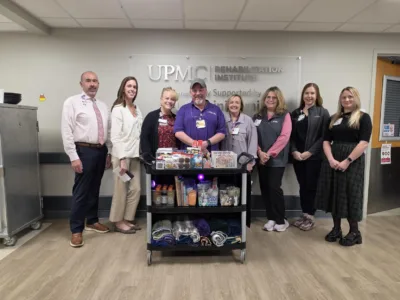
Barner helped develop the "Full Circle Cart," a mobile collection of snacks, handmade blankets, comfort items and resources that accompanies him on his weekly visits. Its name reflects Barner's journey from the patient in the hospital bed to the volunteer pushing the cart.
"Everything on here is kind of stuff I wish I would have had," he said.
The cart itself can help start conversations. Barner said patients may initially be hesitant to talk, but that can change when they learn he has experienced serious trauma himself.
"They'll ask, 'What happened to you?'" he said. "And then they open up quite a bit with fears or worries. It's lived experience. That's the important thing in this program."
"They get it. I get it," he added. "That's the big difference."
The Peer-to-Peer Visitation cart honors trauma survivors while providing comfort items and resources during hospital visits.
Barner's weekly rounds can take him back to the same areas where he once received care, including the ICU, step-down units and inpatient rehabilitation.
Seeing members of his former care teams has become part of his own continued recovery.
"I always tell people I have two sets of batteries in me," Barner said. "One gets depleted as I'm in here, but it fills the other one up while I'm here. It gets me ready for everyday life."
Sometimes, simply hearing a staff member call out, "Hey, Chad," reminds him how far he has come.
"I'm here because of the amazing staff here," he said. "It makes my heart swell pretty big."
The Full Circle Cart has grown into a community effort. Barner has reached out to local organizations, businesses, clubs, friends and neighbors for support. He, his wife and his mother have also contributed handmade items and other comforts for patients and families.
Now, he hopes the program continues to grow and provides future trauma survivors with the same sense of connection and encouragement he found during his own recovery.
"I want this to be here long after I'm gone," Barner said. "It's helped me with my recovery, and I hope that I can help others through theirs."