
Reflections in Nature: Majority of insects are very beneficial
Trending
Our summer unofficially arrived on Memorial Day, however, summer will officially begin June 21. Also arriving are the insects of summer. The common name of bug is applied to almost all insects, especially an insect of the creeping and crawling type.
However, the origin of the word bug comes from the Welsh word bwg, which means a goblin, ghost. Well, by any name, insects are both loved and hated.
Insects, which are found everywhere except in the ocean depths, are more numerous in species than all other living creatures combined. Over one million species of insects have been named, and every year scientists are naming approximately one thousand new ones. It is estimated that there are 300 pounds of insects for every 100 pounds of humans.
Usually, when we think about insects we immediately think of the harmful insects, even though the vast majority of insects are beneficial to humans.
The Greek word for insect was entomon, which is where our word entomology comes from. It was derived from entemnein, meaning cut up, and is a compound verb formed from en (in) and termnein (cut), which literally means creatures divided in segments. The Latin word insectum has the same meaning.
Humans had many beliefs and superstitions about insects. One belief was that if a rattlesnake was killed, the head needed to be cut off and buried. If this was not done, hornets would feed upon the head, causing their stings to be as deadly as a rattlesnake bite.
Have you ever been told that stepping on an ant would make it rain? I haven’t been able to track down the source for this belief but as a child, I remember killing ants just to see if it would rain.
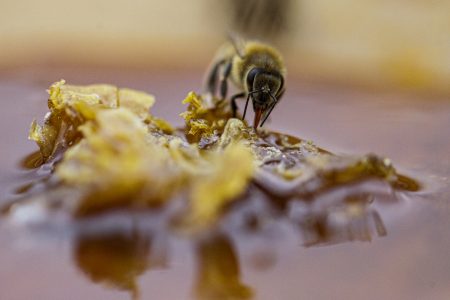
There is more folklore attached to honeybees than any other insect. At one time, it was believed that honeybees should not be purchased. A swarm could be found, swapped or received as a gift, however, if a swarm was purchased, the bees would die.
In earlier times when a bee keeper died, his hives were draped in black to let the bees know that their master was dead. The new owner would then go to the hives and whisper “Little brownies, little brownies, your master is dead, and I am your master now; stay and work for me.” If the bees were not told of the death and not asked to stay, it was believed they would fly away.
Bee wax candles were thought to be the candles to use in churches, due to the belief that bees could fly back and forth between heaven and earth.
Supposedly, bees dislike people with red hair. Bees will sting them readily, even though it has been proven that bees cannot tell the difference between black and red.
The dragonfly, which has many names, is also known as snake doctor. It was believed that the dragonfly was a friend to snakes and would lead them to food and heal them if they were injured. Another popular name was darning needle. This came about because people thought the dragonfly had the ability to sew up the lips of liars and the ears of eavesdroppers.
In New England, people thought moths were human souls; in Japan, fireflies supposedly were the ghosts of heroes slain in battle; in South America, one tribe of Indians believed horseflies were the souls of dead chiefs, with the power to arm the living if they chose; and in the south, some thought the singing of the crickets was the gossiping of old people.
There were those that believed lice were formed from dust and that bread crumbs turned into cockroaches. Actually, I can see how these two beliefs came about since lice are born in dust and, if food was left lying around, it would surely attract cockroaches. Our word cockroach comes from the Spanish word cucaracha. How many of you remember watching the Hit Parade on television and hearing the song, “La Cucaracha?”
Many have believed the following: it is unlucky to kill ladybugs and crickets; if an inch worm is found crawling on a person, the worm is supposedly measuring that person for a coffin; Blackfoot Indians believed that all dreams were delivered by butterflies.
Here are a few weather omens that are connected with insects: rain can be expected when ants go to their underground nest; gnats swarm before a rain shower; biting insects are worse before rain, and if a butterfly flies about your face, you’ll need a sweater before the day is over.
In many countries, insects are eaten, but in the United States, we feel insects are harmful to swallow. In other parts of the world, insects are roasted, stewed, fried and dried for future use. Grasshoppers are a favorite, usually eaten fried crisp and salted. Several years ago in an attempt to get Americans to eat grasshoppers, they were dipped in chocolate.
The grasshopper was used by Aesop in his many fables, and the following is one: "One bright day in late autumn a family of ants were bustling about in the warm sunshine, drying out the grain they had stored up during the summer, when a starving Grasshopper, with fiddle under his arm, came up and humbly begged for a bite to eat.
“What!” cried the ants in surprise, “Haven’t you stored anything away for the winter? What in the world were you doing all last summer?”
“I didn’t have time to store up any food,” whined the grasshopper. “I was so busy making music that before I knew it the summer was gone.”
The ants shrugged their shoulders in disgust and cried, “Making music, were you? Very well, now dance!” And they turned their backs on the grasshopper and went on with their work.”
The moral? There’s a time for work and a time for play.
Bill Bower is a retired Pennsylvania Game Commission Wildlife Officer. Read his blog and listen to his podcasts on the outdoors at www.onemaningreen.com.