
Reflections in Nature: Enjoy dogwoods in bloom this year
Trending
Diary entry for April 30: "Mary Alice's dogwood tree is in full bloom." Many years ago, she purchased what appeared to be a dead dogwood tree at our local hardware store at the end of the planting season.
Mary Alice always wanted a dogwood tree planted in front of our home, and the price was right so she bought the tree. The store owner told her to take the tree home, and after planting, be sure to faithfully water throughout the fall. During the following spring, the tree leafed out, with very few blossoms.
It is now many years later and every year we continue to have an explosion of blossoms.
This year turkey hunters will surely see the wild dogwood trees, with splashes of white (sometimes pink) bracts spread against the background of the fresh greens of early summer.
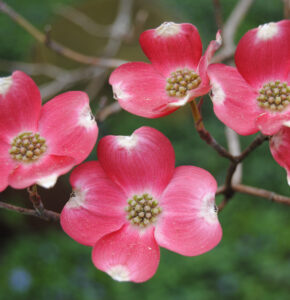
The dogwood is an under-story tree, which means that it grows well in the shade of larger trees. The flowering is now at its peak. The flower has four petals and each is notched. The flower, which is at the center of these bracts or petals, consists of small, greenish heads, densely packed into a head of white bracts that resemble a flower in appearance and are often mistakenly called the flower.
However, the large petals are there to entice the insects to the actual flower in the center of these petals.
According to my diary, most plants, trees and wildlife seem to be early this year. The petals will soon begin to drop from the dogwood trees. The fruit will grow throughout the summer. Although we have eight species of dogwoods native to Pennsylvania (40 species worldwide), the two most common are the flowering dogwood and the alternate-leaved dogwood.
The flowering dogwood has its leaves growing opposite each other on the branches. The fruit will turn into an elongated scarlet drupe. The alternate-leaved dogwood has, as its name describes, leaves placed alternately on the branches. Its flowers, which are small and cream-colored, grow on slender stocks, with the fruits appearing as a bluish-black drupe.
The dogwood is the state tree of Virginia. These trees are often dug up and transplanted. We read in diaries of men, such as George Washington and Thomas Jefferson, who wrote about transplanting dogwood trees.
At one time, the dogwoods were sought after for their wood, which has an extremely high resistance to splitting. It was once used in golf clubs, handles of chisels, mauls, mallet heads, hog yokes, hay forks, barrel hoops, wheel hubs and wedges. Pulleys and spindles made of dogwood were sought after by the textile industry.
Although walnut wears smooth, it is weak; hickory is strong, but wears rough with too much use. Dogwood was an ideal wood for items with continual use.
A dogwood is a symbol of protection and safety in southeastern Native American tribes. In some Mohawk communities, the Tree of Life in the Sky World was said to be a giant dogwood tree. In Northwestern tribes, the dogwood symbolized good luck. The dogwood berries were eaten during religious ceremonies. Dogwood fruit was a popular food item for many Native Americans.
The Blackfoot people associated the dogwood tree with masculinity and their women were to refrain from eating its fruit. The bark and roots of dogwood trees were frequently used as medicine, herbs and dyes, as well. However, dogwood sap is toxic and was used as poison by some tribes.
The Native Americans used a brew made from the bark of the dogwood for malaria because it was high in acid. The roots were also used to make a dye for quills, furs, and feathers.
The pioneers went on one step further and soaked the dogwood's bark in whiskey. This was a good tonic for the shakes. Even as late as 1865 when the union navy made a blockade on southern ports, dogwood bark was used as a substitute for quinine.
Since the commercial use of dogwood has diminished and the public has been educated about destroying the tree, the plant has flourished until recently. A disease known as dogwood anthracnose has enabled a previous fungus to become a significant killer of the dogwoods. The symptoms are tan spots on leaves that develop a purple rim. In some cases, holes appear in the leaves.
If left unchecked, the infection progresses down through the leaves into the twigs, where a canker develops. The twig dies back and shoots become prolific on the trunk. These new branches are very prone to infection, which can progress into the trunk of the tree. The bark will become swollen from cankers and split. These cankers could girdle branches or kill the entire tree.
In the spring of the year, before the colonists had erected churches, outdoor services were held, with the dogwood trees in bloom as their altar.
Well, I hope you were able to take a walk in the spring woods and enjoyed seeing the dogwoods in bloom.
Bill Bower is a retired Pennsylvania Game Commission Wildlife Officer. Read his blog and listen to his podcasts on the outdoors at www.onemaningreen.com.