
Finding acorns provides kids with an outdoor adventure
Trending
Winter is coming, and those furry, fluffy squirrels are mad at work collecting and burying and immediately forgetting where they have hidden nutty treasures like chestnuts, beech nuts and of course, the mighty but small acorns.
The acorn, with its smooth exterior or fruit wall, sharp style, and dapper cupule -- the hat-looking cap -- are not only tasty treats for wildlife but for children as well.
High in fat, the roasted acorn has a similar flavor to cooked potatoes. Acorns from white oaks have a stronger, nuttier flavor and are preferred.
To identify a white oak, look for round lobed leaves that are still present even this deep into fall. White oaks hold on to their leaves longer than most other oaks, usually waiting until mid-winter to defoliate. The bark of a white oak tree is pale gray. The leaves in fall can vary from deep red to copper. You can borrow a tree identification guide from a local library to help kids find a white oak.
The biggest tell, of course, will be a carpet of acorns at the base of the tree.
Kids can gather as many acorns as they want. Having a basket or special gathering bag that attaches to a belt motivates young ones to really enjoy a foraging time.
Once home, cover the nuts with water. Any nuts that float are safe to eat. Any that sink are likely not fresh and should be thrown away. For the toddler age, an extension lesson on other things that sink or float is particularly fascinating.
Kids can then rinse the acorns under cold water for a few minutes to remove any debris like mud or insects.
They can also remove the cupules by popping them off and saving for crafts later. Freezing the acorns first can help with stubborn cupules that don't want to detach.
The next step is a favorite for most kiddos. Wrap the acorns in a paper towel, and using a hammer or nutcracker and safety goggles, hit the acorns to remove the fruit wall. Separate the meat from fruit wall and discard any fruit walls.
The next step is best done by a grownup.
Acorns need to be boiled a few times to remove the terribly bitter tannins. This step is called leaching. Cover the acorns with water, allow to boil, and then discard the water. Repeat this three or four times until the water is no longer brown. This step will take roughly an hour.
We are finally at the roasting stage.
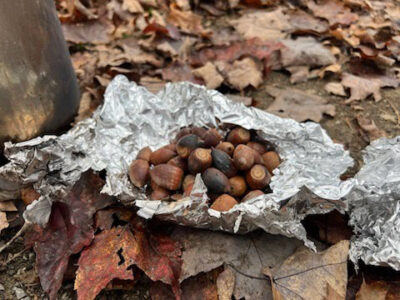
I prefer to roast acorns over an open fire for 15 minutes, perhaps in a campfire cook pot or aluminum foil pouch. Cooking in a 350-degree oven for 15 minutes also creates tasty roasted acorns.
Eat the acorns as is, in a trail mix, add to baked goods or grind them into a fine powder for acorn flour.
Bethany Marcello is a certified nature teacher and teacher preschool at Fern Hill School in Milton.