
Bird banding by PGC provides a lot of valuable data to study
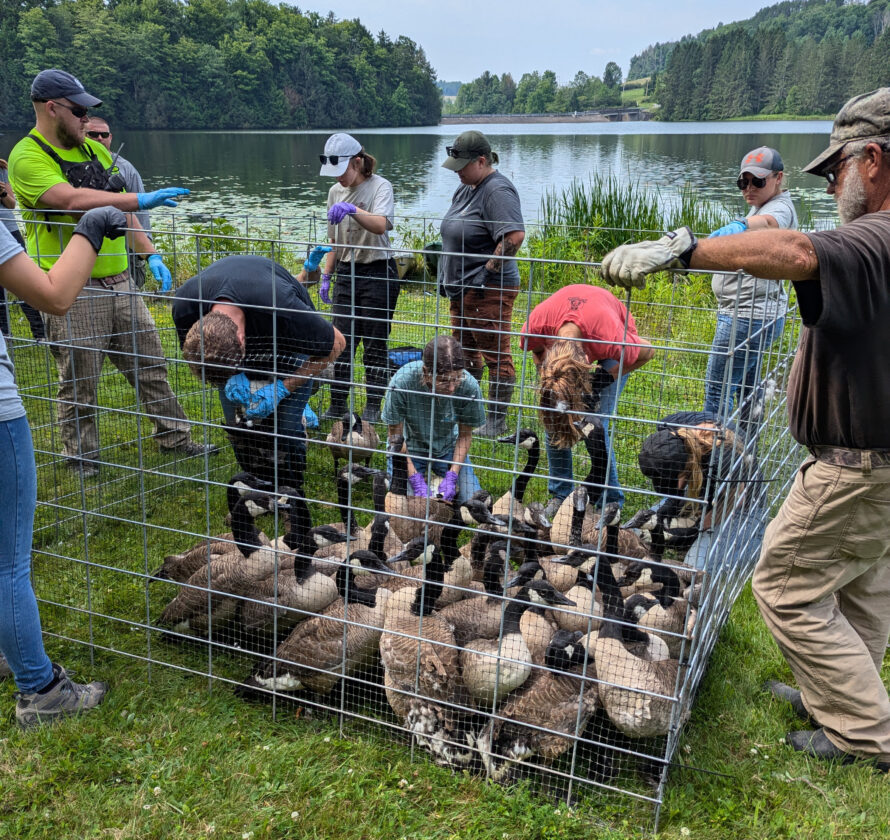
PHOTO PROVIDED Geese are corralled into an enclosed area in order to be prepared for banding in this photo by Pennsylvania Game Commission intern Maddie Carlini. The Pennsylvania Game Commission bands numerous birds — geese, barn owls and others — to gain valuable information such as where they migrate to and breeding patterns.
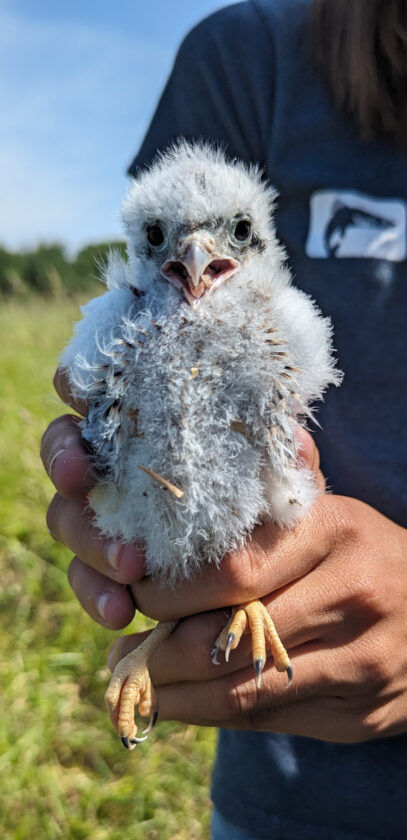
PHOTO PROVIDED A young barn owl is held as its prepared for a bird band on its leg in this photo by Pennsylvania Game Commission intern Maddie Carlini.
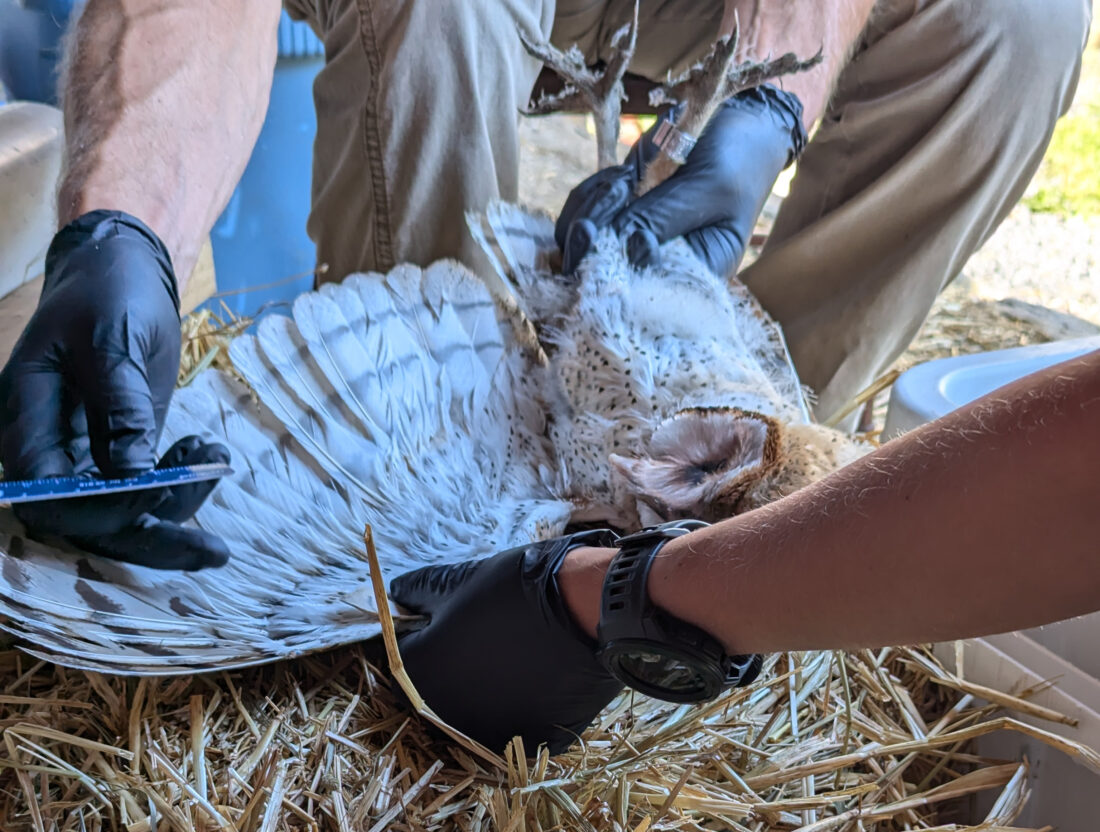
PHOTO PROVIDED A barn owl has a band placed on its leg in this photo by Pennsylvania Game Commission intern Maddie Carlini. The Pennsylvania Game Commission bands numerous birds to gain valuable information such as where they migrate to and breeding patterns.
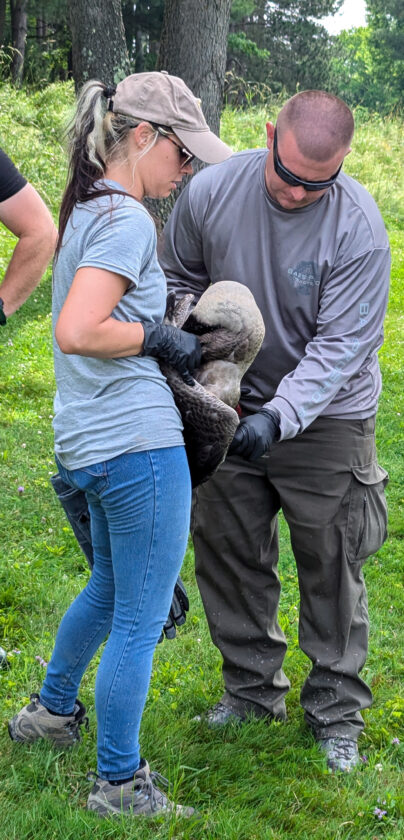
PHOTO PROVIDED A goose is held as the Pennsylvania Game Commission places a band on its leg in this photo by Pennsylvania Game Commission intern Maddie Carlini. The Pennsylvania Game Commission bands numerous birds — geese, barn owls and others — to gain valuable information such as where they migrate to and breeding patterns.
PHOTO PROVIDED Geese are corralled into an enclosed area in order to be prepared for banding in this photo by Pennsylvania Game Commission intern Maddie Carlini. The Pennsylvania Game Commission bands numerous birds — geese, barn owls and others — to gain valuable information such as where they migrate to and breeding patterns.
PHOTO PROVIDED A young barn owl is held as its prepared for a bird band on its leg in this photo by Pennsylvania Game Commission intern Maddie Carlini.
PHOTO PROVIDED A barn owl has a band placed on its leg in this photo by Pennsylvania Game Commission intern Maddie Carlini. The Pennsylvania Game Commission bands numerous birds to gain valuable information such as where they migrate to and breeding patterns.
PHOTO PROVIDED A goose is held as the Pennsylvania Game Commission places a band on its leg in this photo by Pennsylvania Game Commission intern Maddie Carlini. The Pennsylvania Game Commission bands numerous birds — geese, barn owls and others — to gain valuable information such as where they migrate to and breeding patterns.
Trending
Maddie Carlini is no stranger to being up close and personal with various birds to attempt to band them for studying purposes. Her father for years was the regional director for the Pennsylvania Game Commission and she got to take part in bird banding over the years with him.
Now, as an intern with the Pennsylvania Game Commission, she's back doing exactly that and helping spread word about the benefits and purpose of banding birds in Pennsylvania.
"It's always nice to meet the owners of this farm or that property and explaining what we're doing and stuff like that," Pennsylvania Game Commission information and education intern Carlini said. "Especially with the geese."
Oh yeah, Carlini loves banding geese. They may be an aggressive bird that many people try to avoid on lakes or rivers, but for Carlini, they're one of her favorites.
Carlini and the Pennsylvania Game Commission took part in banding birds throughout Pennsylvania earlier this summer -- be it barn owls, kestrels or geese. Each bird poses its own challenges and difficulty, but it's all for helping gain knowledge for researchers and the game commission to utilize.
"The Pennsylvania Game Commission is in conservation, so there's nothing we do to harm these animals. Everything we do is for scientific purposes and people in the community. If you'd tell people about it, you'd probably say it's for the bird's safety and their own good, and for the people's as well," Carlini said. "We want to control populations and if there's less, let them thrive. If there's more, maybe more hunting licenses and things like that."
As for non-hunted animals like owls?
"It's good to know population wise when you have your native species involved," Carlini said of barn owls and raptor species like kestrels. "Other non-native species don't take over those areas where they're much needed. Like barn owls taking care of pests in farmer's fields."
When Carlini and the game commission banded owls, a large group of people went with them and were shown what was going on. Carlini would go into the rafters to get the owls out of their owl boxes and put them into small sacks to attempt to calm the owls down.
"My job was to write down weights, measurements, get little bands for them for these animals. We would do the banding where we'd have to get them in the little tubes to calm them down a little more and they're usually screeching very, very loud," Carlini said with a laugh.
Blood samples are also taken and the owls are weighed. Carlini noted the blood samples are given to the laboratories so they know which birds had blood taken from them.
The kestrels were the next bird that was banded with Carlini, a bird that she noted was very fast and easy to do. Like the barn owls, they're both weighed and banded and then quickly put back in their nest.
"We don't want to cause any more disturbances to them or their mom," Carlini said.
Anyone who's encountered a goose knows they can be aggressive and chase people. And they hiss as well, something Carlini and the Game Commission individuals were more than familiar with when they attempt to band them.
For geese, they band a large number of them for data collection.
"Usually our region for the north central has the most just based on migratory patterns and we have to make up for other regions when we go out and get them," Carlini said.
When attempting to get geese corralled to band, the Game Commission and Carlini went on kayaks on the river or lake to get the geese to go toward where they need them while other people are on the bank being very quiet and getting the geese to go into large fenced areas.
"We get them all into the fence and get the fence together with tiptoes so they can't escape," Carlini said. "They're very powerful and their wings are very powerful to get them to fly long distances."
Unlike the owls or kestrels, the geese are looked at to determine if they're juveniles or adults and also see what sex the bird is. For juveniles, they're put into a separate fence so they don't run off without an adult. The adults and juveniles both have their sexes marked before a band is then put on them with the game wardens.
"All of them are very simple and very easy, and we just let them go back into the water or wherever they came from and then move onto another location," Carlini said.
This year, the Game Commission tagged around 300 geese and they're tagged when they can't fly. There's a two-week window where the geese can't fly as they're regrowing their flight feathers, which is when the Game Commission aims to band them.
Carlini has been part of banding trips and adventures for awhile thanks to her dad being a regional director and now her as an intern. And she notes there's a lot of enjoyable moments in the process.
"Holding geese, going out with parents and learning the process of caring for these animals. They're not just animals to be looked at," Carlini said. "They're to be harvested as well for conservation. So it's good to know you're doing your part of something to help these animals in your community as well."
The data that's gathered as well can produce interesting finds for those who view the data.
"Knowing they're being tracked and monitored is a thrilling thing for the scientific process," Carlini said. "Usually barn owls don't fly far, but knowing you're doing something for them and for farmers is very rewarding."