
Reflections in Nature: Rhododendron bushes have two types of buds
Trending
The leaves and buds on our rhododendron bushes froze during the last cold blast. This caused the leaves to curl and appear as if frosted. When the temperature drops the leaves of the rhododendron bush will curl inward to prevent water from evaporating, and as the temperature warms the leaves will uncurl.
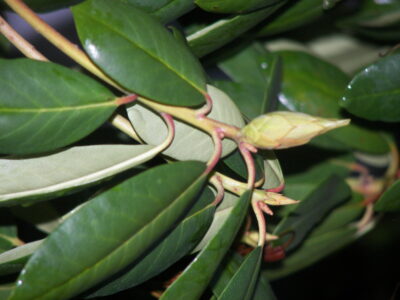
Rhododendron bushes have two types of buds. On most rhododendrons, the flower buds are large and round as a marble, while the leaf buds are small and pointed. However there are exceptions. The leaf buds on the big-leafed rhododendrons, are large, and on the tiny leafed lepidote rhododendrons, the flower buds are small and pointed, both of which cause confusion.
Although mid-spring blooming rhododendrons make their flower buds in July to September, the buds will not open until the following year.
When the trees are bare during the winter months, look closely at the limbs and you will notice buds. New buds are formed on tree limbs in the spring along with the leaves and flowers. These spring buds are miniscule and no larger than the head of a pin. In the spring, the food that the tree can produce is used to make the tree grow.
The buds formed in the spring require very little food. In early July, the tree will have grown to the size it will be that season. Twigs are as long as they will grow; leaves are full-sized; flowers have set their fruit and dropped off and the trunk's new rings are completed.
The tree switches its food supply to the spring buds for the following year. During the next two months, the tree concentrates on building, folding and storing the miniature buds for growth in the following year.
While some trees have different buds for leaves and flowers, a bud can also be both a leaf and a flower (for example, apple, cherry or June berry). All buds, whether leaf or flower, are packed with nutrition, which is why wildlife such as grouse, deer and some birds feed on them during the winter months.
Buds come in all sizes. Trees that grow in the north usually have larger buds than trees that grow in the south. A tree has approximately three to four months growing season in which to produce flowers, leaves and seeds. As winter begins to lose its grip and the snow and ice melt, the ground begins to absorb heat, and the buds on the trees will begin to swell. In May, the trees go from swollen buds to green leaves, while soaking up sunshine.
However the tree cannot leaf out too early due to a late frost or snowstorm which could damage the leaves and possibly break limbs from the weight of the snow.
A tree must time its leafing out. If a tree was to lose its leaves from a late frost, it does have a fail-safe system in which it has secondary leaf buds that would leaf out later. This is stressful on the tree. If these secondary buds are not used, they could last as a bud for several years and then shrivel up and die.
If you look at the buds on a tree, usually the larger buds are flower buds, while the smaller buds are leaf buds. Some trees will produce flowers before they produce leaves. It is not as hard on a tree if the tree produces its flowers and is then hit by a late frost. Failing to flower one year will reduce the seed production but not harm the tree as much as if the leaves are lost. However, if you have a fruit orchard, this is disastrous.
Trees that produce flowers before the leaves are usually pollinated by the wind. The leaves would interfere with the exchange of pollen. While trees that flower out after they produce leaves are usually cross pollinated by insects. Wind pollinated trees produce flowers weeks ahead of their leaves, in contrast, a bee pollinated tree, such as a basswood, can flower out a month after it has leafed out.
Why? When the basswood tree creates its flowers, it is the exact time when the bees have had enough time to build up their population, and the basswood tree has a greater chance to have its flowers pollinated.
Some types of trees are equipped with two kinds of buds that are entirely different in appearance. During the winter, the dogwood tree's flower buds, which are always at the end of the twig, are wider than they are long and come to a peak. The dogwood tree's leaf buds, which are found along the twig, are extremely slender and sharp. These two types of buds open entirely different, and of course, the flowers come first.
In late winter I usually bring a few pussy willow branches home for Mary Alice. If she puts them in a vase with water, it won't be long before the buds burst open and shed their pollen. If she puts them in a vase without water, they will last indefinitely.
Bill Bower is a retired Pennsylvania Game Commission Wildlife Officer. Read his blog and listen to his podcasts on the outdoors at www.onemaningreen.com.