
Reflections in Nature: Mist nets now used for bird trapping instead of birdlime
Trending
In last week's article about mistletoe I wrote how it was used in the making of birdlime. While attending the Ross Leffler School of Conservation -- which is the Pennsylvania Game Commission Training School -- I first became aware of birdlime in the trapping of birds.
In 1969, I graduated after a year of intense training. I found that birdlime appeared on the list of game commission regulations. It was covered very little in the training program though because it was not being used within the state by violators.
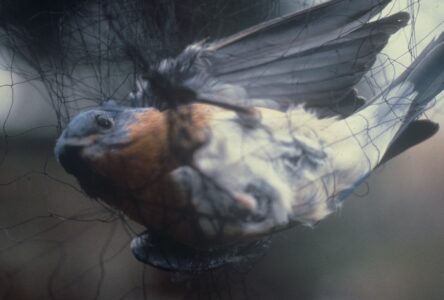
Today mist nets are used in the trapping of birds. The nets are not as messy, and less damage is done to the birds. Although using birdlime is not a major problem in Pennsylvania, it is a worldwide problem.
Birdlime is a sticky substance made from plant materials, such as the berries of the mistletoe plant. Different countries use different materials and methods of preparation. The type of mistletoe that makes its appearance during the holiday season is American mistletoe. This species, which grows in North America, is sold all over the world.
Small white flowers grow in the spring, followed by white berries. Be sure to keep sprigs of mistletoe away from children and pets because it is a poisonous plant. According to the National Capital Poison Center, swallowing American mistletoe can cause gastrointestinal problems.
Although the mistletoe is poisonous, birdlime is prepared from the American mistletoe berries. After a handful of ripe berries is chewed until sticky, the mass is then rubbed between the palms of the hands to form long and extremely sticky strands.
These strands are coiled around small thin tree branches and then placed in a suitable location with a decoy live bird. Care is used not to swallow any of the sticky mass.
The decoy bird is usually left tied nearby, where its cries will attract area birds. Once a bird perches on the branch it becomes stuck. In its struggles to get free, the bird becomes further entangled in the gummy substance. The trapper returns to claim his prize, the bird for food or to be sold to the caged-bird trade.
Although this method of trapping is not allowed in many countries, it is still done in some Asian countries. The birdlime method is used because it is cheap, and the resin used is readily available from common trees.
Sad to say, when trapped with birdlime, the outcome is usually not very good for birds. In days past, when wild-caught birds were more frequently imported and sold in pet shops, those trapped with birdlime fetched far lower prices than those that were netted or snared by other means. Those caught with birdlime usually lost huge swathes of feathers, often to the extent of not being able to fly.
They would need months of rehabilitation before they resembled their former selves. Removing the birdlime from the feet and beak of birds was a problem. Some types of birdlime could be removed with water; another method was by using flour to slowly rub the birdlime off. A method not recommended was to wipe off the birdlime with either petrol or methylated spirits. These substances can be absorbed through the skin and can be toxic to birds.
Of course, the birds trapped for eating, the cleaning of the birdlime was not done until the bird was plucked for eating.
Birdlime was used in the manufacturing of British sticky bombs during World War II. Birdlime was listed as an important commodity in the history of Canada's fur trade.
The trapper needs very little equipment. They will have a small cage to put the birds in, and a live bird to use as a lure. The decoy bird will be chained to part of a branch where the resin has not been applied. The lure bird attracts a variety of birds, not just his own species.
In the United States, mistletoe is most often found on black gum, hickory, oak, pecan and red maple trees. Most healthy trees can manage a few mistletoe infestations, but too many can cause the trees to become weak, especially in situations like disease or drought.
Throughout history, European mistletoe has been used to treat arthritis, asthma, dermatitis, epilepsy, headaches, hypertension, infertility, rheumatism, seizures and symptoms of menopause. Some believe it could be used as a cancer treatment, but there has not yet been a study that has proved this to be the case. Despite this, mistletoe extract is one of the most prescribed therapies for cancer patients in Europe.
Despite being a parasite, mistletoe is important to the environment. Their berries feed several species of birds, and three species of butterfly are dependent on mistletoe for survival. Mistletoe also provides nectar and pollen for bees when few other sources are available. Animals, such as cattle, deer, elk, and several species of insects, feed on the mistletoe plant.
Bill Bower is a retired Pennsylvania Game Commission Wildlife Officer. Read his blog and listen to his podcasts on the outdoors at www.onemaningreen.com.