
December: The advent mystery of new beginnings in nature
Trending
Yet another miracle of nature becomes apparent in December: the diverse and curious means that animals, birds and insects have developed to survive winter conditions.
When we think of hibernation, bears most likely come to mind.
Bears actually begin to prepare for hibernation in the summer when some interior signal seems to scream “begin ravenous eating now." Then bears greedily paw up or lap up berries from bushes (raspberries, blueberries, blackberries), other types of green plants (cattails, jewelweed) and nuts from our bountiful Pennsylvania trees such as beechnuts, hickory and hazelnuts.
They also find yellow jackets to be tantalizing without any apparent concern for being stung. Bears also add insects like ants and beetle larvae, and meat sources, while hoping of course to locate a most cherished treat: a honeybee hive.
The result? In the fall a bear might consume 20,000 calories daily.
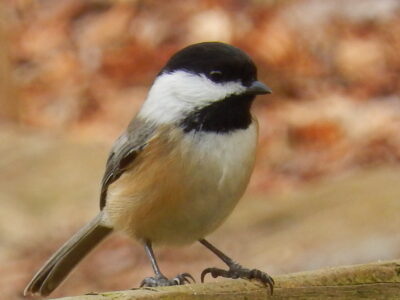
Let's pivot to a completely different form of getting ready for winter. At our bird feeders, the tufted titmouse places a seed between its feet, cracks it open and eats it on the spot. And yet another of our most common feeder birds, the black-capped chickadee, has a totally different strategy.
Watch closely, and you will see this fellow grab one seed at a time and fly off with it. Its strategy is to map out in its memory where it has stashed each seed into a crevice of tree bark or rotting logs. Then it revisits many hundreds or even a thousand of such sites during the winter to ingest enough calories to survive. At least two physiological changes support survival: this bird's ability to lower its body temperature overnight and secondly, its ability to grow its brain a bit larger in winter by adding neurons which assist remembering where each seed is hidden, according to preliminary research.
These adaptations are truly amazing, considering that this little bird weighs only the equivalent of two nickels in its hollow bones, feathers, flesh and hairless legs and feet.
A third amazing and totally dissimilar strategy has evolved for the honey bee.
In winter, a hive consists only of one queen plus solely female honey bees. In summer, bees' transparent wings beat to cool down the hive. In winter their wings would wear out if flapping all winter, so these bees also shiver the tiny muscles inside their bodies.
This shivering keeps the queen, her all-female nurses and the honey supply at a tropical temperature, often higher than 90 degrees. This activity also has its own unique choreography. As the bees on the outside of the hive get cold, they burrow toward the center, pushing out the next layer of bees to take its turn on the cold outside of the hive. All this frantic activity requires a lot of calories. Lucky for these bees, this food is right at hand: their honey.
Now how in the world did all this evolve?
According to St. Columban, an Irish monk (543-615 AD): "If you wish to know the Creator, come to know his creatures."