
Reflections in Nature: Two species of flying squirrels live in Pennsylvania
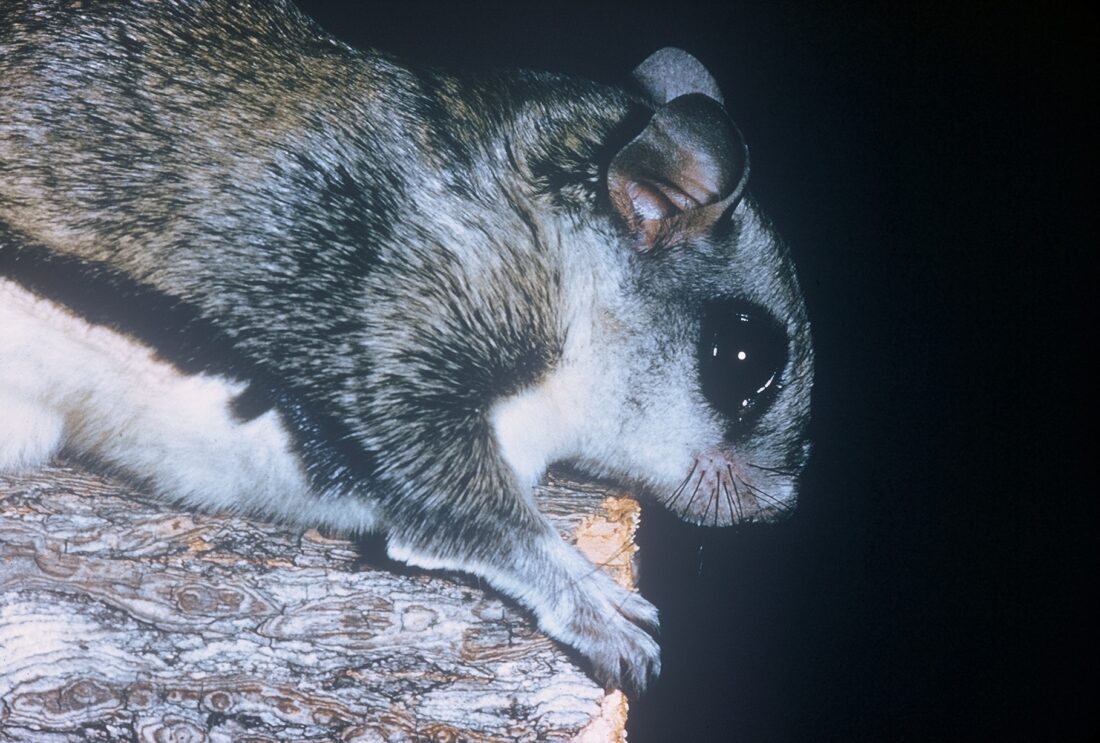
PHOTO PROVIDED Shown is a flying squirrel.
I recently received an email from a friend saying that she had flying squirrels on her property. She went on to write that she and a friend had made a nesting box and were planning to make a few more. They hope to identify whether their flying squirrels are southern or northern.
Sometimes the most interesting animals are those living right under our feet, however, their secretive lives keep them from being noticed. One such creature is the flying squirrel. Many folks have flying squirrels visiting their backyard bird feeders without ever knowing.
This is because the flying squirrel is a nocturnal animal.
In Pennsylvania, we have two species of flying squirrels: the northern flying squirrel, which inhabits the northern part of the state, and its smaller cousin, the southern flying squirrel, which lives throughout the state.
Although it is very difficult to tell the difference between the two species, I have read in several books that the northern squirrel, which has a darker brown coat, with an indistinct reddish back, prefers to live in stands of conifers. The southern flying squirrel favors our hardwood forests, where there is an abundance of nuts.
The southern flying squirrel is the most common of the two and is said to be Pennsylvania’s most abundant squirrel, with numbers exceeding the gray squirrel. Although I find that statement hard to believe, it gives you a good idea of how secretive these squirrels are. The northern flying squirrel is facing hard times and is being considered as an endangered or threatened species by the Pennsylvania Game Commission and the U.S. Fish and Wildlife Service.
Research has shown that the two flying squirrels are sharing habitats and nesting quarters. This means trouble for the northern species, which is already in short supply within the state. Their numbers have dwindled because of the European wooly adelgid, which is an insect that has been devouring the state’s hemlock tree stands, the preferred habitat of the northern squirrel.
Also, the problem with sharing of habitat and living quarters with the southern species is that a small parasite Strongyloides robustus carried by the southern squirrel can be lethal to the northern squirrel. According to a study done by the Pennsylvania Game Commission, this parasite poses no threat to the southern flying squirrel; however, it seems to suppress the northerner’s ability to put on weight and maintain its existing weight.
A more appropriate name for a flying squirrel would be gliding squirrel because the flying squirrel does not fly, it glides. By using fur-covered membrane that runs from just above the paws on the front legs to the ankles on the rear legs, the squirrel jumps from a tree and glides to a lower location, by using its tail and legs to change directions while in flight.
Unless the wind carries the squirrel upward, it is only able to glide downward. Flying squirrels have been known to glide up to 125 feet. Usually, the glide is made at a 30-degree angle.
Flying squirrels weigh only 2-4 ounces. They are active year round even when the temperature drops well below freezing. During extreme cold temperatures, they will limit their time spent outdoors. Occasionally, the southern flying squirrel enters a torpid state, which is just a short hibernation.
The flying squirrels diet consists of nuts, seeds, tree blossoms, fungi, fruits, berries and insects. Young birds, bird eggs, small mice and shrews are included at times. The northern squirrel feeds heavily on conifer seeds, lichens and truffles, which is an underground fungi.
The flying squirrels are members of the Sciuridae family and closely related to the red, gray and fox squirrels. Although they are rodents, they do not store food, put on layers of fat or hibernate. However, they do den together during the winter months.
In North America, there are 13 species of small animals, which are usually solitary, that share sleeping quarters during the winter months to stay warm. Biologists have discovered that the temperature in these shared nests will often be 25 degrees warmer than the outside air. One might wonder why the flying squirrels are not active during a winter’s day when the temperature is much warmer but the squirrels sleep away the day in their snug nests and come out when the sun goes down and the temperature dips sharply.
Their activity at night makes them more conspicuous to predators.
The flying squirrels being active at night is not left up to mere chance. An internal clock ensures that they are up and active only after sunset. Although they use light and dark to help set their internal clocks, the flying squirrel becomes active at the right time regardless of light and darkness.
In one study done at the University of Wisconsin, 68 flying squirrels were trapped and housed in cages. The study revealed that even though the caged squirrels were kept in constant darkness, they became active at the same time as when they previously experienced a 24-hour light-dark cycle.
Although the flying squirrel’s gliding flight saves energy when moving about, the wing membranes slow them down when running.
During the winter months, a concentration of flying squirrels can be discovered by looking over your snow-covered yard for their landing spots (a sitzmark) in an open area, with tracks in the snow leading away.
Perhaps if you have a backyard bird feeder, you might be having visits from flying squirrels. These dusk and dark loving animals are fun to watch as they hang upside down to pull seeds from the feeder tray. By leaving the porch light on, you’ll be able to watch them glide to your feeder. Follow these tips and perhaps you will observe one of Pennsylvania’s most intriguing animals.
Outdoors
CWD seminar is scheduled for March
A free seminar on Chronic Wasting Disease is scheduled at Penn College for March 28 with speaker Marcelo Jorge, a ...
PFBC to be featured at TU chapter meeting
The Pennsylvania Fish and Boat Commission to be featured at an upcoming Trout Unlimited Susquehanna Chapter Meeting ...

From the Susquehanna to Katahdin: A Cogan Station thru-hiker’s journey
Reflections in Nature: Different animals have ways of dealing with brutal cold
Here in Bradford County, we had very cold temperatures during December and January, and then, in January, a ...
Pheasants will be getting released soon
HARRISBURG — Pennsylvania pheasant hunters again will be getting a pleasant surprise for the season’s final ...
Reflections in Nature: Perfumes come from not just plants, but odors of animals too
Recently I accompanied Mary Alice shopping for groceries. My job was to push the cart and since she is only 4 feet, ...