Birding out of country allows for unique sightings
-
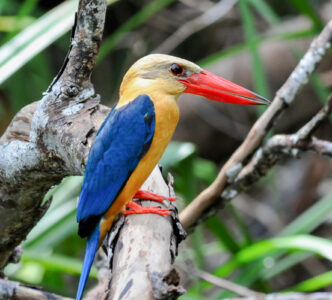
- PHOTO PROVIDED A stork-billed kingfisher is shown in this photo by John Rollins which won an Audubon Photography Award in 2015.
-
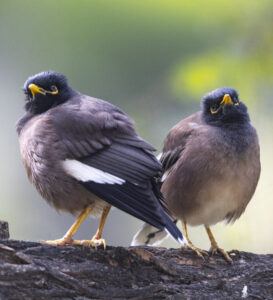
- PHOTO PROVIDED Common mynas are shown in this photo by Joshua Pelta Heller which won an Audubon Photography Award in 2025.
-
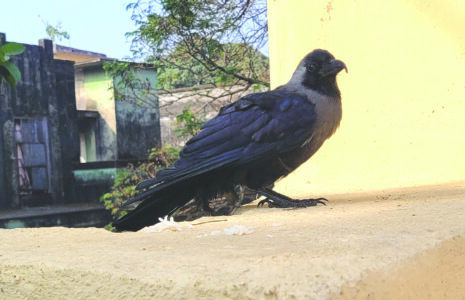
- PHOTO PROVIDED A house crow is shown plotting to steal food from wedding guests in this photo by Jules Cramer Le in December of 2025.
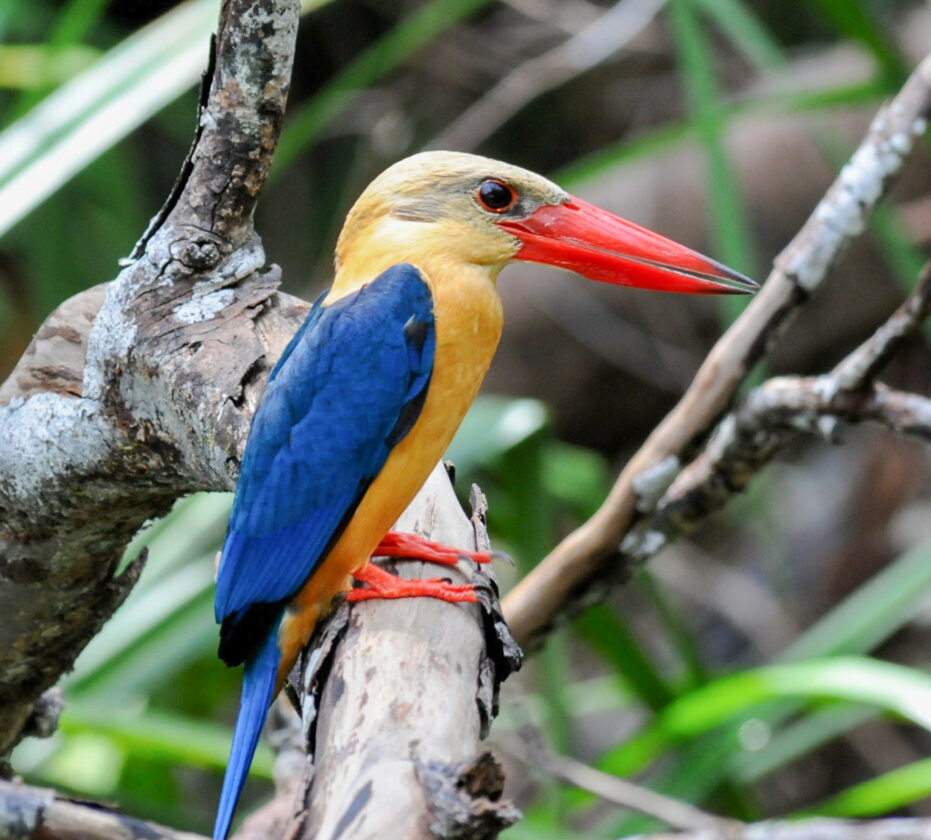
PHOTO PROVIDED A stork-billed kingfisher is shown in this photo by John Rollins which won an Audubon Photography Award in 2015.
As a birder in New Jersey, I rarely have to travel outside the boundaries of my state to see amazing birds. Bird habitats of all kinds are within a two-hour drive of my home in central New Jersey.
I have a network of local friends and contacts who let me know when something cool is sighted, allowing me to get up and chase at a moment’s notice.
But this December I had the opportunity to do something very different while attending my sister’s wedding in West Bengal, a state in northeastern India. As we prepared to head out, I have to confess I was almost more excited to whip out my binoculars on the streets of Kolkata than to see my baby sister get married.
One of the pleasures of birding somewhere new is that everything is exciting. Here, it’s possible to get jaded by the common birds — I don’t jump for joy when I see a red-bellied woodpecker or white-throated sparrow. In Kolkata, the house crows and mynas that were everywhere had me rapt. House crows, unlike our American crows, have a grey hood of feathers that makes them distinct, and they were constantly flying through the streets fussing and stealing garbage.
One even tried to steal my wife’s dessert at the rooftop wedding reception. The common mynas are in the same family as our local starlings, and they made a similar variety of weird chirps and clicks as they squabbled with each other or perched on fences to keep an eye on things. I’m sure that birders in West Bengal don’t find these birds interesting at all, but for me they were brand-new life birds.
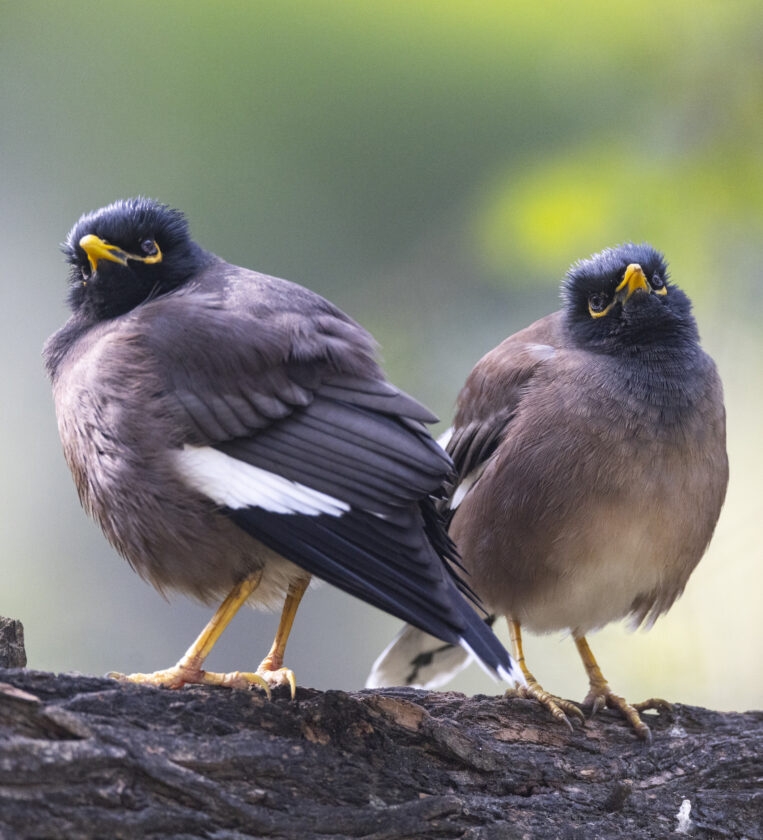
PHOTO PROVIDED Common mynas are shown in this photo by Joshua Pelta Heller which won an Audubon Photography Award in 2025.
My sister, knowing the kind of fanatic I am, picked a guesthouse that was only a few blocks away from a major city park: Rabindra Sarovar. That meant that every morning before breakfast I spent a few hours racking up new and gorgeous birds: rufous treepies, a kind of magpie with an incredibly long tail; lineated barbets, a weird green bird that looks like it’s coming off a three-day bender; and jungle babblers, which are an unassuming grey-brown but more than have the personality to make up for it.
The park includes a huge lake where painted storks and Indian cormorants nest, and bronze-winged jacanas walked across lily pads on their huge, splayed feet. The trees were full of yellow-footed green pigeons, which look like mangos when they perch, smooth and round and clustered.
We spent a day outside the city traveling to the border of West Bengal and Bangladesh. The rice fields were populated by black drongos, one of my top birds to see on the trip. The drongo is a beautiful black songbird with a long fluttering tail, which helps keep the rice insect-free.
We also saw four different kingfisher species: an azure and white collared kingfisher, red-breasted common kingfisher, the striking red and teal white-throated kingfisher — which doesn’t just eat fish but hunts grasshoppers and other insects, allowing it to thrive in both dry and watery habitats — and the stork-billed kingfisher, which, as its name suggests, has an outsize pink bill.
The crop fields were full of paddyfield pipits and oriental skylarks, and out in the ditches eastern cattle-egrets and red-wattled lapwings stalked. One of my favorite sightings was in a wet area where an Asian open-bill pair was joined by Asian green bee-eaters and both tri-colored and scaly-breasted munia, tiny finch-like birds that are often sold as pets in the United States.
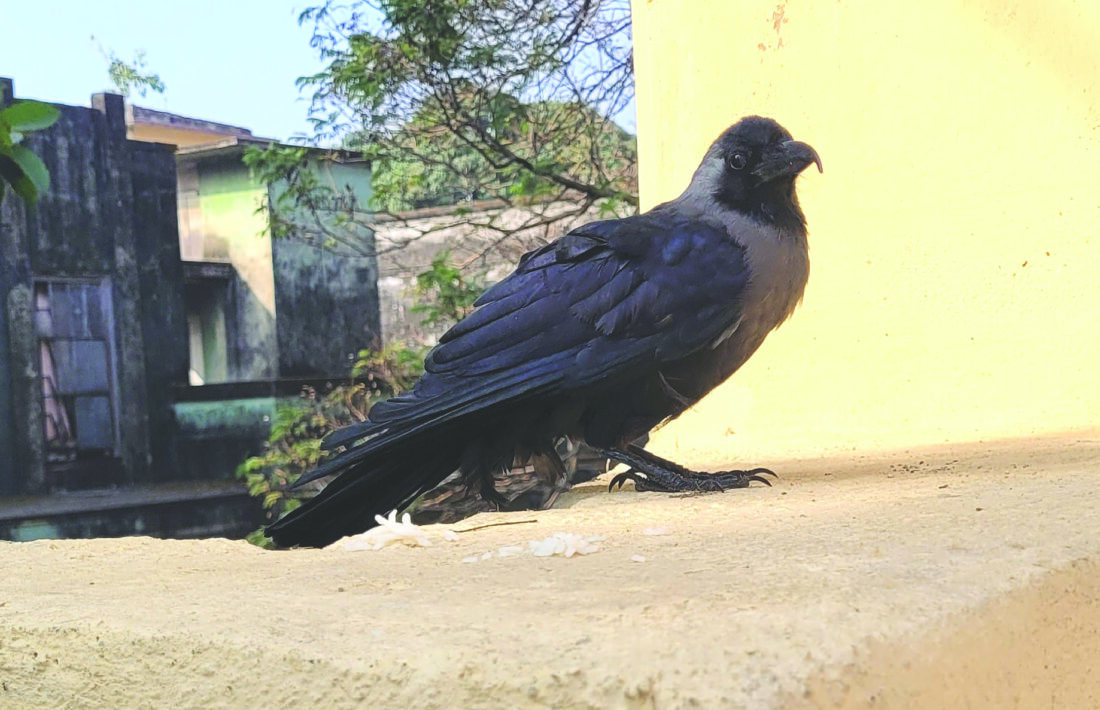
PHOTO PROVIDED A house crow is shown plotting to steal food from wedding guests in this photo by Jules Cramer Le in December of 2025.
On our last few days in India, we visited the Kolkata Botanical Gardens where we spotted red-breasted parakeets, a parakeet whose defining feature is the big red bill that makes it look like a muppet. My sister took us to an area called Shyamkhola, and as we wandered through paths in the bamboo, we were serenaded by an elegant white-throated fantail.
Before we caught our plane home, we did one last tour of Rabindra Sarovar and were lucky enough to see one of the birds I’d been hoping for the whole trip — a verditer flycatcher. Unlike North America’s largely yellowish-brownish-greyish flycatcher species, it is a brilliant, shocking blue.
It was a truly stunning way to end an amazing trip.
Now that I’m back, I have a new appreciation for my common birds. Every day, people visit New Jersey from all over the world. For them our red-breasted American robins and brilliant blue jays are brand-new birds, worth getting excited about.
That’s the joy of birding.
Jules Cramer-Le is a transplanted Snyder County resident who found her love of birds and birding in New Jersey. She is in her fifth year as a serious birder, a passion she pursues in between her profession as social worker and volunteering for an animal rescue organization. Cramer-Le is a member of New Jersey Audubon.
Outdoors
Reflections in Nature: Chimney swift birds are one of Pennsylvania’s latest migrators
Last week Stan Strong of Canton stopped at our home to give me a dead chimney swift, which was in a mummified ...
Outdoor community calendar for Week of March 31
JOY TO THE EARTH FAMILY FUN WHERE: Selinsgrove Commons (2 N. Market Street, Selinsgrove) WHEN: Saturday, April ...
Birding out of country allows for unique sightings
What do northern pike eat?
As predators pike are opportunistic feeders, taking a bite at anything that presents itself. That being said, they ...
Time of year for antler shed gathering