
Reflections in Nature: Our rocks and mountains can tell an interesting story
Last fall when our grandson Nate visited, he showed interest in Mary Alice’s stone collection. He had recently graduated from college with a degree in earth science. Of course, grandma asked Nate if he would like to have some of the stones.
When Nate left to go home he had a box of unusual stones. Perhaps some people might think collecting stones is a strange hobby, however I know of many people that collect stones from different places they have visited.
When on a vacation Mary Alice would always look for one special stone to take home. The stone treasures would be placed in her flower gardens. She often quizzes me as to where a certain stone came from. Of course I never remember, but I would listen to her tell me all about where the stone came from.
In the future, a geologist will be puzzled when he finds rocks from the west here in the east.
Transporting stones is nothing new. Over 300 years ago, Native Americans transported stones up and down the East Coast. In Pennsylvania, we have a stone called Jasper, which the Native Americans mined from pits near the present town of Vera Cruz which is located south of Allentown, where more than 100 jasper pits were discovered in that area. Jasper is a type of quartz, which comes in shades of red, yellow and brown. This stone was ideal for the Native Americans to make arrowheads, spear tips and axes.
What is the difference between a rock and a stone? Webster’s definition of a rock is a large outstanding natural mass of stone; a natural mass of one or more minerals, consolidated or loose. Our word rock is believed to go back to the old French word Rocque, which means stone. Our word stone comes from the Germanic word stein, which means stiffness or solidity and also the source of the Greek word stia, which means pebble.
Webster states a stone is a detached piece of rock.
Geologists study rocks to learn about the Earth’s past. Plants and animals that lived on earth millions of years ago leave fossils, which can be the remains of the durable part of a plant or animal. For example: wood, teeth, shells or bones. Fossils can also be an imprint of a footprint of an animal such as a dinosaur.
Fossils, which are usually found in sedimentary rocks, are a type of rock that make up three-quarters of the land surface of the Earth. Most commonly, the sediments are from rocks that were either ground down or eroded by wind and water.
An Earth science teacher got me hooked on both looking for and collecting fossils, a collection that I have given away. In Bradford County, these fossils are abundant. The many stone walls that were erected by early farmers while clearing their fields for crops will reveal trilobites. Now the American Indians were not the only ones to transport rocks from one area to another, nature also moved rocks from one area to another.
The Appalachian Mountains that run through Pennsylvania tell an interesting story about this area. At one time, the Appalachians — which are now old mountains worn down by wind and water — were as lofty and as mighty as the Rocky Mountains. During what is called the Permian Period, the Appalachians were born as the Earth had a great folding, and the great basin that covered most of Pennsylvania was lifted to a great height.
However, erosion attacked the mountains and they soon became a flat featureless plain, which stood only a few feet above sea level.
Then, another force began to operate on the Appalachians. This time instead of being folded, the area was lifted vertically. The higher the mountains were lifted the more the streams and rivers gnawed at the rocks.
The area where the Susquehanna and Delaware Rivers cut through the mountains are known as water gaps. If you travel on Route 15 south from Sunbury to Harrisburg, you are going through a water gap. Look at the mountains on both sides of the river, and you’ll notice that they are the same height. If the river is low, rows of rocks that run from one mountain to the other are visible, allowing us to see how the river wore away the mountains.
You can see how the rocks stand almost vertically, especially where the highway department cut through the mountains to build the highway.
The last period to attack the Appalachians was the Pleistocene epoch (the ice age). The last two advances of the ice glaciers entered Northern Pennsylvania, pushing rocks and stones ahead. Each time the glacier retreated, the melting ice deposited a mantle of rocks that were picked up and deposited hundreds of miles away.
Along with many different varieties and sizes of rocks, these glacial deposits also contain clay and sand.
The North Central part of the state, including Bradford County and into Northeastern Pennsylvania, is known as the Allegheny Plateau. This plateau is a highland that has been eroded by streams, which have created deep valleys and a hilly topography. This area has many lakes, swamps, peat bogs and extensive deposits of loose sediments.
Unlike the rocks in the mountains to our south, the rocks in this area are primarily laying horizontally because these rolling hills were formed by the water of the receding glaciers. Since moving water tends to separate things, gravel banks will produce items of the same size.
On your next venture into the mountains and hills of Pennsylvania, take the time to look closely at the rocks and mountains. They can tell you a very interesting story.
Bill Bower is a retired Pennsylvania Game Commission Wildlife Officer. Read his blog and listen to his podcasts on the outdoors at www.onemaningreen.com.
Outdoors
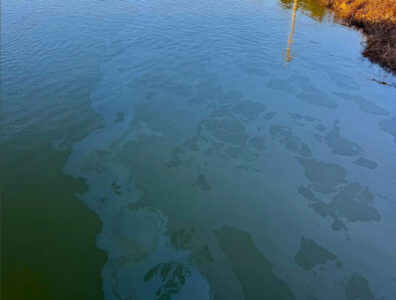
DEP provides update on oily sheen report on Susquehanna’s West Branch near Clearfield
Outdoors community calendar for week of March 24
VIRTUAL CCC OF CLINTON COUNTY WHERE: Virtually online via Microsoft Teams WHEN: Tuesday, March 24 from ...
Reflections in Nature: Our rocks and mountains can tell an interesting story
Last fall when our grandson Nate visited, he showed interest in Mary Alice’s stone collection. He had recently ...
Pennsylvania Game Commission releases its deer harvest estimates
HARRISBURG — Pennsylvania hunters harvested about 6% more deer in the 2025-26 hunting seasons than they did the ...

Migration season on Susquehanna River is here
The importance of a good leader when it comes to fishing
From the boardroom to the battlefield, the leader can be the difference between winning and losing. The same can be ...