Reflections in Nature: In Pennsylvania we have two types of cuckoo birds
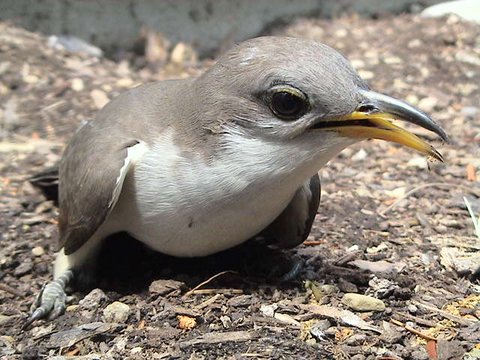
PHOTO PROVIDED Shown is a cuckoo. In Pennsylvania, we have two cuckoos: the black-billed cuckoo and the yellow-billed cuckoo.
Many years ago Mary Alice, our daughter Holly and I went to Belgium to meet our first grandchild. We spent a month with the family and toured several countries. While in Switzerland, we purchased a cuckoo clock made in Germany’s Black Forest.
The hour was known by the number of cuckoos. A tiny wooden band played a tune while going in a circle. About a year ago one of the weights was pulled too hard and we were unable to lower the weight. A cuckoo was still played on the hour.
Mary Alice has wanted me to take the clock to a repair man to have it fixed but we have been unable to find anyone able to do so. I decided to see what I could do. Once I began taking the clock apart I knew I had no idea what to do, and I could not put the clock back to how it was.
Now the clock does not work at all. Does anyone know why these beautifully carved clocks are known as cuckoo clocks?
Ten years ago Scott Crandall of Mifflinburg sent me a picture of a young yellow-billed cuckoo sitting in its nest. After Crandall walked away from the nest, he noticed a crow flying overhead. Crandall was able to snap a photo of the crow, and when checking the photo he was surprised to find the crow had a young bird in its beak. He emailed the photo to me with the caption, “The crow flew over the cuckoo’s nest.”
In Pennsylvania, we have two cuckoos: the black-billed cuckoo and the yellow-billed cuckoo, with the black-billed being the most common species here in northern Pennsylvania. They belong to the Cuculidae family, which has 127 species including the roadrunner. The cuckoos are not classified as songbirds because of their different structure of having two toes pointed forward and two toes pointed backward.
The name of cuckoo originally applied to the common cuckoo of Europe. The cuckoos are most noted for their cuckoo call, from which the well-known cuckoo clock’s calling has been patterned after.
The black-billed cuckoo’s scientific name is Coccyzus erythropthalmus. The genus name comes from the Greek word kokkyzein, meaning to call cuckoo. The species name comes from two Greek words: eruthros meaning red and ophthalmic meaning the eye. The black-billed cuckoo has a red ring around its eye.
Both the yellow-billed and the black-billed are slender and fairly large birds, with rounded wings, long tails and down-curved bills. The yellow-billed has prominent white spots on the underside of its tail.
The black-billed cuckoos migration is done mostly at night and will not appear in Pennsylvania until May. They will leave Pennsylvania in September to spend their winters in South America. The black-billed cuckoo, which is on the 2014 State of the Birds Watch List Species, is most in danger of extinction without significant conservation action. This species is also listed as a high priority concern on the Audubon Watch List.
Since caterpillars are the main prey of the black-billed cuckoos they can be susceptible to pesticide use.
The black-billed cuckoo’s nest is loosely built with twigs and lined with catkins, plant fibers, dry leaves and pine needles. The nest is generally built six feet off the ground amidst thick foliage of both deciduous and evergreen trees. Since this cuckoo is a late breeder, the young usually do not hatch until June when there is enough insect food available.
The female will lay two or three greenish-blue eggs, which will hatch within two weeks. Both the male and female take turns at incubating the eggs. The young will begin to fly at approximately three weeks after hatching.
The black-billed cuckoos have been observed laying eggs in nests of the yellow-billed cuckoos, yellow warblers, chipping sparrows, cardinals, gray catbirds and wood thrushes. Ornithologists speculate that cuckoos often become ready to lay eggs before their nests have been finished, which means they must quickly find places to deposit their eggs. The yellow-billed cuckoo also uses at least eleven different species as hosts, most frequently the robin, catbird and wood thrush.
The yellow-billed cuckoo is more of a southern bird than the black-billed cuckoo, however ranges do overlap. During the last 50 years the yellow-billed cuckoo has expanded its breeding range northward into Pennsylvania, and today, the yellow-billed cuckoo is more widespread, within the state, than the black-billed cuckoo.
Both species of cuckoos eat great numbers of hairy caterpillars. In one study, 325 hairy caterpillars were found in the stomach of a yellow-billed cuckoo. The call of the yellow-billed cuckoo is not as musical as the black-billed cuckoo. The folk name of rain crow was given to the yellow-billed cuckoo because it was believed that this cuckoo began calling just before rain began.
The cuckoos are more likely to be heard than seen.
It is hard to believe that these two birds are not related to our songbirds but are related to the roadrunner, whose scientific name means ground cuckoo. The roadrunner’s common name came from its habit of running ahead of horse-drawn vehicles.
The cuckoo bird sound that announces each hour from authentic Black Forest clocks did not appear by accident or arbitrary choice. This distinctive call connects directly to a real bird native to the forests of Europe, particularly in the German regions where traditional clock making flourished.
Franz Anton Ketterer — a clockmaker from the Black Forest Village of Schonwald –receives credit for developing the mechanism that would define cuckoo clocks. Drawing inspiration from church organ bellows, Ketterer created a system that could produce the distinctive two-note call mechanically.
The cuckoo call is an elegantly simple design that has remained essentially unchanged for nearly three centuries.
Does anyone know someone who could fix Mary Alice’s cuckoo clock? This would surely get me out of the dog house.
Bill Bower is a retired Pennsylvania Game Commission Wildlife Officer. Read his blog and listen to his podcasts on the outdoors at www.onemaningreen.com.
Outdoors
Program on effective fly patterns compared to what trout tend to eat
We tie a fly to our leader and proceed to fish and that’s OK. But have you ever been curious enough to wonder how ...
Reflections in Nature: In Pennsylvania we have two types of cuckoo birds
Outdoor community calendar for Week of April 7
AUDUBON EVENT WHERE: Rose Valley Lake or Williamsport Water Authority WHEN: Saturday, April 11 at 8 ...
SGP Mini-Grant Program awards $40,000 to various projects
LEWISBURG — The Susquehanna Greenway Partnership is pleased to announce the recipients of the 2025-2026 ...
What do northern pike eat?
As predators pike are opportunistic feeders, taking a bite at anything that presents itself. That being said, they ...