
Fishing at night for monster trout is best time to do so
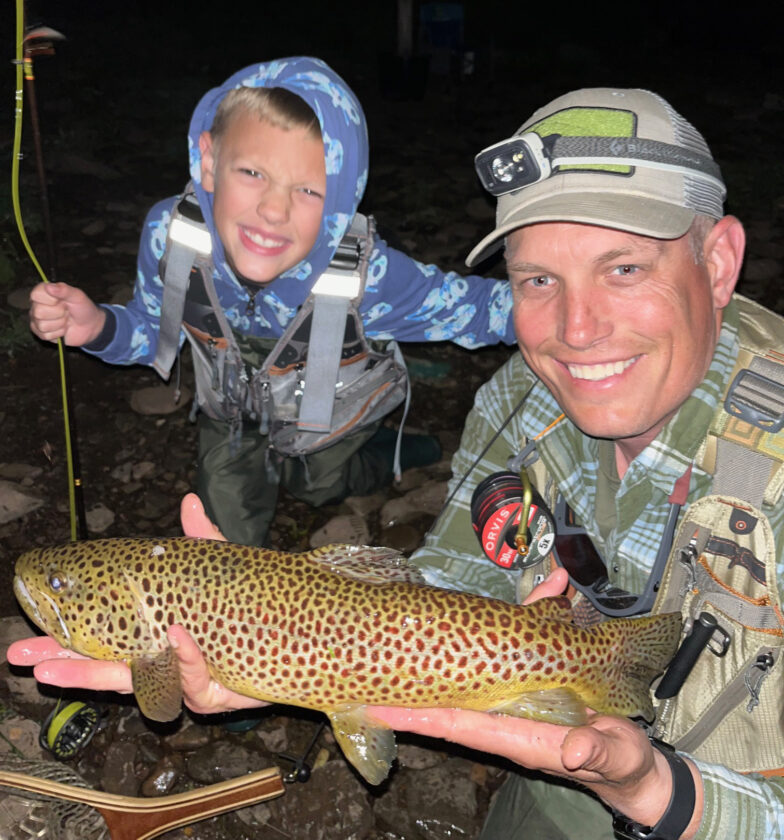
PHOTO PROVIDED Bob McCullough’s son-in-law Kenny Baker poses with his grandson Kayden Baker, on Pine Creek in this photo by Robert McClullough III.
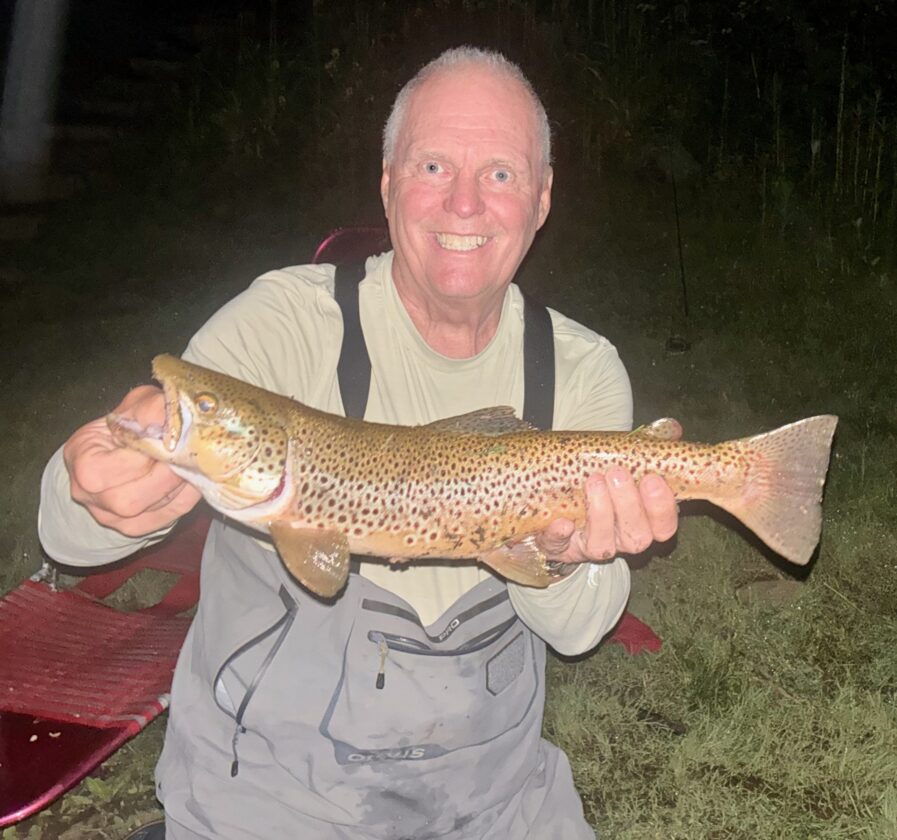
PHOTO PROVIDED Bobby McCullough is shown with a brown trout he caught at night in this photo by Robert McCullough III.
PHOTO PROVIDED Bob McCullough’s son-in-law Kenny Baker poses with his grandson Kayden Baker, on Pine Creek in this photo by Robert McClullough III.
PHOTO PROVIDED Bobby McCullough is shown with a brown trout he caught at night in this photo by Robert McCullough III.
Trending
Big brown trout, longer than your forearm, don't get that way by being easy to catch. For the most part, they sulk on the bottom of deep pools, in undercuts or under snags during the day, out of the reach of predators.
They might venture out from their lairs to feed on an overcast day for a hatch of big mayflies, or in cloudy water after a rainstorm. Night is the right time, though, when they can safely patrol the shallows and calm bank waters, terrorizing baitfish, crayfish and smaller trout.
Plus you are likely to have the stream to yourself -- other than bats, raccoons, and other critters.
I haven't night fished much other than occasionally extending my evening fishing for an hour or two, but Bobby McCullough III has put in the time to learn this deadly technique. McCullough served as a Pennsylvania Fish and Boat Commission deputy fish warden for 17 years. Now retired after a long and successful career in the Lycoming County criminal justice system, he enjoys fly fishing local trout streams on an almost daily basis.
McCullough generously shared tips about "fishing when nobody else wants to" at a meeting of the Susquehanna Chapter of Trout Unlimited.
McCullough mainly night fishes on Pine, Lycoming or Loyalsock creeks. First, you need to find a large, deep pool with suitable big fish habitat, preferably with a cool water spring or tributary. Familiarize yourself with it during the day, because you will be wading it at night with minimal use of a flashlight.
McCullough recommends night fishing from May to September between the hours of 10 p.m. through 4 a.m., with June being the prime month. On small streams, he recommends not moving between pools until after midnight to allow the fish to settle in to their feeding rhythms.
A hot humid night between 65-80 degrees is best for night fly action, with water temperatures below 65 -- sometimes a difficult to find combination.
Over 65 years of night fishing has ingrained that the best nights are the dark of the moon, with only the ambient light from stars to go by. He had great fishing recently from 10 p.m. until the half moon rose at 1:30 a.m., including a hog 24 1/4 inch brown trout. Then, it went dead.
Brown trout must sense that great blue herons, also with excellent night vision, are active under the light of the moon, being able to distinguish the shapes of their prey in the water.
He recommends absolutely no flashlights as they will mess up your night vision and spook the fish. I have read about using a dim red headlamp, focused only on the task at hand, such as tying on a fly. You'll want to carry a bright flashlight in case of emergency and to find your way back to your vehicle. You may also want to shine the light through the pool when you're done to see if there really were any big trout.
He uses a stout 9-10 foot fly rod with a 6-8 weight line and eight-pound test tippet, the better to reel in the big ones. Trout aren't leader shy at night. McCullough learned to tie flies from SCTU members Bill O'Connor, Al Troth and Dick Lever. He swings a trio of traditional night flies such as the Montreal and light cahill, with a royal coachman always in the middle.
Grasshoppers and crickets also work well at night. He believes that the professor pattern -- with its yellow body -- resembles a hopper. Most casts are short, only a rod length to one-and-a-half times rod length. He says that dry flies are effective at dusk, but he uses wet flies at night.
Domenick Swentosky, from www.troutbitten.com, opines "trout eat flies better at the surface or shallow (at night) because they need to see the silhouette against the sky." He recommends trying large flies like a mouse or articulated streamer that push a lot of water, felt by cruising browns with their lateral lines.
I remember night fishing with McCullough dad, Mac McCullough, Jr., a renowned conservationist responsible for the cleanup of Babb Creek and the resurgence of hatches on Pine Creek. Mac was practically blind, relying on his other sharpened senses. Night fishing suited him.
He tied flies on by holding the eye of the fly on the tip of his tongue and threading the leader through it. We made our way down the bank to a pool on Cedar Run. He directed me to take two steps out, then three steps forward until "a hemlock brushed my cheek," and cast.
I immediately felt the tug of a foot long brownie, a dink by night fishing standards, but I'll take it.
Mac first took his son night fishing when he only 3 or 4 years old. He'd roll a sleeping bag out on the bank and call to him "son, they're biting, get up." McCullough has taken his grandchildren -- an experience they will remember for the rest of their lives. It has been many years since McCullough has run into another night fisherman on the stream.
He thinks many people are afraid of the dark. Swentosky writes about overcoming the voice in his mind telling him to go home. There will be fishless nights, especially as you learn, but the excitement of a leviathan trout exploding on your fly at night is worth the effort.