
Get your kids outdoors this summer
Trending
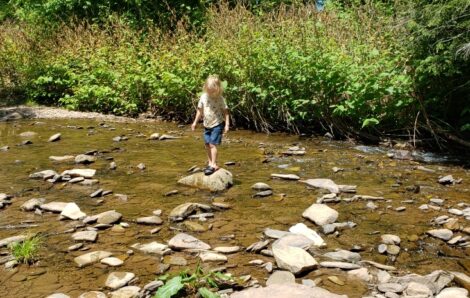
A very valuable gift you can give your kids, especially this time of year, is to deeply meet them through nature.
Of course the most obvious benefits are to physical health. Taking a hike or riding a bike benefit physical health, as opposed to screen time. Numerous less obvious benefits are also being consistently documented. Nature activities improve cognitive functioning, such as learning to identify birds, flowers and trees, and mood, such as taking in the magic of nature. This builds confidence and support kids to practice decision-making:
Kids can choose outdoor activities and how to do them in the less structured environment of nature. Unstructured nature activities also support creativity and imagination since, in nature, kids can think more freely and design their own activities.
Less obvious benefits include kids learning about cause and effect and responsibility. Children learn that pulling a plant up by its roots will kill it, or that shooting a bird may contribute to that species being in decline. Finally, consider that in nature we can use every one of our senses. See the Child Mind Institute website for more research findings.
In addition, in nature parents/guardians have opportunities to make deep connections or contact with their kids. Real contact is actually about being met.. In other words, the child feels that the adult meets him or her personally.
A simple nature activity is to identify various leaves or flowers during a hike, or even while walking along your city street. Leaf samples can then be taped to a board later and identified. Today's apps -- such as PlantNet -- allow parents to do such identification immediately at the plant's site. However, such documentation isn't the same as using a nature walk to meet or be attuned to your child.
Attunement more likely results from the types of activities listed below.
After gathering some examples of different leaves, ask your child which one he likes best and why. Then share your own answers. Ask which flower color or pattern makes the child feel the happiest or saddest. Or share together how it felt to be on a hike in dense woods. is it awesome? Scary?.
These ideas are examples of ways to use the medium of nature to make real contact with your child.
A key to success of these types of activities is to ask more questions, as exemplified in the previous paragraphs. But then also give the child plenty of time to reflect and articulate a clear thought. My experience with kids is that when a child says "I don't know," but then the adult allows plenty of silent thinking time for the child, she will likely arrive at a clear answer.
It's the same for adults.
The educational evidence is also clear that the more parents ask questions and wait for answers, the more kids' self-confidence to speak their truth is being developed. Kids who have had fewer opportunities at home to learn about and then express what they think and feel perform less well in school.
Nature presents outstanding opportunities to slow down and learn many things -- actually for all of us.