
Voices on proposed Wildlife Action Plan can be heard still
Trending
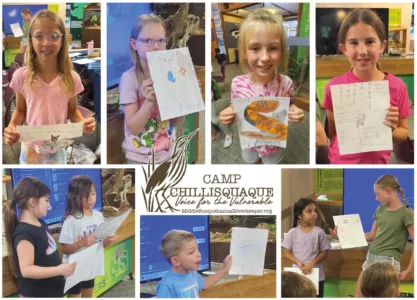
It didn't take long for middle-school students at each of four Camp Chillisquaque day camp programs to catch on.
Early in each program day, intern Maggie Yonkin would share a PowerPoint overview of endangered and threatened species in Pennsylvania. Each slide offered a quick overview of the species and various reasons it was struggling to survive in our state.
In two words, the least common denominator that could be tied to most every species' decline: Habitat loss.
The American bittern depends on the specialized marshes and wetlands for which it is perfectly designed to thrive in -- but those habitats have declined by more than 50%.
The piping plover, common tern and other beach-dwellers are struggling as their sandy nest sites are over-run by tourists and other threats.
Grassland species such as the Northern harrier, sedge wren and dickcissel all have drastically declined as changes in agricultural practices led to earlier haying of fields in which they are still trying to raise young.
Sensitive waterway species, such as the Eastern hellbender, has seen as much as 95% of its required clean water and sediment-free habitat lost across the Susquehanna River watershed, according to local hellbender expert Dr. Peter Petokas.
Despite these and numerous other examples, we are at a critical juncture for our struggling species. Habitat is being threatened by changing policies and politics. Data center proposals are popping up across regions that hold key habitat for these species.
In the midst of all this, our state officials are looking to put out the next 10-year Statewide Wildlife Action Plan. This plan is an extensive review of key species of conservation need, addressing topics like statewide protections and efforts to be made over the next 10 years to help keep the species from disappearing completely.
The public is invited to offer feedback on the plan through Saturday, Sept. 19. This is a major opportunity to provide an extra voice for vulnerable species that may be lacking.
Of course, it is extensive and overwhelming to take it all in. There is an overview on public feedback and participation in the Wildlife Action Plan as well as instructions and the actual feedback form itself.
As far as specific species that have actual plans in place for the upcoming decade are accessible by species type, in which you can access directly below:
• Mammals
• Birds
• Amphibians and Reptiles
• Aquatic and Terrestrial Invertebrates
• Fishes
It is best to make sure comments you share are specific, avoiding broad topics or opinions that may not be grounded in factual information that helps drive the next step of action.
Any questions or requests for help can be sent to midsusriver@gmail.com.
The Middle Susquehanna Riverkeeper Association serves an 11,000-square-mile watershed of the Susquehanna River, including Sullivan, Lycoming, Clinton, Union and Northumberland counties. Read more at www.middlesusquehannariverkeeper.org.