
Merger unlikely between game, fish commissions
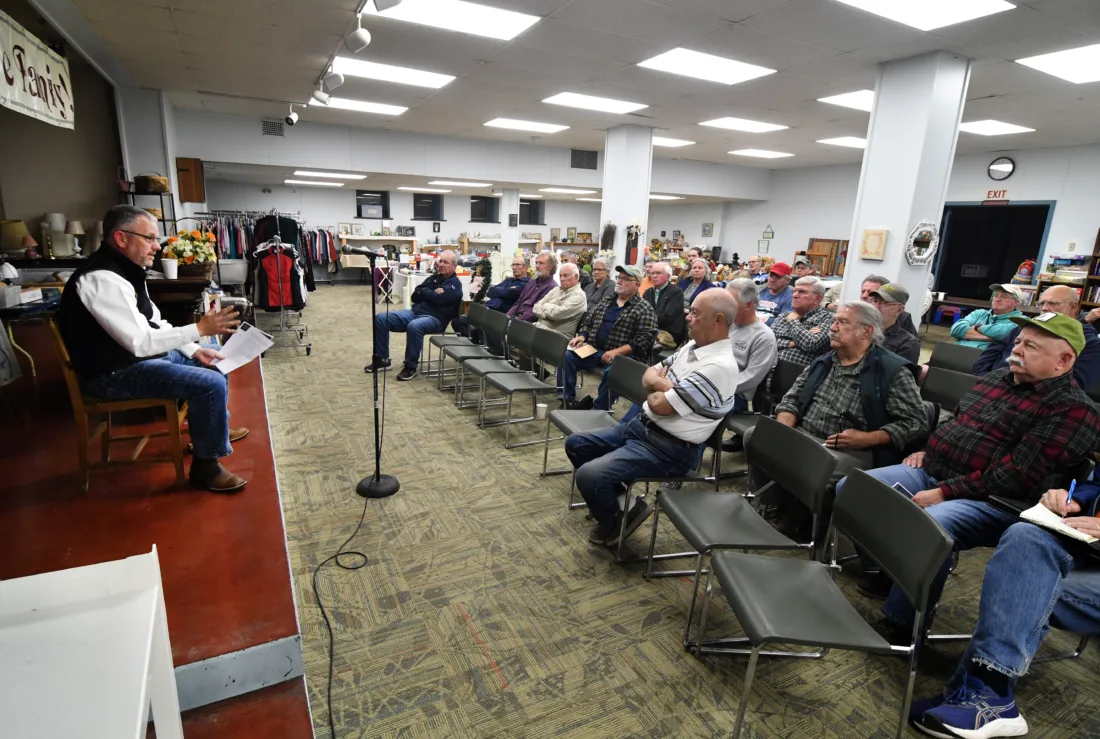
MARK NANCE/Sun-Gazette Correspondent PA Game Commission Deputy Executive Director Dave Gustafson, left, addresses issues of outdoorsmen during the Susquehanna Chapter of Trout Unlimited's monthly meeting at Covenant Presbyterian Church Wednesday.
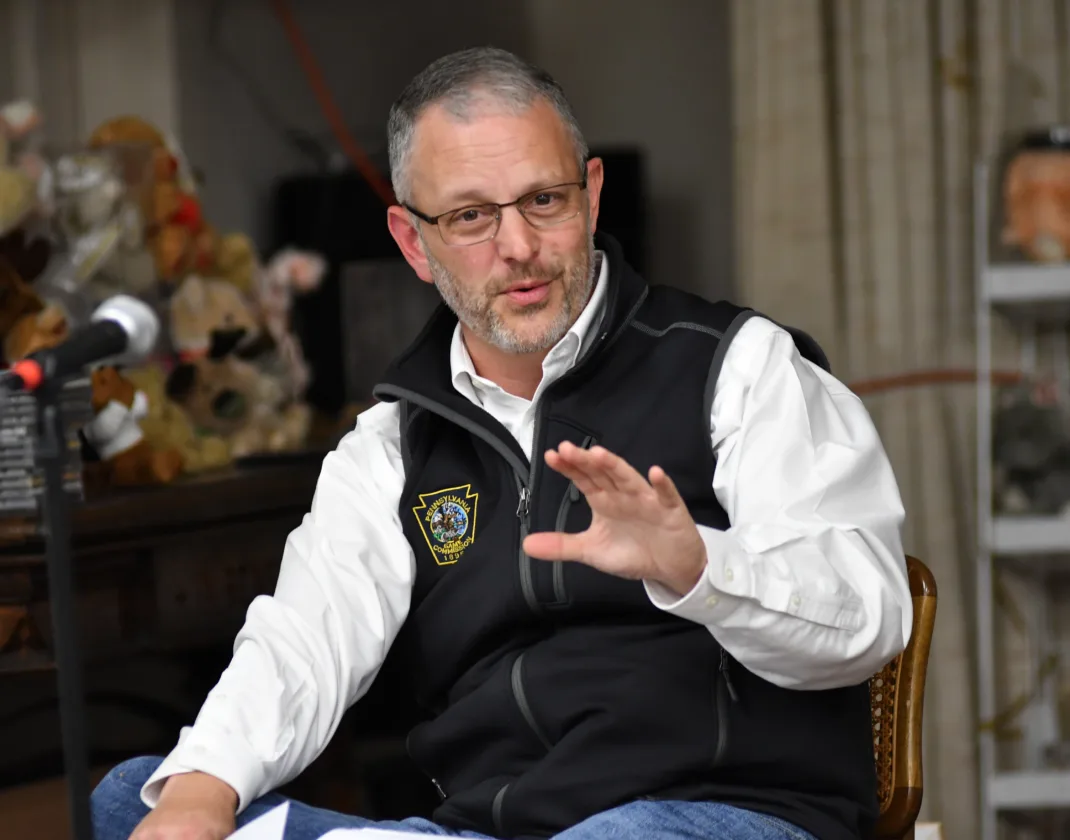
MARK NANCE/Sun-Gazette Correspondent PA Game Commission Deputy Executive Director Dave Gustafson, addresses issues of outdoorsmen during the Susquehanna Chapter of Trout Unlimited's monthly meeting at Covenant Presbyterian Church Wednesday.
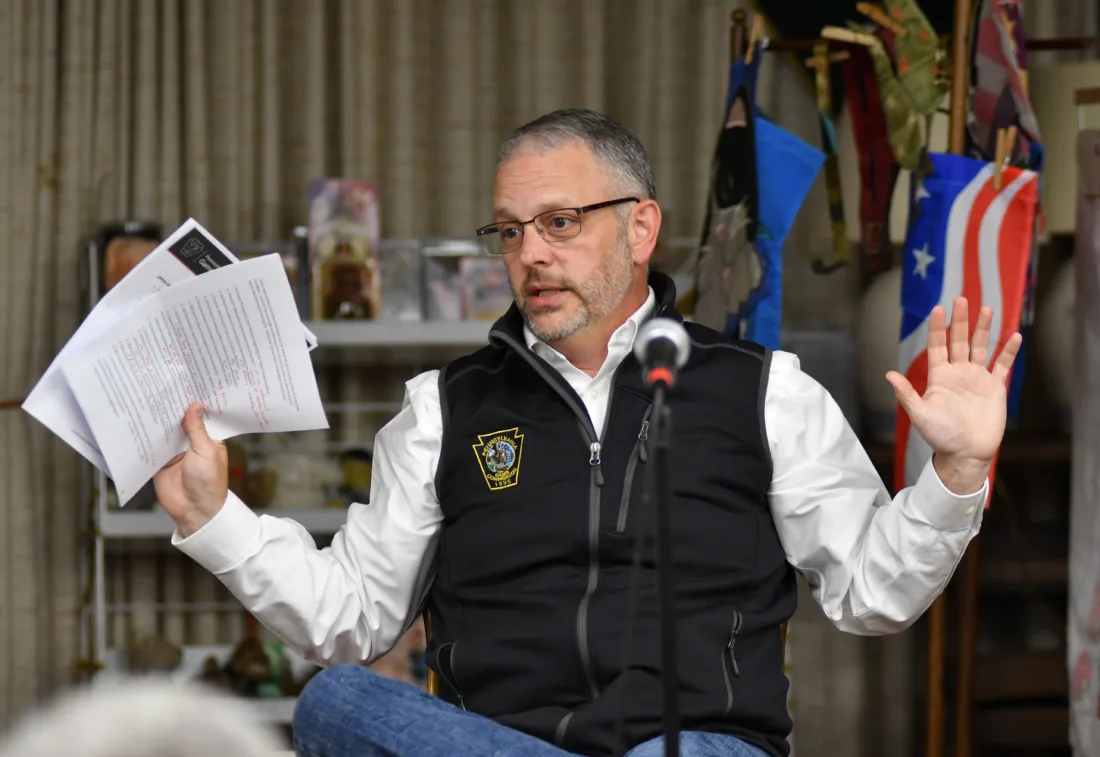
MARK NANCE/Sun-Gazette Correspondent PA Game Commission Deputy Executive Director Dave Gustafson, addresses issues of outdoorsmen during the Susquehanna Chapter of Trout Unlimited's monthly meeting at Covenant Presbyterian Church Wednesday.
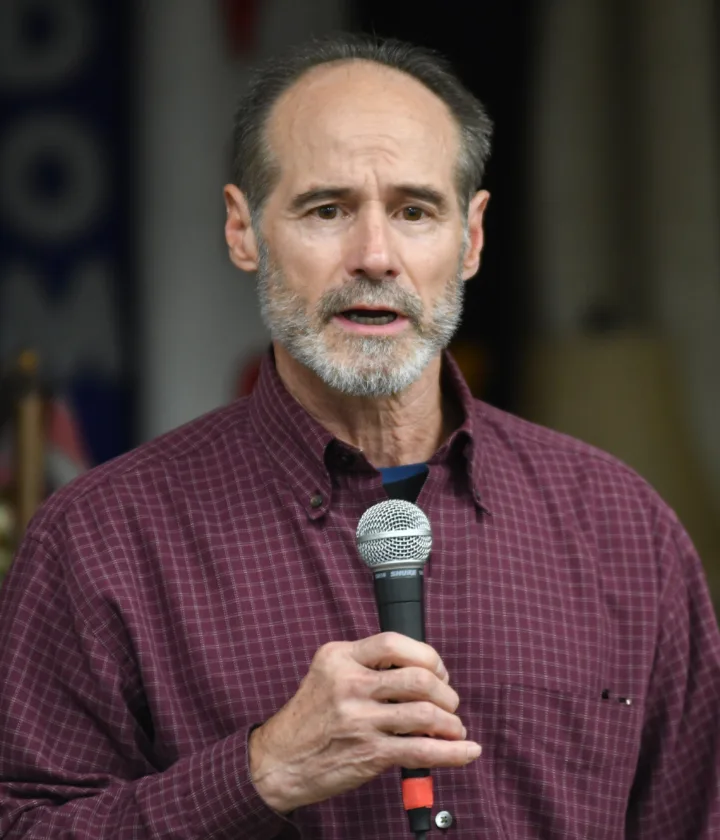
MARK NANCE/Sun-Gazette Correspondent Susquehanna Chapter of Trout Unlimited President Stephen Martin addresses a full room before introducing the guest speaker of PA Game Commission Deputy Executive Director Dave Gustafson during the monthly meeting at Covenant Presbyterian Church Wednesday.
MARK NANCE/Sun-Gazette Correspondent PA Game Commission Deputy Executive Director Dave Gustafson, left, addresses issues of outdoorsmen during the Susquehanna Chapter of Trout Unlimited's monthly meeting at Covenant Presbyterian Church Wednesday.
MARK NANCE/Sun-Gazette Correspondent PA Game Commission Deputy Executive Director Dave Gustafson, addresses issues of outdoorsmen during the Susquehanna Chapter of Trout Unlimited's monthly meeting at Covenant Presbyterian Church Wednesday.
MARK NANCE/Sun-Gazette Correspondent PA Game Commission Deputy Executive Director Dave Gustafson, addresses issues of outdoorsmen during the Susquehanna Chapter of Trout Unlimited's monthly meeting at Covenant Presbyterian Church Wednesday.
MARK NANCE/Sun-Gazette Correspondent Susquehanna Chapter of Trout Unlimited President Stephen Martin addresses a full room before introducing the guest speaker of PA Game Commission Deputy Executive Director Dave Gustafson during the monthly meeting at Covenant Presbyterian Church Wednesday.
Trending
A state Game Commission official told Susquehanna Trout Unlimited members that his organization will not join with the Fish and Boat Commission to form a single entity.
Dave Gustafson, deputy executive director, spoke to that issue, conservation issues and related topics during the October Trout Unlimited meeting.
Gustafson pointed to a Wildlife Management Institute research study that considered the sustainability of the two organizations. The study concluded it did not recommend a merger, a position echoed by Gustafson.
"We are not looking at a merger," he said.
However, he conceded that changes could be forthcoming, including consolidation of law enforcement efforts. Any changes, he said, would have to go through the state legislature but only after the issue is further studied.
"None of this happening anytime soon," he said. "I think there is recognition that something should be done."
He noted that Pennsylvania is the only state that doesn't operate its game and fish departments separately.
Both the Game Commission and Fish and Boat Commission are independently funded rather than through tax revenues.
Gustafson talked about the Game Commission decision to end the deputy game warden program. Deputy wardens have been comprised of volunteers and part-time employees who helped with law enforcement in the field.
However, the program simply is not sustainable given the technology that has greatly enhanced communications to aid law enforcement.
"We can communicate with game wardens almost instantaneously," he said. "We have technology you can't imagine."
Deputy wardens, Gustafson said, did good work with the resources they had, but were hard to recruit and often received just the minimum of training.
"The deputy program was on a steady decline," he said.
Ending the deputy warden program, he said, comes in the aftermath of a state Supreme Court ruling that warrantless searches in so-called open fields by state game officials are unconstitutional.
That court decision likely will mean new questions arising over law enforcement and private property rights.
"It's still kind of murky," Gustafson said. "It's going to be an evolution."
Overall, he said the court ruling could be a way of strengthening relationships between game wardens and local communities.
Gustafson briefly addressed efforts to mitigate acid mine drainage at streams with naturally reproducing trout populations at State Game Lands 75 near English Center. The game lands, he noted, were leased to Pennsylvania General Energy Co. for oil and gas extraction.
In exchange for extraction rights, PGE conveyed major land tracts in Warren and Cambria counties to the Game Commission.
In addition, PGE was approved by the Game Commission to extract oil and gas at State Game Lands 134 in Plunketts Creek and Gamble townships. The agreement includes PGE transferring 3,931 acres in Elk County to establish State Game Land 338.
Gustafson addressed movement of elk herd populations throughout parts of the state's Northern Tier.
For the most part, he said, the herds are confined to a north/south boundary between Route 6 and Route 80 and east to west from Route 287 to Route 219.
"Elk don't migrate long distances in the region," he said. "They want to be close to the good habitat."