
Trending
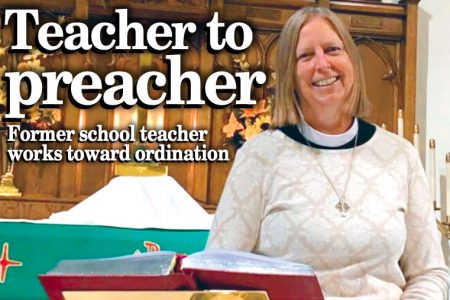
After teaching math for 35 years, all but one of those in the Loyalsock Township School District, Carol Johnson decided to retire two years ago, at least from the education profession. "It was a long time and overall a great career at Loyalsock," she said. She thought, once she retired from teaching, perhaps she would become a lay worship leader, as she had seen other people do for her home church, Redeemer Lutheran, Williamsport. She knew for certain that she was not the kind of person who could retire and just do nothing. Even before she had retired from her teaching position, her pastor, the Rev. David Byerly, had asked her if she ever had thought of becoming a pastor. "I said, yeah, you're nuts," she said. Every now and then someone would say something to her or she would read something. Then, after her husband passed away, she said, "God, what were you thinking? We were going along fine doing work together for you. Why did you have to go and do this?" she said. "You do a lot of that conversation and it just came back to this," she added. "God just kept connecting all the dots." "After all the dots were connected, I went, really, did I miss a number," she said, referring to a favorite childhood pastime. "It's been that kind of a journey." So, for her second career, Johnson is studying to become an ordained minister in the Lutheran Church.
At the present time she serves as Vicar for Redeemer Lutheran and St. Michael's Lutheran churches. She had learned about a program in the Evangelical Lutheran Church in America has called TEEM, Theological Education for Emerging Ministries. Johnson explained that it was initially developed for a member of a church to be raised up in a congregation to serve as a pastor to a specific group, such as immigrants who don't speak English. "You raise someone up in the congregation and that person becomes their pastor," she said. "Or you're in an extremely rural area and you raise someone up from the congregation. Generally it's someone from that congregation or the lay program who serves that congregation," she said. She applied for the program and went through all the required background checks, a psychological evaluation and recommendations. "It's just not like, oh, you can do this," Johnson said. Once she had done all that and gotten the approved of the Synod it was then presented to the Redeemer-St. Michaels congregations by the Bishop. It was brought before their church councils and they were in favor of Johnson pursuing the ministry. The United Lutheran Seminary, which has campuses at Gettysburg and Philadelphia, has a three-year program of coursework, which includes five courses per year. Because there are no prerequisites, Johnson was able to begin at any time, she said.
"When I was approved by Synod in December 2019, there was a course that started in January, so I jumped right in and took that course," she said. She described the courses as fourday intense. "You go there and it's all day, all day, all day, and then, here's your project, your paper, your take-home exam, whatever," she said. Johnson noted that many of the people in the program are already involved in a ministry at their church, just as she is, in addition to taking the classes and maybe having a full-time job. "It's really meant to be something that you're evolving into as a second career," she said. "I'm blessed to be retired to be able to do this -- and slightly, at the moment, overwhelmed because I'm in the middle of two different courses," Johnson shared. In June, Johnson three classes are held in one week. Each day the students spend three and a half hours in the morning, in the afternoon and in the evening in class. "This summer it was all on ZOOM, 6:15 in the morning to 9:30 at night. Never did they let us out early. They do give us appropriate breaks, but it is hard," she said. This month she begins another intensive three days of classes. In addition, she noted that everyone in the TEEM program has to have clinical pastoral education, which is specific to pastoral care such as visitation, hospice, hospitals, and nursing homes. "Being able to come alongside and have that care and compassion that someone needs at that time," she explained. This part of the program is usually done in a hospital setting, but at this time the course is being offered online and the settings are their own congregations. "So, we have to meet with our own homebounds, meet with our members of the congregation and get our hours in and talk about those visits and reflect," she said. "It's a little tricky online." Johnson will have two more years of course work, so by 2023 she should be finished with her coursework and be ready to be ordained. "If I receive a call," she noted. "Theoretically the call is supposed to come from these two congregations." "Even though it's meant to serve a specific ministry, if something happens in that relationship and that ministry doesn't want you as a call, or doesn't need you…then I would still be eligible for a call as any ordained minister," she added.