
Trending
"That's what it's all about. It's just being that safe space, whether it be in our personal lives, or at church or in our professional lives, wherever we are. Even, no matter what our personal beliefs, no matter our beliefs of the Scripture -- to be a kind human and help someone who is struggling to figure out their identity. That's what this is about," said Rebecca Hosier, YWCA prevention educator.
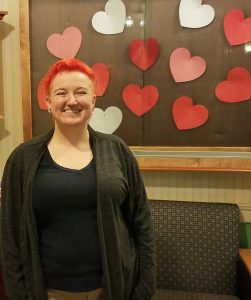
Hosier was the featured speaker for the United Churches of Lycoming County's Ecumenical Luncheon recently. She spoke about understanding the LGBTQIA+ community.
First, Hosier noted, it is important to define sex and gender and then establish what they mean because they are often mistakenly used interchangeably.
"When we think about biological sex, we often actually conflate sex and gender when in reality, someone's sex that biological sex, refers to the traits like your reproductive system, your secondary sex characteristics, your genetic composition," Hosier explained.
"It is the physical anatomy that you have when you are born. Your sex is assigned at birth," she added.
Most people think of sex as XX or XY chromosomes, when there are actually 10 different gender markers that scientists have identified that are not just related to chromosomes.
Chromosomes are one way of telling the gender or sex of someone. We have gonads, hormones, secondary sex characteristics, your external genitalia, your internal genitalia, the skeletal structure, the gene expression, your brain structure and how you personally identify," Hosier said.
"All of those factors contribute to biological sex and gender," Hosier said.
Science is finding that gender is much more of a spectrum.
"It is completely natural for there to be people who are born with XXX chromosomes, XXY chromosomes, a mix or something else. There are like 16 different chromosome expressions, not two," she stated.
"There isn't just one way or two ways to exist as a human. It's not male or female. It is much more of a gender spectrum," Hosier added.
There is also intersex, a term which Hosier said may be unfamiliar to many people. Intersex refers to people who are born with a reproductive or sexual anatomy that doesn't fit the standard male or female definition.
It is estimated that about 2% of the world's population has intersex traits of some type. Often, people who are intersex may not be aware of it until later in life.
Historically, physicians have performed surgeries on infants that are intersex and assigned them the sex associated with their external genitalia -- many times without the person or their parents knowing this has been done. Then, during puberty, the child begins producing contradictory hormones.
"Doctors have this belief that intersex people should fit what we visually see that as, so if anything inside them does affect what we physically see, we're going to take it out and force them to live the way we physically see them," Hosier said.
Gender on the other hand is a "social construct" Hosier stated.
"Gender are the characteristics that we assign to each sex," she said.
These might include things such as society expects boys to be strong and like trucks and cars and getting dirty. Conversely, in the past girls were expected to like pink and dolls and be more passive. Gender expectations can also evolve with culture.
"How women are viewed in the Bible versus how women are viewed and what they're allowed to do in churches now is very different," Hosier noted.
Most people can tell you what their gender identity is. It matches what sex has been assigned at birth. It matches their physical bodies. For transgender people, their gender identity and how they feel and their brain chemistry, because gender identity is tied directly to brain chemistry, fits more their gender identity than their actual sex assigned at birth.
"So, they have the brains and the hormones and the chemicals that are closer to how they identify than how other people are viewing them," Hosier explained.
"That's important to remember. Gender identity isn't a choice. None of us woke up one day and chose to be our identity. That's just who we are," she stated.
How a person expresses their gender identity can be illustrated in their clothing or hairstyle choices. These can be impacted by culture.
"Your gender expression is what you show to other people. It's how you act out your gender. It's the behaviors you have. It's the markers you show, the way you dress. Your biological sex is what you physically have," Hosier said.
"Sexual orientation are the people we love, the people we choose to be around, the people we are connected to. Again, sexual attraction is not a choice. We didn't wake up and decide that we were going to be sexually attracted to someone or not. It's something that's born within you," she said.
During her presentation, Hosier discussed the terms associated with sexual orientation.
"We'll start with obviously heterosexual. It's someone who is primarily or exclusively attracted to a different sex or gender than their own and when we talk about heterosexual, we often use the term straight," she said.
"We don't often call ourselves heterosexual. You just call yourself straight and most people who are straight don't ever make that active decision. You never sat down and thought, I'm going to be straight. It was just something you felt, that natural attraction whether or not you were attracted to people of the same gender or the opposite gender," she stated.
In conjunction with this, Hosier introduced the term heteronormative, which is the attitude that heterosexuality is the only or natural expression of sexuality.
Traditionally this was a belief held by society.
"It doesn't leave any space for someone who might be different. It assumes that the normal, the default is heterosexual," Hosier said.
Gay refers to men who are attracted to other men, while lesbian is used to describe women who are attracted to other women, she noted. This attraction between women can be romantically, erotically or emotionally.
The B in LGBTQIA+ refers to someone who is bisexual or likes both men and women or they may like men, women or anyone else, Hosier said.
"What's important to know is that someone who is bisexual isn't confused. They're not half-gay, half-straight. They know what they want and they're allowed to decide who they are attracted to," she said.
Hosier described transgender as an umbrella term.
"It's someone who, their self-identity for their gender does not fit the conventional notions of male or female. They could be binary. It could be someone who has decided that their gender expression, their gender identity, does not match their physical body, but they still fit that binary," she explained.
"They feel like a man or a woman, or they might feel like they're not really either. They don't feel like they fit into the narrow confines of what society says a male or a female is, so they identify as non-binary," she added.
Prefacing her discussion of privilege as it relates to working toward a more inclusive society, Hosier reminded those attending the virtual event that "no one is accusing you of being insensitive. No one's accusing you of being anti anyone or anything."
"What's important when we look at privilege is that we're aware of how our own experience has impacted our life and how our privileges have changed and impacted who we are and what we have experienced," she said.
"When we keep that in mind, we're able to make a more just and inclusive world. If we can look at how our lives have benefited us, or we've had obstacles, if we look at that we can also look at that for other people how to have that equal access and that's social equity," she said.
Hosier enumerated the ways privilege prevents the discrimination members of the LGBTQIA+ community face discrimination because of their sexual orientation.
"No one questions the normality of my sexuality or believes my sexuality was caused by psychological trauma, sin or abuse. I do not have to fear that my family, friends or co-workers will find out about my sexual orientation and that their knowing will have negative consequences for me. My sexual orientation, if known to others, is not used to exclude me from any profession or organization, whether that be teaching, coaching, military or adoption," she said.
"I can go home from most meeting, classes and conversations without feeling excluded, attacked, outnumber, intimidate, invisible, stereotypes, dehumanized or feared because of my sexual orientation. I can freely use a public restroom without allegations of sexual harassment. I am not accused of being deviant, warped, perverted or psychologically confused or dysfunctional because of my sexual orientation or gender identity," she continued.
Currently there are 29 states where someone can be legally fired for being gay and 34 where being trans is a fireable offense.
"So these are the things I want us to think about because these probably aren't things we think about in our day to day life. These probably aren't things that impact us here in Williamsport in our little circle or little bubble. These are probably things we'll never have to worry about. And that is a privilege we have," she said.
Becoming educated to the issues in order to serve as an ally was stressed in a video shared by Hosier.
"Educate yourself on the issues that are important to the community you want to support and then use your privilege and your voice to educate others being careful to not speak over or take credit for things they are already saying and if you mess up, apologize when you do," the video stated.
"We are just there to use our platform to amplify the voices of those in the community, of those already doing the work. They don't need us to do the work for them. They just need us to support them and empower them and listen," Hosier said.
Hosier closed with a quote from 18th century theologian John Wesley.
"Though we cannot think alike, may we not love alike? May we not be of one heart, though we are not of one opinion? Without all doubt, we may. Herein all the children of God may unite, notwithstanding these smaller differences."
"I think it is our job as the community and as faith leaders as people from the church to be that welcoming safe space for community members, for parishioners, for anyone in our lives and in the community," Hosier said.