
New Covenant United Church of Christ celebrates first 50 years, looks ahead to next 50
Trending
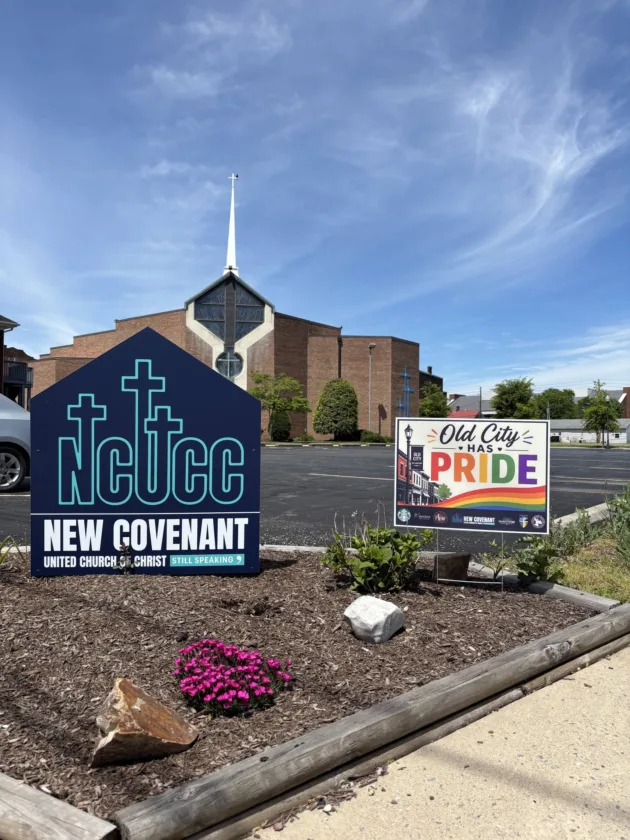
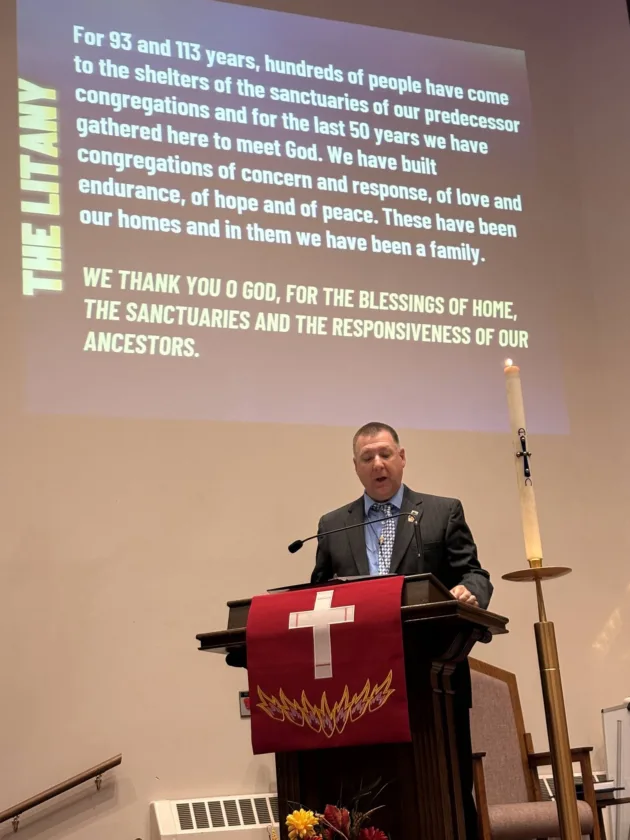
Fifty years ago on Oct. 3, 1976, the service began at St. John's Reformed Church, at the corner of Packer and Ross streets, with the worshippers then processing to Immanuel Church, located in the 200 block of East Third Street, where the two congregations would be united to become the New Covenant United Church of Christ (NCUCC). Tomorrow that uniting will be celebrated with a reaffirming of the "New Covenant" which cemented their commitment.
The congregation will again read the words spoken on that day "Affirming our unity in Jesus Christ, we believe that God is calling us in and through a new congregation of the United Church of Christ."
The new covenant further stated that the two congregations united to "perform the mission of God's Church by our own personal commitment to accept and serve Jesus Christ and in His name to reach out in service to this community and to the world."
That tradition has held as the church enters its second half century.
Looking back at that time, Phil Landers, who worshipped at St. John's at the time of the joining of the two congregations, said that the conference had encouraged the move because Immanuel had the endowment, but St. John's had the people.
"One of the questions emerging was where do you go," Landers said.
"It was decided that it ended up at the Immanuel building," he added.
Although at one point there was talk of moving the new church out of town and constructing a new building, after much discussion, the decision was made to stay in the city.
"We are a community and it is important to be part of that. I think that probably the most telling piece of information, that the reason this church is here is because we wanted to be part of the community, all the social justice issues," Landers said.
The joining of the two congregations also doubled the impact they could have on the community, according to the Rev. Brad Walmer, pastor of NCUCC.
The mid-1970's was a time of church growth and the larger congregations were splitting apart into smaller ones, which necessitated sharing pastors.
"All the Baby Boomers had children and grandchildren and it was a time in church history when your mainline Protestant churches were doing really well and flourishing," Walmer said.
"It was a time when a lot of churches were ending their long-time partnerships with other churches that were close by...and were going off on their own. And here, two churches in Williamsport recognized that they could do more together than they could separate and be more impactful and a different set of resources," he said.
From that emerged not only a new congregation, but a new name, a tangible mark of the new covenant they had entered into.
"It wasn't a merger. St. John's didn't merge with Immanuel and become Immanuel and Immanuel didn't merge with St. John's and everybody become St. John's. They united and what came about was this new covenant that they made, a new promise with each other and they made a promise with each other, the affirmation that they shared was this promise to be an active part of the community," Walmer said.
So, St. John's was sold to the American Rescue Workers and the two churches-St. John's and Immanuel- became one.
The decision was then made to build a new sanctuary at NCUCC because the old one dated to the 1800's and was in need of work. In the process of tearing down the old building, the bell tower actually collapsed across East Third Street, so, Landers said, it was a good thing they had decided to build.
The 1970's were a turbulent time in the country with the Vietnam War and a growing civil rights movement.
The pastor at St. John's, at that time the Rev. Doyle Luckenbaugh, a former Marine, had actually traveled to Canton, MS, when he was in seminary, to help register African-American voters during what was called "Freedom Summer." Locally he and some of his parishioners were on the picket line when there was a faculty strike at the former Williamsport Area Community College.
Landers, whose wife, Gail, had worshipped at St. John's, prior to their marriage, admitted that involvement in the social issues of the day appealed to him.
"It was that social justice and then other issues have come-LGBTQ, creation justice. All of those the United Church of Christ has been very upfront with dealing with those issues," Landers said.
Walmer explained that "from the history that I know, the social justice component was probably a little stronger at St. John's than it was at Immanuel, but they certainly brought that with them and this new congregation that was created certainly has continued to thrive."
"I think having Pastor Luckenbaugh as their pastor during that time in our nation's history and being across from Lycoming College on Packer and Ross streets, there were youth groups of college students that would come to the church and they had like a coffee house-type thing," he said.
St. John's had a strong social justice impact that they brought with them into the new congregation and I certainly think at least in my tenure here, it has continued to be that way," Walmer added.
As with any group, through the years there have been those who have been uncomfortable with the church's involvement in social issues and they have left, Landers said, but in general the reaction of the congregation was positive.
The social issues have grown to include acceptance of the LGBTQ community and creation justice and the church remains staunch in their belief that diversity enriches, not detracts, from the life of the congregation.
Taking a stand on those issues has not come without its detractors as the church had several instances of vandalism, broken windows and nasty online comments when they first became an open and affirming congregation. Walmer admitted he's become numb to the attacks.
"I think our diversity as a congregation is a wonderful thing. I think it exemplifies what the Apostle Paul talked about in his letters-servant or free, male, female, Greek, Jew, all have a home in the body of Christ and I think here at New Covenant we exemplify that the body of Christ is quite diverse," Walmer said.
Landers said he feels that the church overall has kept their "eye on the ball."
"There are certain things that a lot of us believe in...No matter who you are or where you are in your life's journey, you are welcome here," Landers said.
Looking ahead to the next 50 years, Walmer doesn't see that changing, but rather increasing as issues arise.
"I foresee the church continuing to be active in the community, serving where it's called to serve, using its gifts and resources to continue to help transform lives and make a difference as the different things pop up," he said.
Landers sees the church and the denomination as leading the way in taking a stand on social issues.
"New Covenant United Church of Christ is like a beacon sometimes in the forest or in the fog and things that we get involved in other major denominations might get involved in, but not at the level we consistently do at the local level as well as at the conference level and at the national level," Landers said.
The church also welcomes a diverse group within its walls throughout the week. Spaces in the church are used for PA Connect, a weekly gathering for people with diverse abilities. Another space is occupied by Thrive International while the kitchens are being utilized by the Rise Up Village Bakery for their program for people coming out of incarceration. Offices for United Churches of Lycoming County are also located in the building.
Throughout the church there are elements of the former congregations that came together 50 years ago-artwork, stained glass, ornate chairs, an old German Bible-all reminders of the heritage that they brought when they professed their new covenant.