
Firefighters recall the prison fire ‘we would not forget’
Trending
Time was running out for Harold "Butch" Anthony and four other city firefighters.
In blind conditions, the firefighters were searching for any more teenagers who might be trapped in the dark, hot, smoke-filled juvenile detection quarters at the Lycoming County Prison.
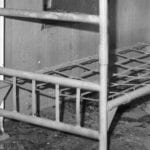
"We were down low, crawling, and our air packs were getting stuck underneath the bunks, the bed springs," Anthony said.
Anthony, Duane Harvey, Paul O'Donnell, Ron Whaley and Dennis Navarro already had carried out three lifeless bodies from the quarters. Other firefighters and corrections officers were trying desperately to revive them.
The firefighters had re-entered the quarters but soon the warning bells of their air packs were sounding.
"We were in there for a while looking for people, trying to get them out. That was always our No. 1 priority," Navarro said.
"We only had so much time. I remember hearing the bells on our air packs, which means we were running out of air. We knew we had to get something done here. Get it done and get out," Anthony recalled.
Anthony and Navarro, both of whom were city firefighters for many years, recently were recalling their memories from the tragic early-morning prison fire that was set on Nov. 18, 1975.
Three of the six juveniles that were being detained in the facility perished in the fire, which did not take very long to extinguish.
In addition to the juveniles, there were 38 adult inmates in the jail on the night of the fire.
"There wasn't a lot of fire, but it was very, very hot, with these smoldering mattresses and the heat that they generated," Anthony said, adding that the juvenile inmates "put mattresses up against the door and set them on fire. We had to try to pull them away" from the door in order to get into the quarters.
"We were in there on our hands and knees," Navarro remembered.
Anthony said the mattresses "were just smoldering, but they still created all kinds of toxic smoke and heat."
The juvenile quarters, located on the second floor, had been open for just a week.
The Sun-Gazette staff covered the tragedy extensively.
"The fire was discovered about 12:45 a.m. by prison trusties, whose (locked) quarters are also on the second floor, near the juvenile detention quarters. At the sound of an upstairs buzzer that signals a fire, Rick A. Goodbrod and L. Steve Armbruster, both prison guards, started up the steps. Because of intense heat and smoke, they had to turn back," according to a newspaper article.
The two men made a second attempt, but were again driven back. While Armbruster went to alert a supervisor to call the fire department, "Goodbrod made a third attempt and was able to reach the hallway where he could hear the trusties pounding on a door. They were screaming and yelling," the article reported.
Goodbrod unlocked the door, and "as the men came out coughing, they ran down the steps," the newspaper reported.
With the assistance of two of the trusties, Goodbrod "forced open a heavy steel latch and got the door (to the juvenile quarters) open," the report stated. Goodbrod told a reporter "The intense heat and heavy smoke prevented us from going right in. I attempted to enter, but couldn't make it."
Anthony, who had only joined the fire company 14 months before the fire, said the incident "really scared me.
"Here we were in a building, a room, that was contained. There are times when you are working inside a structure fire, and you know there are ways to get out if you suddenly find yourself cut off. If you have to get out, you'll figure a way out. You can bust out a window, kick out the side of a wall if you have to. You can let someone know you're in trouble. I was thinking, this is not good."
Anthony, who would go on to fight countless dangerous fires until his retirement in 1998, said the prison fire "was probably the first and only fire that I really felt there was a chance that I could lose my life. The reason being, we were really fighting a fire in a place where you were not supposed to get out."
"It wasn't a real big fire at all. It was just the mattresses. The fire melted a television set and other things in the room that were combustible (things that easily burn)," Anthony said.
He described the conditions in the juvenile quarters as "being like a big old fireplace. There was no place for the heat to go. The heat couldn't go through the ceiling, so it was a fireplace without a chimney. A hot house."
Navarro, a firefighter from 1970 to 1998, said clearing the smoke from the large quarters was especially difficult because the was a second set of double windows that had to be broken.
"I remember smashing the windows with our pike poles," he said.
Killed in the fire were Steven Sullenberger, 16, John E. VanHorn, 17, and David Reese, 16, and all three were removed from a shower stall, according to published reports.
"Dr. Earl R. Miller, the county, coroner, said Reese and VanHorn died of smoke inhalation, and that Sullenberger died of smoke inhalation and second-degree burns," according to a newspaper article.
"It was a fire we would not forget," Navarro said.