
Community Arts Center working toward 2021
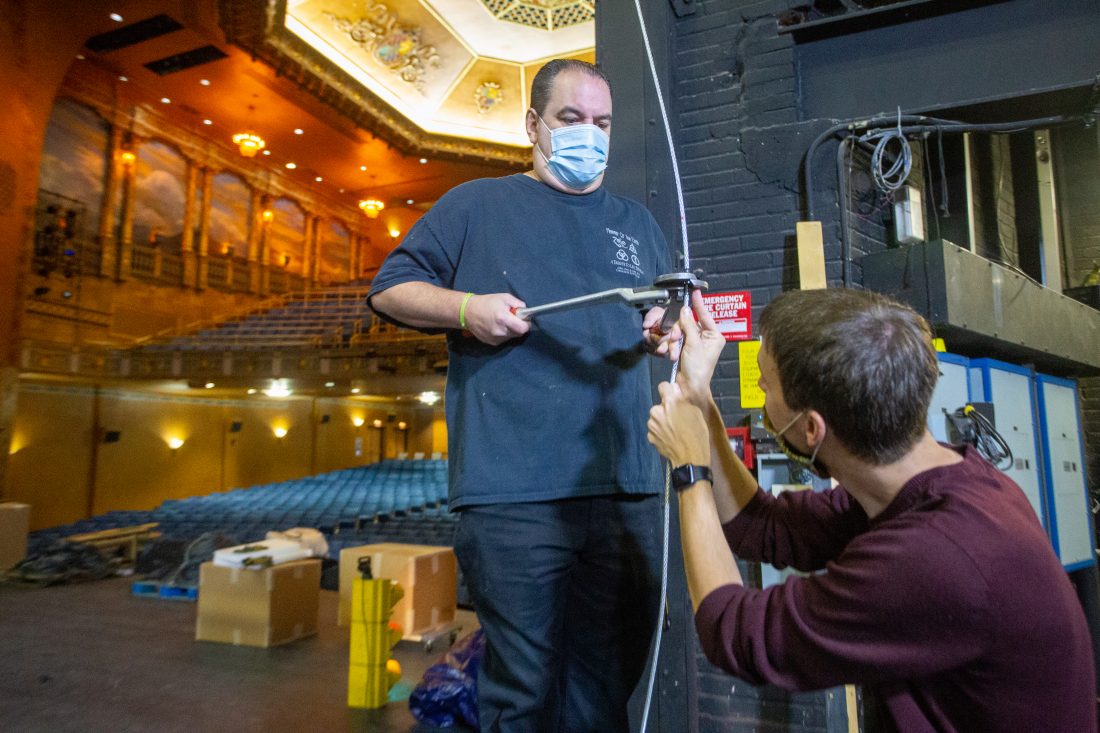
Tom Bressler, left, and Jordan Miller, right, of the Community Arts Center cut a cable that part of the 30,000 sq. ft. of cable being replaced backstage at the CAC. KAREN VIBERT-KENNEDY/Sun-Gazette

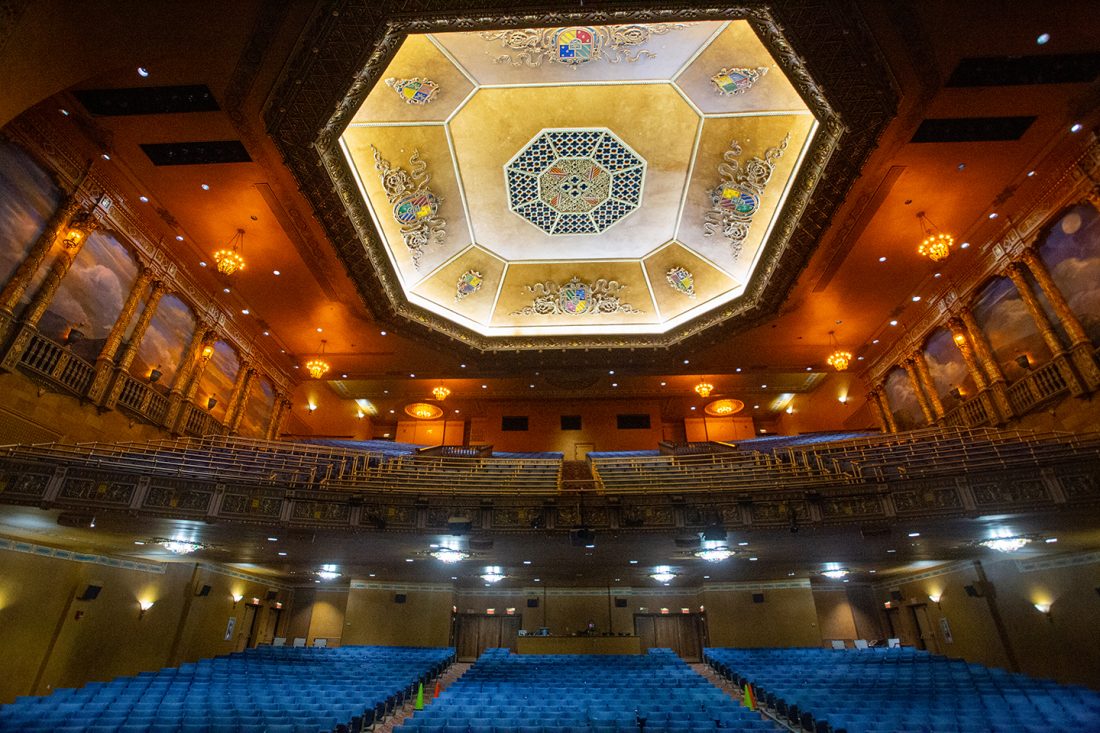
The auditorium of the Community Arts Center in Williamsport on Tuesday. KAREN VIBERT-KENNEDY.Sun-Gazette
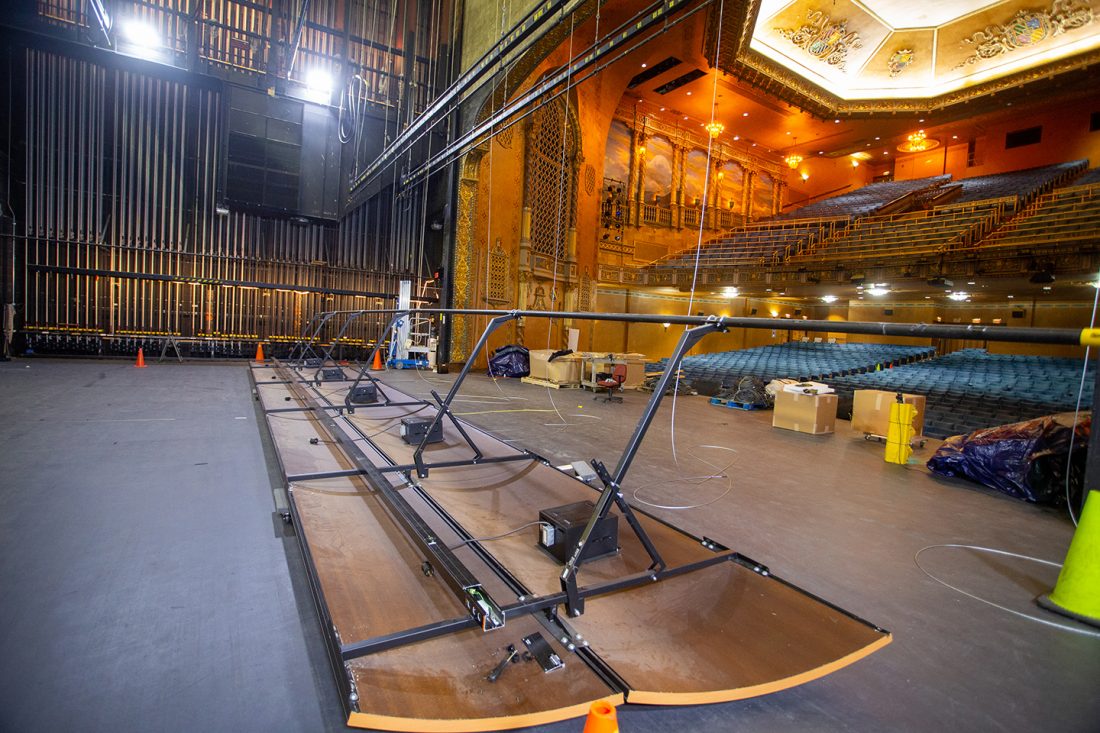
A piece of the orchestra shell rests in the stage of the Community Arts Center while 30,000 sq. ft. of cable is being replaced backstage as part of the renovations. KAREN VIBERT-KENNEDY/Sun-Gazette
Tom Bressler, left, and Jordan Miller, right, of the Community Arts Center cut a cable that part of the 30,000 sq. ft. of cable being replaced backstage at the CAC. KAREN VIBERT-KENNEDY/Sun-Gazette
The auditorium of the Community Arts Center in Williamsport on Tuesday. KAREN VIBERT-KENNEDY.Sun-Gazette
A piece of the orchestra shell rests in the stage of the Community Arts Center while 30,000 sq. ft. of cable is being replaced backstage as part of the renovations. KAREN VIBERT-KENNEDY/Sun-Gazette
Trending
With plans to merge the Pennsylvania College of Technology and the Community Arts Center moving forward, Chuck Still, CAC's executive director, sees the move as representing the culmination of what's been going on since the founding of the center.
"Penn College has been the biggest supporter of CAC all along," he noted.
"I think it will make it easier for the CAC to utilize some of the assets that the college has. They have a big graphic arts department. They have a marketing department and they have a big development department," he said. "We will be able to call on those resources in a way that we haven't really done in the past."
Although he doesn't anticipate the day-to-day operations to change, Still said that there will be some "economies of scale when we're more closely tied into the college."
The board's approval of the plans is the first step in the process, which requires that the consolidation proposal now be approved by the Charitable Trusts and Organization section of the state Attorney General's office as well as the Lycoming County Court of Common Pleas before it can be finalized. The merger is expected to be completed in 2021.
Once final approval is given, the move effectively transfers the administrative oversight of the CAC to the college.
Penn College purchased the former Capitol Theatre in 1989. Following an $11 million restoration and renovation project the Community Arts Center officially opened in 1993.
Since that time, the center has seen its operational and infrastructure costs largely and increasingly subsidized by the college. Following the closure of the facility in March due to the pandemic, the college has explored efficiencies to support the center's long-term sustainability, according to a statement from the college.
Still estimated that the loss of revenue in terms of rentals, performances, ticket sales and concessions could be between $600,000 and $750,000 by the end of the year because of the pandemic.
"I don't anticipate any performances this year," Still said.
"All the national tours have canceled. Everything has canceled or been postponed. Almost everything we had this past spring has moved to the spring of 2021 and the things we had in the fall have moved to the fall of 2021," he stated.
He noted that the first date he is holding on the center's calendar is for a national tour on March 12.
"If that takes place, it will have been a year without performances," Still said.
The Community Arts Center also recently went through a rebranding in order to become more in line with the college, adopting things such as Penn College's school colors and a new logo. The center took advantage of the lack of patrons this year to revamp the ticketing system and website.
"The website has been overhauled to include more focus on the upcoming events rather than just the history of the building," said Courtney Fowler, marketing manager. "It has also been streamlined to make ticket buying simpler and more effective for the patron."
During the shutdown, the CAC used the time to perform some needed improvements to the building.
Still said a new roof and a new stage floor have been installed. The project was necessary due to damage from a storm last year which tore off part of the roof causing water damage to the stage floor.
Other projects included a rigging inspection that had been on the calendar for awhile, Still said, but was moved forward because there were no shows. Now that it has been inspected, it will also be repaired.
Improvements are being made to the heating and air conditioning system in the stage and backstage areas where, Still noted, temperatures hovered around 55 degrees.
"When the performers get on stage and the lights are on, it's not so bad. It's cold backstage," he shared.
"A lot of this stuff, we wouldn't be able to do if we were having shows," he said, adding, "I'd much rather be doing shows than renovating HVAC."
Still cited the backing and support of both of the local colleges, as well as money for non-profits included in the CARES Act as helping the CAC to stay afloat, but he wonders how long that can go on.
"Everybody is hurting and to move us to the front of the pack and say we're hurting worse than anybody else would be really stupid because there are a lot of closed restaurants and closed businesses. There are a lot of places that will never reopen," he said.
He noted that the pandemic is really hard on businesses that depend on large gatherings of people.
"It makes it really hard. I think what's going to be a double whammy for us is if the governor tomorrow should say, hey, it's all over, you can go back to 100 percent," he said.
"How much of our audience is going to be willing to go into a big room and sit shoulder to shoulder with somebody for a performance? How long is it going to take us to feel comfortable doing that again? We're really in uncharted territory here," he said.