
City invests in parks; administration responds to feedback

Mayor Derek Slaughter is interviewed in his offices recently in Williamsport. DAVE KENNEDY/Sun-Gazette
Mayor Derek Slaughter is interviewed in his offices recently in Williamsport. DAVE KENNEDY/Sun-Gazette
Trending
No city can thrive or grow, see property values increase or say they are worth moving to without a proper network of safe and functioning parks and open spaces in which to recreate and to call their own.
The city of Williamsport is no different. Years of neglect, a lack of available income and apathy left its ballfields covered in ditches and weeds, benches decaying and basketball rims rusty. After hearing from residents through a survey as part of his assessment on the use of the American Rescue Plan funds and working with state agencies like the Department of Conservation and Natural Resources and Department of Community and Economic Development, Mayor Derek Slaughter said he could see the need to work with these agencies and City Council to invest in local parks.
"I'm big -- my administration is big -- on parks and recreation," Slaughter said in a recent video interview.
"Unfortunately, our parks were let go over the years and we want to bring them back up to let the kids, the families and all of the people in our community enjoy those spaces," he said.
It is a Slaughter Administration promise and commitment to restore vibrancy to the neighborhoods whose residents use these parks.
Because it takes dollars to make it happen, the city applied for a state Department of Conservation and Natural Resources' grant to update what it calls its Comprehensive Parks, Recreation and Open Spaces Plan.
"The current comprehensive plan is too old and DCNR won't accept it," Slaughter said.
Along with DCNR, and DCED, an infusion of American Rescue Plan funds, as approved by council for allocation and reviewed by the solicitor, consultants and compliance adviser, UHY Advisors, went into park systems. In all, there is nearly $25 million in ARPA funds, some of which have been allocated to infrastructure, economic development and future use public safety, but also to recreation.
For improving recreation, the larger plan is to add value to the city, offer outdoor areas that are safe to walk in, new play and game surfaces, options that are fun and valuable, and make parks the jewels that they were intended to be.
Such investment includes a splash park at Shaw Place Park, the recently completed repairs and upgrades to Memorial Park Pool and a contribution from the United States Air Force for its sponsorship to buy six new basketball hoops for the city. Two at Memorial Park, two at Youngs Woods Park and Shaw Place Park gets two.
The backboards will have the emblem of the U.S. Air Force to remind the community and players of the military branch's contribution. A shout out goes to Air Force Recruiter Master Sgt. Leo Knight-Inglesby for spearheading the basketball hoop project, as the mayor recognized, as did council, the recruiter's commitment to recreation and to providing opportunities for men and women who are eligible to join the Air Force.
Pending upcoming council approval, the city will reconstruct the pickleball courts at Memorial Park, Slaughter said.
The city also is looking to resurface tennis courts at Shaw Place Park, and basketball courts at Youngs Woods Park.
"It's a quality of life improvement so folks, if they're able to, can go outdoors and recreate," Slaughter said.
The city will be seeking additional input as it continues to update its comprehensive plan for open spaces.
A request for proposals process will be brought before council to get a firm in to get input from the people about what they would like to see in terms of parks and recreation and use of open and green spaces.
"We want to hear what it is the public wants to see," he said.
"Do you want to see additional pickleball courts, basketball courts, tennis courts, splash pads and walking trails?" he asked.
Then, the strategy will be to update the comprehensive plan, he noted.
That then opens up the city for additional grant funding that can help to pay for the cost associated with implementing the projects.
Slaughter touched on the splash pad at Shaw Place Park, which is scheduled to open in the spring or summer of 2023.
"Municipal pools are very very expensive and splash pads are where municipalities are transitioning," Slaughter said.
He noted how he got the idea after meeting with Scranton Mayor Paige Cognetti.
Scranton put one in and the mayor and a team from the city were able to learn from Scranton officials how that went and could see whether it would work for Williamsport.
Jon Sander, the professional city engineer for Williamsport, worked with some of the splash park companies and was able to put together a package approved by council.
It is basically a $550,000 project, paid for through ARPA funds. It is a swerving-designed 3,200 square foot splash park for the community, installed at Shaw Place Park off Sherman Street in the east end.
The park's use will be free. The technology is such that if it is raining or the wind is too gusty, the facility will automatically shut off.
It has a number of spray and splash features and is operated to run a certain number of minutes before it shuts off and if the button is pushed will begin the water feature fun again. At the beloved Brandon Park, the city is restoring the condition of two baseball fields and working on the reconditioning and repair of the band shell.
Lose Park on Memorial Avenue recently received investment through a state DCNR grant and use of Community Development Block Grant money to resurface the basketball court, add sidewalks, lights, a pavilion and storage shed along with accessible entrances and playground equipment.
Updating the comprehensive plan and investing in the parks is going to help with property values. Recent approval to acquire an asphalt paver using about $225,000 in ARPA funds to recondition the parks' pathways and walking trails is also part of the plan to reconnect parks to city sidewalks, walking paths and bicycle paths and get easier access to the Susquehanna Riverwalk, he said.
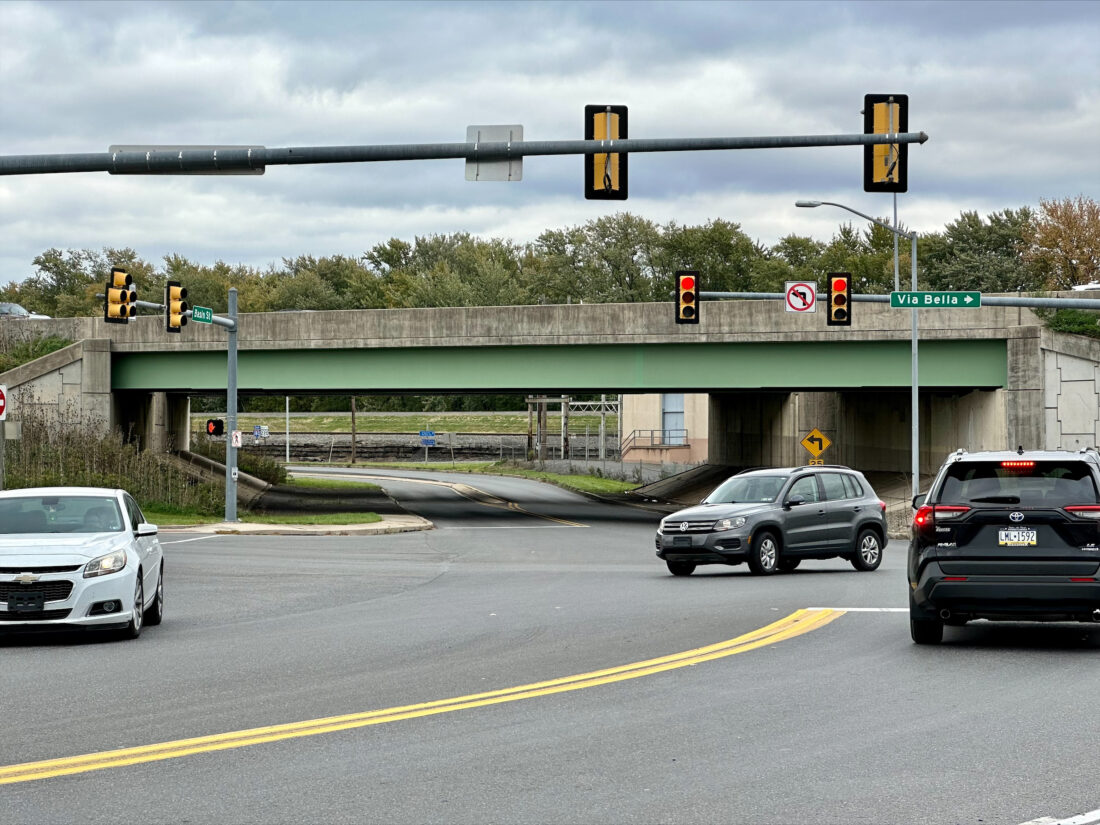
The city has a plan to connect those along Basin Street and Via Bella to the riverwalk by making it safe access with traffic signals and sidewalk additions to go beneath Interstate 180 and safely across the railroad tracks to access the riverwalk.
As this update was being written the city was notified it received $50,000 from the Commonwealth Finance Authority to connect the Basin Street Connector pathway to the riverwalk.
This article is written from a
Sun-Gazette video interview done by
Karen-Vibert Kennedy.