
Lycoming College’s Trachte Music Center dedicated
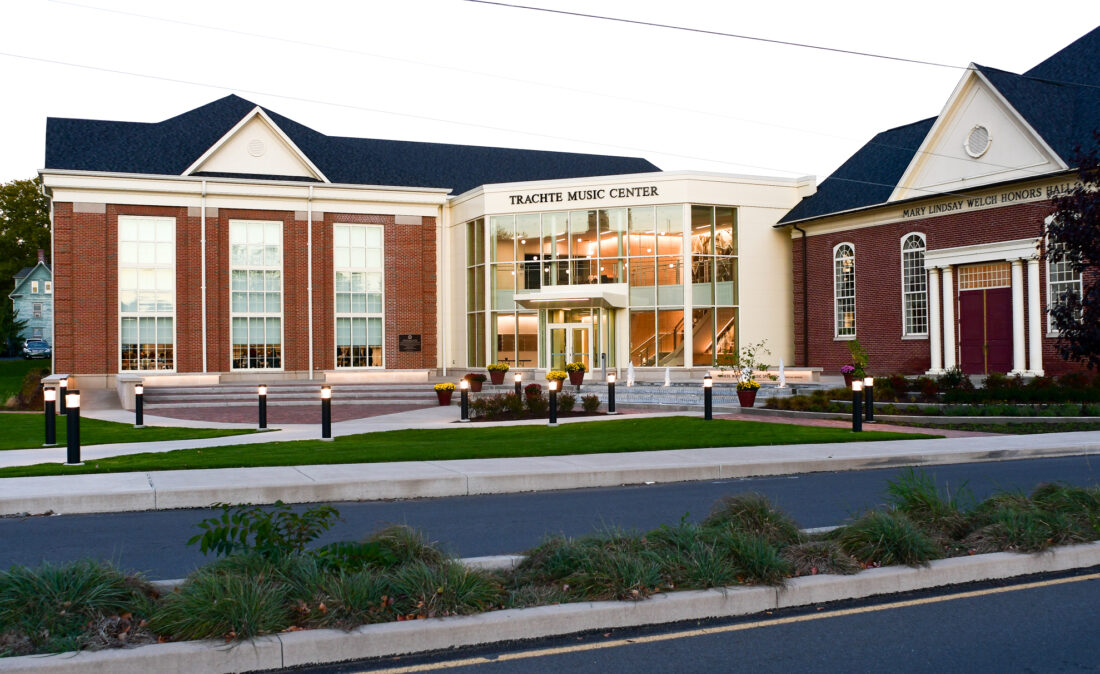
RALPH WILSON/Sun-Gazette Correspondent Lycoming College dedicated the Trachte Music Center in Williamsport on Friday, Oct. 21, 2022. The 14,000 square foot building at the corner of Basin and East Fourth St. houses classroom, practice rooms, recital space and offices.
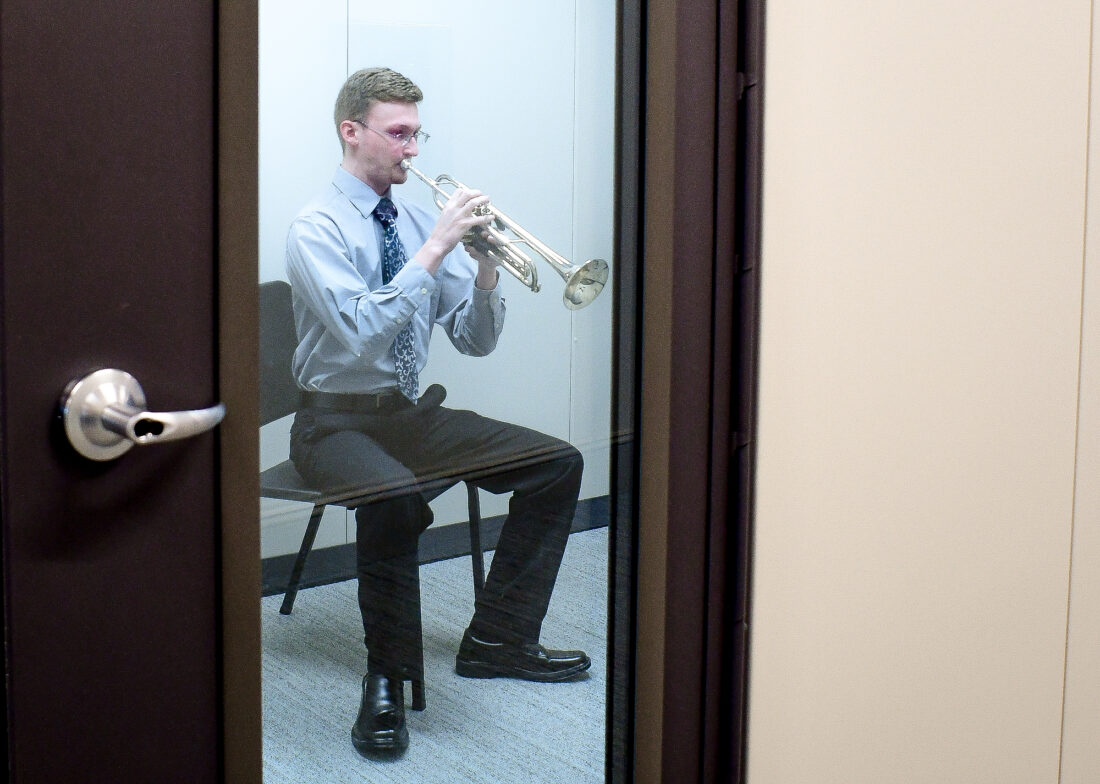
RALPH WILSON/Sun-Gazette Correspondent Sophomore Isaac Brumbaugh of Allentown utilizes a practice room in the newly dedicated Trachte Music Center on the campus of Lycoming College in Williamsport on Friday, Oct. 21, 2022. The 14,000 square foot building at the corner of Basin and East Fourth St. houses classroom, practice rooms, recital space and offices.
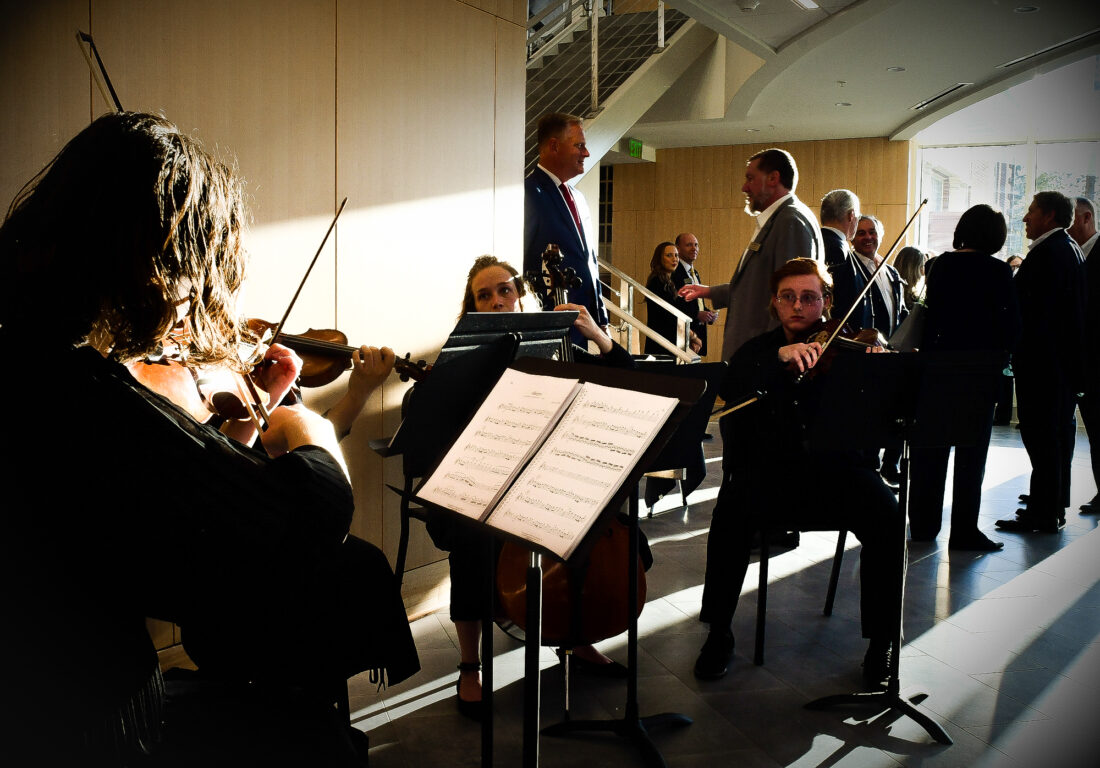
RALPH WILSON/Sun-Gazette Correspondent A string ensemble performs at the Lycoming College dedication of the Trachte Music Center in Williamsport on Friday, Oct. 21, 2022. The 14,000 square foot building at the corner of Basin and East Fourth St. houses classroom, practice rooms, recital space and offices.
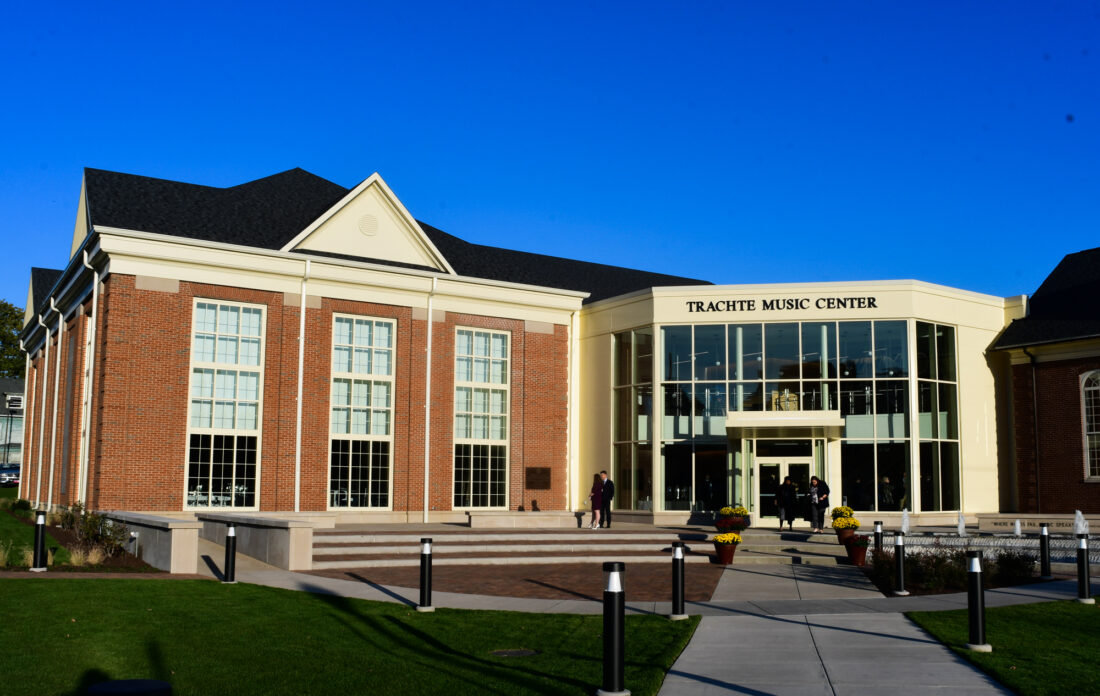
RALPH WILSON/Sun-Gazette Correspondent Lycoming College dedicated the Trachte Music Center in Williamsport on Friday, Oct. 21, 2022. The 14,000 square foot building at the corner of Basin and East Fourth St. houses classroom, practice rooms, recital space and offices.
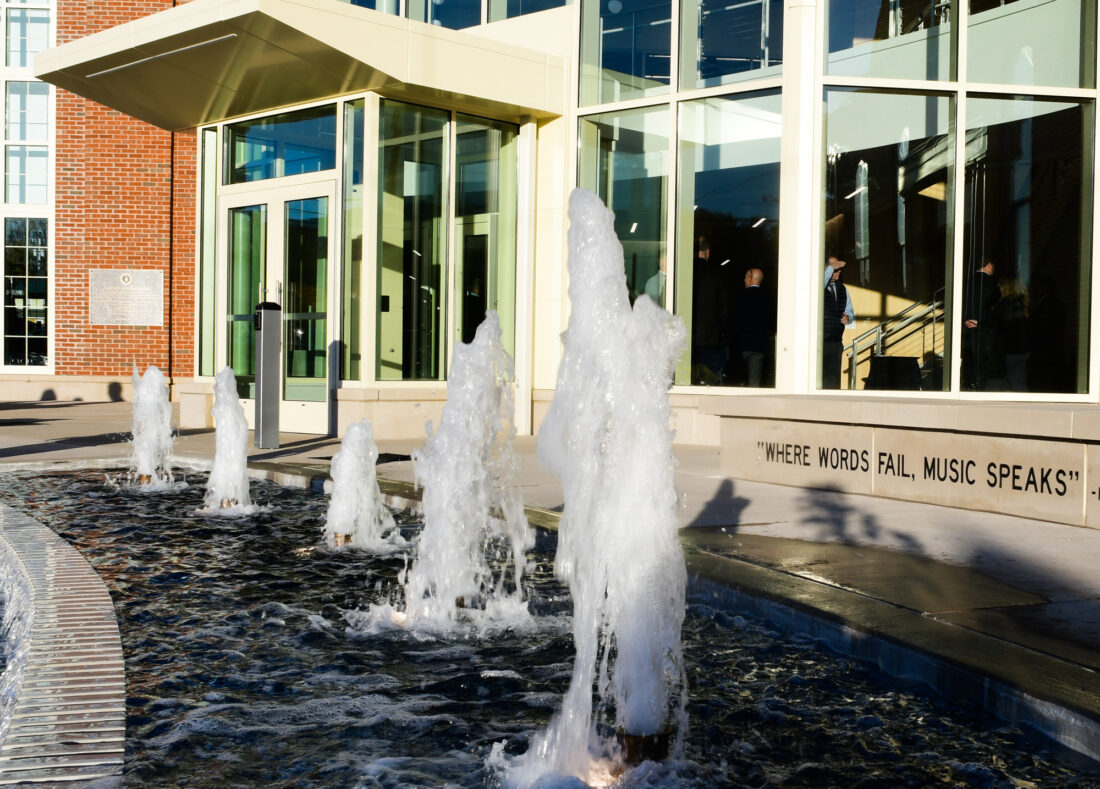
RALPH WILSON/Sun-Gazette Correspondent Lycoming College dedicated the Trachte Music Center in Williamsport on Friday, Oct. 21, 2022. The 14,000 square foot building at the corner of Basin and East Fourth St. houses classroom, practice rooms, recital space and offices.
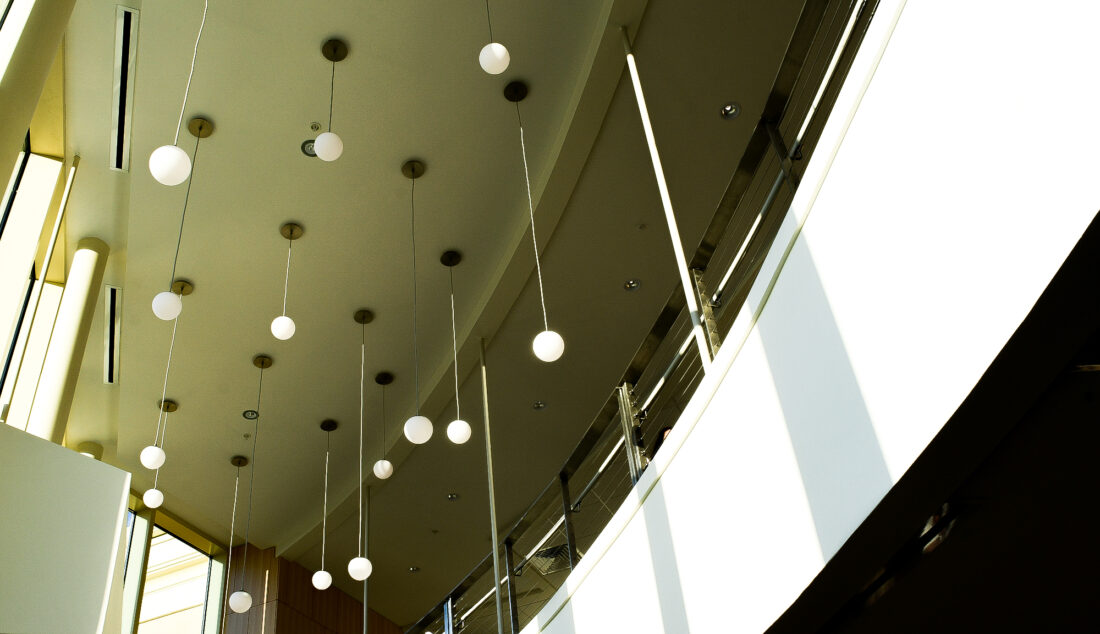
RALPH WILSON/Sun-Gazette Correspondent Lycoming College dedicated the Trachte Music Center in Williamsport on Friday, Oct. 21, 2022. The 14,000 square foot building at the corner of Basin and East Fourth St. houses classroom, practice rooms, recital space and offices.
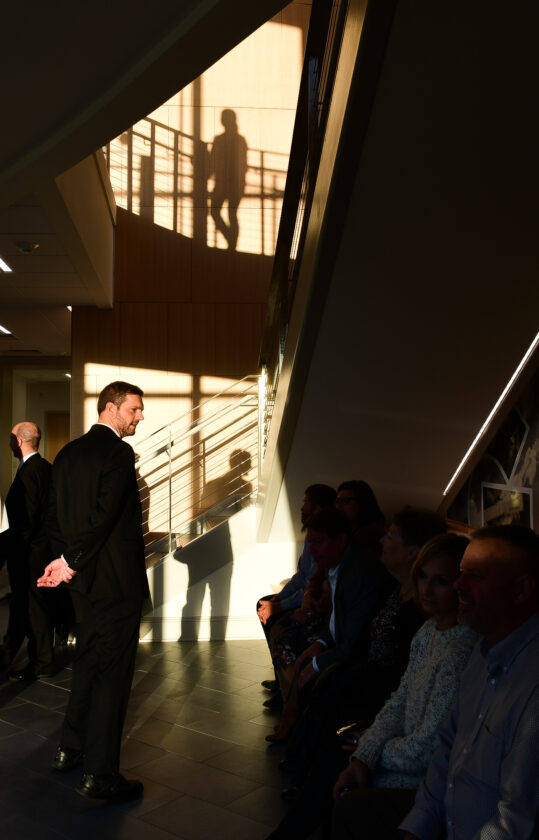
RALPH WILSON/Sun-Gazette Correspondent Lycoming College dedicated the Trachte Music Center in Williamsport on Friday, Oct. 21, 2022. The 14,000 square foot building at the corner of Basin and East Fourth St. houses classroom, practice rooms, recital space and offices.
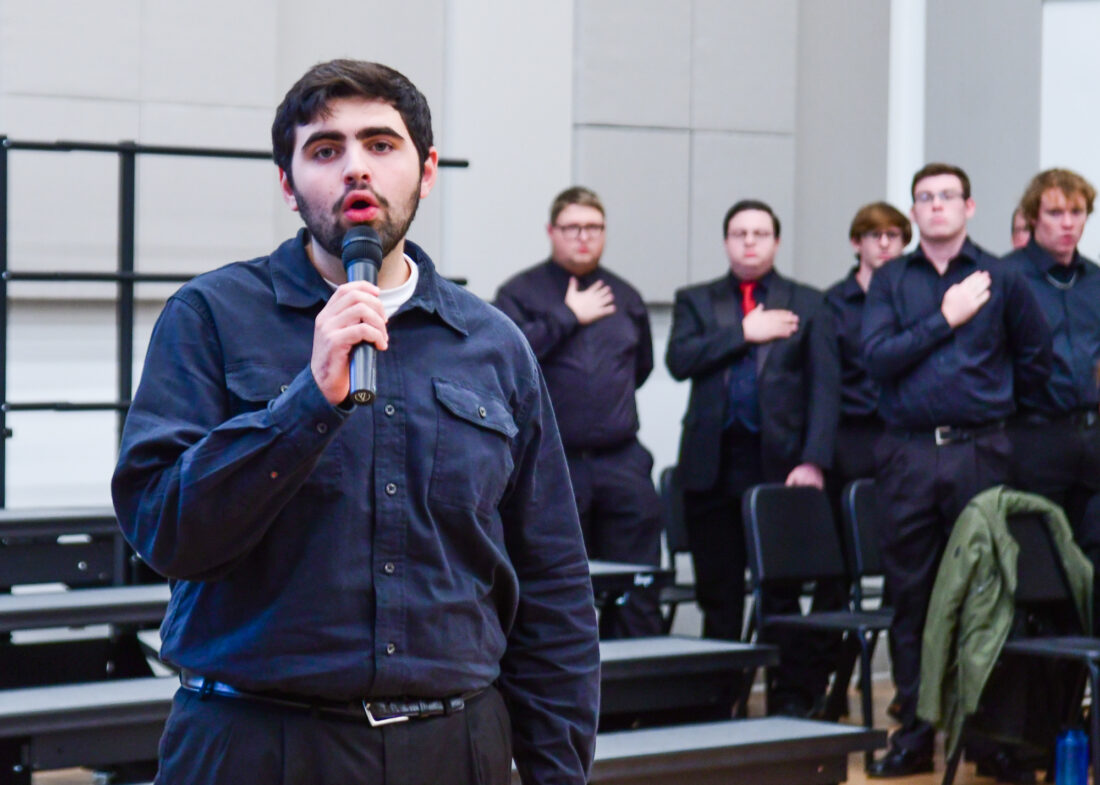
RALPH WILSON/Sun-Gazette Correspondent Dominick Phillip sings the National Anthem at the Lycoming College dedication of the Trachte Music Center in Williamsport on Friday, Oct. 21, 2022. The 14,000 square foot building at the corner of Basin and East Fourth St. houses classroom, practice rooms, recital space and offices.
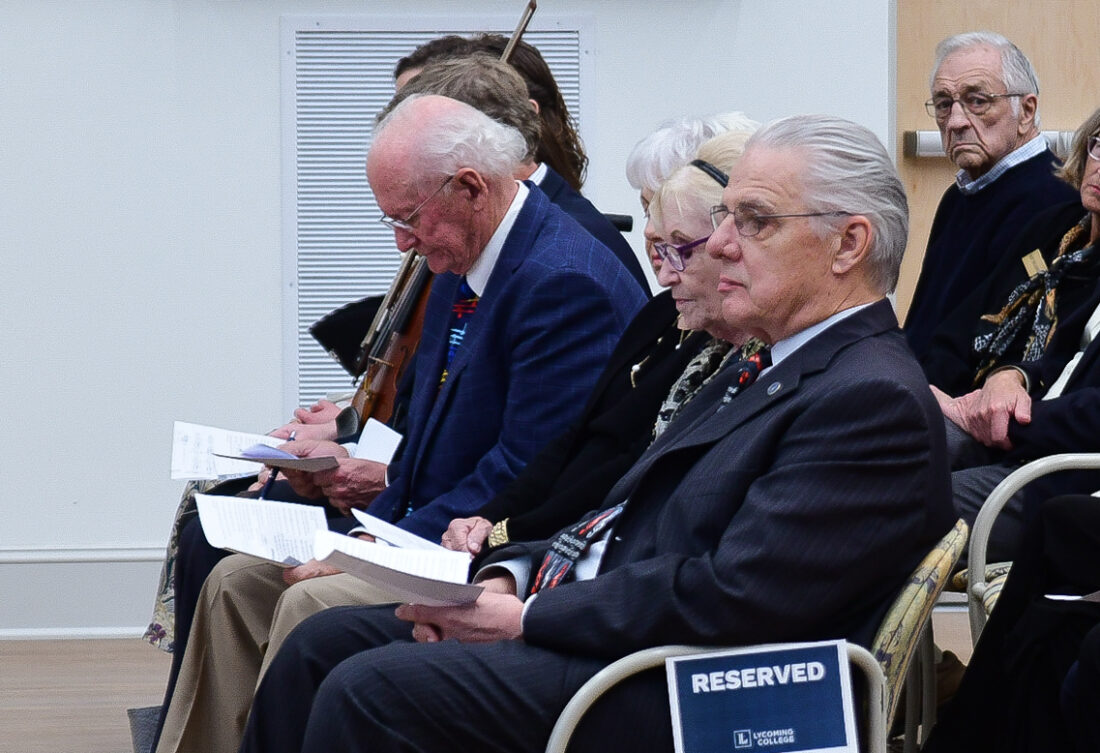
RALPH WILSON/Sun-Gazette Correspondent Dr Kent C. Trachte, listens to speakers at the Lycoming College dedication of the Trachte Music Center in Williamsport on Friday, Oct. 21, 2022. The 14,000 square foot building at the corner of Basin and East Fourth St. houses classroom, practice rooms, recital space and offices.
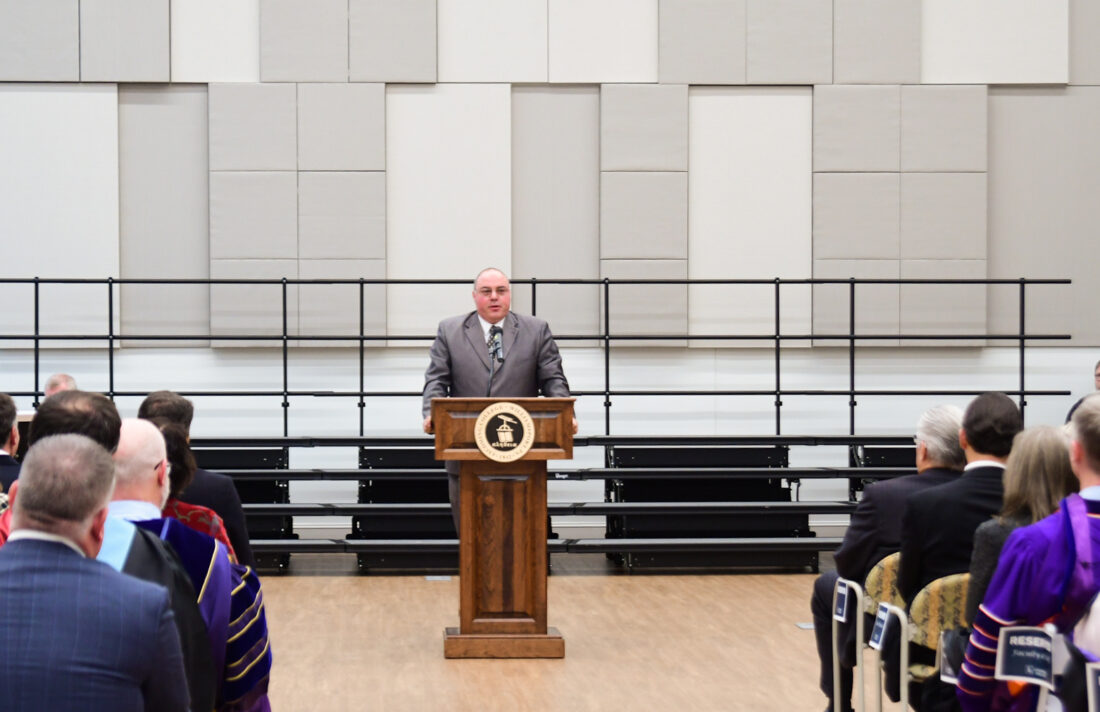
RALPH WILSON/Sun-Gazette Correspondent Rd, William S. Ciabattari, Assoc. Professor of Music, speaks at the Lycoming College dedication of the Trachte Music Center in Williamsport on Friday, Oct. 21, 2022. The 14,000 square foot building at the corner of Basin and East Fourth St. houses classroom, practice rooms, recital space and offices.
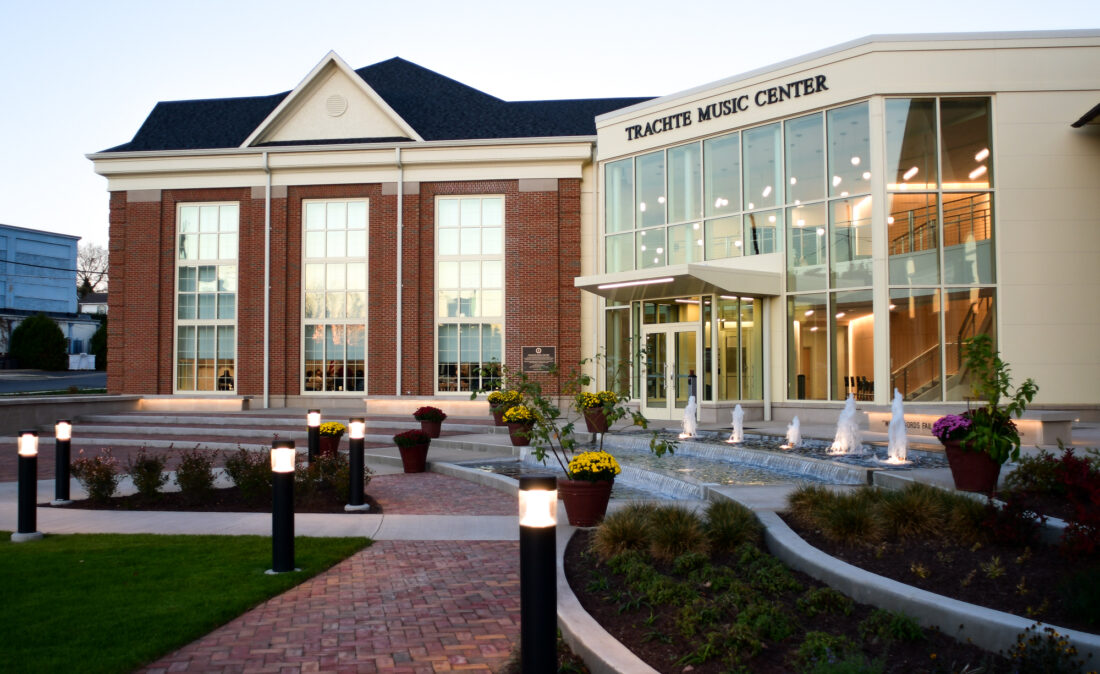
RALPH WILSON/Sun-Gazette Correspondent Lycoming College dedicated the Trachte Music Center in Williamsport on Friday, Oct. 21, 2022. The 14,000 square foot building at the corner of Basin and East Fourth St. houses classroom, practice rooms, recital space and offices.
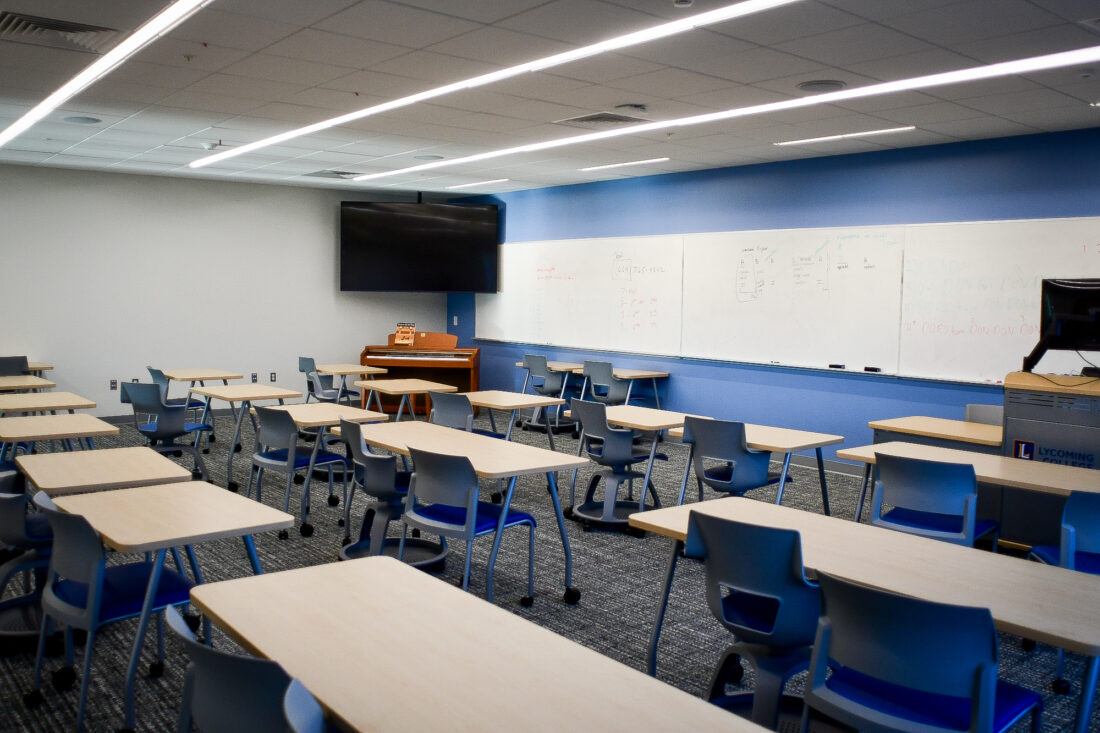
RALPH WILSON/Sun-Gazette Correspondent Lycoming College dedicated the Trachte Music Center in Williamsport on Friday, Oct. 21, 2022. The 14,000 square foot building at the corner of Basin and East Fourth St. houses classroom, practice rooms, recital space and offices.
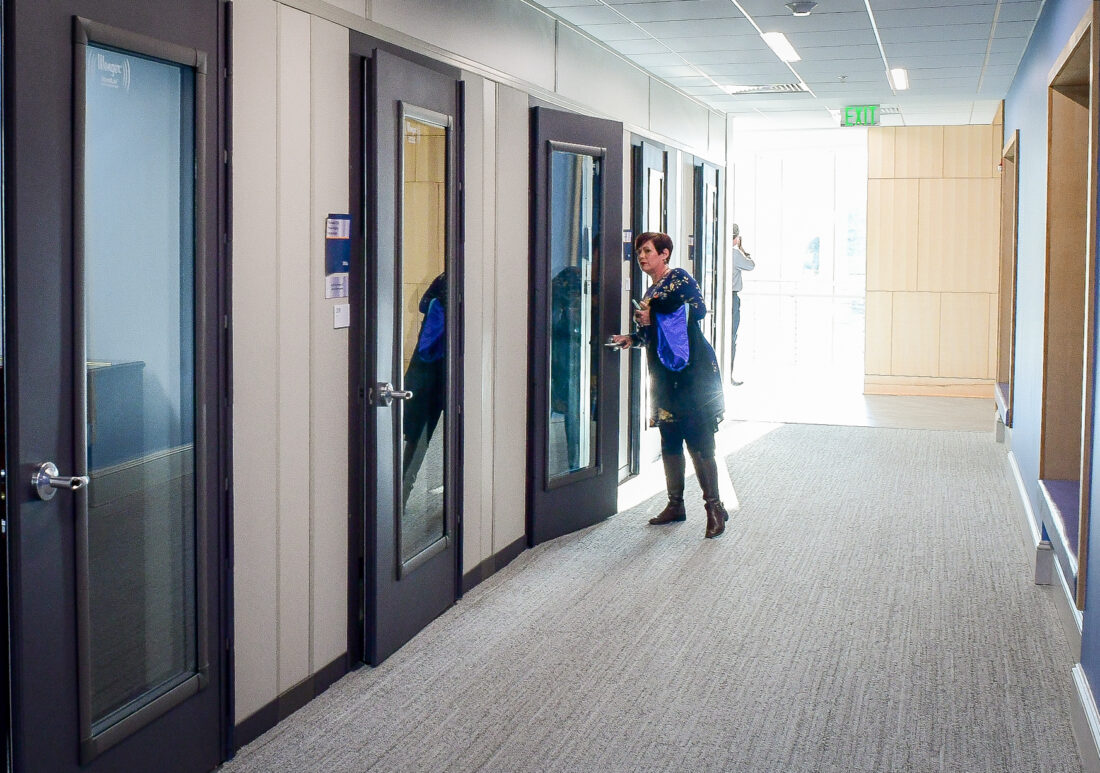
RALPH WILSON/Sun-Gazette Correspondent A visitor takes a peek at a practice room at the newly dedicated Trachte Music Center on the campus of Lycoming College in Williamsport on Friday, Oct. 21, 2022. The 14,000 square foot building at the corner of Basin and East Fourth St. houses classroom, practice rooms, recital space and offices.
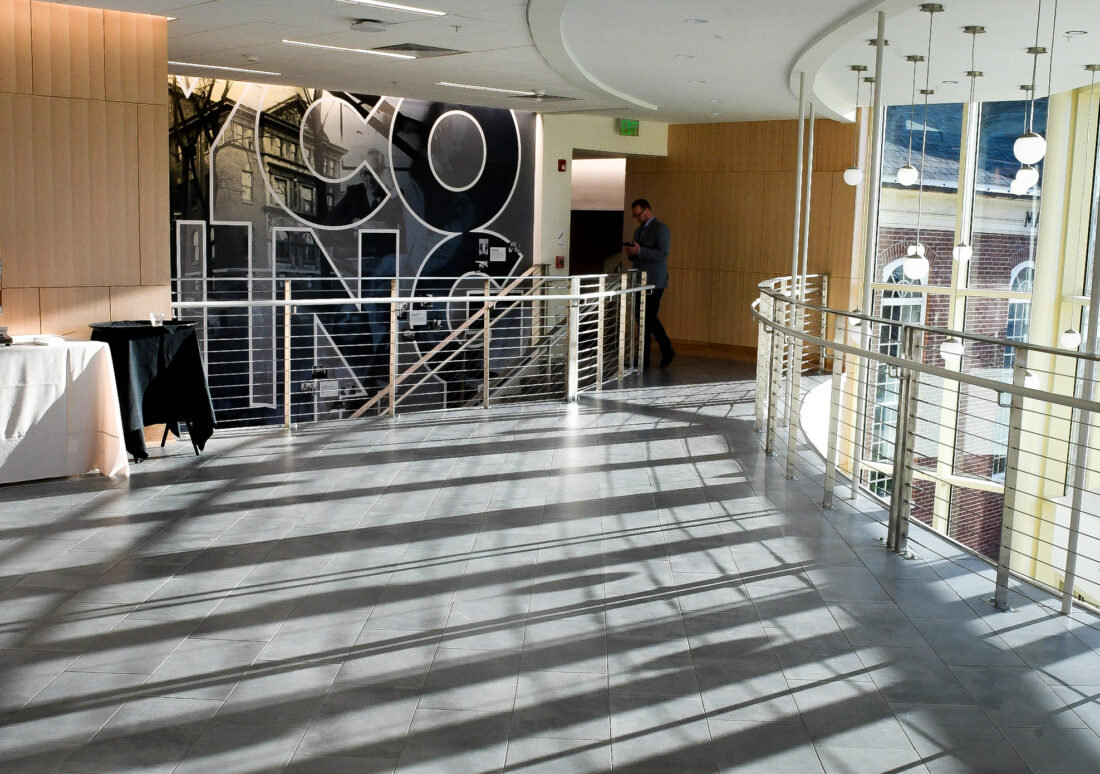
RALPH WILSON/Sun-Gazette Correspondent Lycoming College dedicated the Trachte Music Center in Williamsport on Friday, Oct. 21, 2022. The 14,000 square foot building at the corner of Basin and East Fourth St. houses classroom, practice rooms, recital space and offices.
RALPH WILSON/Sun-Gazette Correspondent Lycoming College dedicated the Trachte Music Center in Williamsport on Friday, Oct. 21, 2022. The 14,000 square foot building at the corner of Basin and East Fourth St. houses classroom, practice rooms, recital space and offices.
RALPH WILSON/Sun-Gazette Correspondent Sophomore Isaac Brumbaugh of Allentown utilizes a practice room in the newly dedicated Trachte Music Center on the campus of Lycoming College in Williamsport on Friday, Oct. 21, 2022. The 14,000 square foot building at the corner of Basin and East Fourth St. houses classroom, practice rooms, recital space and offices.
RALPH WILSON/Sun-Gazette Correspondent A string ensemble performs at the Lycoming College dedication of the Trachte Music Center in Williamsport on Friday, Oct. 21, 2022. The 14,000 square foot building at the corner of Basin and East Fourth St. houses classroom, practice rooms, recital space and offices.
RALPH WILSON/Sun-Gazette Correspondent Lycoming College dedicated the Trachte Music Center in Williamsport on Friday, Oct. 21, 2022. The 14,000 square foot building at the corner of Basin and East Fourth St. houses classroom, practice rooms, recital space and offices.
RALPH WILSON/Sun-Gazette Correspondent Lycoming College dedicated the Trachte Music Center in Williamsport on Friday, Oct. 21, 2022. The 14,000 square foot building at the corner of Basin and East Fourth St. houses classroom, practice rooms, recital space and offices.
RALPH WILSON/Sun-Gazette Correspondent Lycoming College dedicated the Trachte Music Center in Williamsport on Friday, Oct. 21, 2022. The 14,000 square foot building at the corner of Basin and East Fourth St. houses classroom, practice rooms, recital space and offices.
RALPH WILSON/Sun-Gazette Correspondent Lycoming College dedicated the Trachte Music Center in Williamsport on Friday, Oct. 21, 2022. The 14,000 square foot building at the corner of Basin and East Fourth St. houses classroom, practice rooms, recital space and offices.
RALPH WILSON/Sun-Gazette Correspondent Dominick Phillip sings the National Anthem at the Lycoming College dedication of the Trachte Music Center in Williamsport on Friday, Oct. 21, 2022. The 14,000 square foot building at the corner of Basin and East Fourth St. houses classroom, practice rooms, recital space and offices.
RALPH WILSON/Sun-Gazette Correspondent Dr Kent C. Trachte, listens to speakers at the Lycoming College dedication of the Trachte Music Center in Williamsport on Friday, Oct. 21, 2022. The 14,000 square foot building at the corner of Basin and East Fourth St. houses classroom, practice rooms, recital space and offices.
RALPH WILSON/Sun-Gazette Correspondent Rd, William S. Ciabattari, Assoc. Professor of Music, speaks at the Lycoming College dedication of the Trachte Music Center in Williamsport on Friday, Oct. 21, 2022. The 14,000 square foot building at the corner of Basin and East Fourth St. houses classroom, practice rooms, recital space and offices.
RALPH WILSON/Sun-Gazette Correspondent Lycoming College dedicated the Trachte Music Center in Williamsport on Friday, Oct. 21, 2022. The 14,000 square foot building at the corner of Basin and East Fourth St. houses classroom, practice rooms, recital space and offices.
RALPH WILSON/Sun-Gazette Correspondent Lycoming College dedicated the Trachte Music Center in Williamsport on Friday, Oct. 21, 2022. The 14,000 square foot building at the corner of Basin and East Fourth St. houses classroom, practice rooms, recital space and offices.
RALPH WILSON/Sun-Gazette Correspondent A visitor takes a peek at a practice room at the newly dedicated Trachte Music Center on the campus of Lycoming College in Williamsport on Friday, Oct. 21, 2022. The 14,000 square foot building at the corner of Basin and East Fourth St. houses classroom, practice rooms, recital space and offices.
RALPH WILSON/Sun-Gazette Correspondent Lycoming College dedicated the Trachte Music Center in Williamsport on Friday, Oct. 21, 2022. The 14,000 square foot building at the corner of Basin and East Fourth St. houses classroom, practice rooms, recital space and offices.
Trending
"This magnificent facility will stand here and generations and generations of Lycoming College, students, faculty, alumni and members of the community will make music."
With those promising words, Kent C. Trachte, 15th and current Lycoming College president, humbly expressed his gratitude at the formal dedication ceremony Friday night of the new music center named in his honor on the campus of Lycoming College in Williamsport.
In the presence of his wife, Sharon, and lead donors of the college's music building, dozens gathered for a night of tribute that included elegantly and melodically delivered comments and a solo violinist and pianist performances.
Faculty and students were joined by members of the greater Williamsport community, including city and county officials.
Faculty, Trachte and others on the college board of trustees gathered inside the spacious recital area, in a night of historic relevance for the college and city.
In attendance were dozens of guests, including U.S. Rep. Fred Keller, R-Kreamer, who was also one of those who took a walk around to view the open amphitheater entrance, with its three-tiered water feature and soundproof practice rooms, before the ceremony began.
"This music center represents the most significant investment in music at Lycoming College in over 100 years," said Charles W. Edmonds, college executive vice president. That statement alone drew a round of applause from the
musically inclined visitors.
Music for life's moments
"It is music that stirs our souls in moments of triumph and also in moments of despair, and that is the greatest gift that has been given by all of you who made this happen," Trachte said.
For the formal presentation of the building, D. Mark Fultz, chair of the Board of Trustees, who represented his father Daniel G. Fultz, who was unable to attend due to illness and is trustee emeritus, was joined by Peter R. Lynn, chair and trustee emeritus, and Stanley W. Sloter, trustee, chair emeritus. Each worked with Trachte over the course of his nine years as president.
They named the building in recognition of Kent and Sharon, the Trachtes' leadership contributions to the college and community and their love and appreciation for music.
Trachte expressed his appreciation for the generosity of Lynn, Sloter and Fultz and earlier noted the depth of their leadership and impact their philanthropy has had on the learning community.
A neighborhood on the rise
The $8.5 million, 14,000-square-foot building connects to the Mary Lindsay Welch Honors Hall.
Like other projects in Old City Williamsport, a state Redevelopment Assistance Capital Program grant supported the site work and enhancements of the area around the building.
Edmonds was acknowledged for maintaining the steady progress on the site preparation and building process, including when bids came in significantly higher than anticipated.
Edmonds steadfastly continued pursuit to completion, working closely with the city and the county and maintaining that relationship with the various individuals, which was a remarkable achievement given it occurred during the height of the COVID pandemic when supply chain delays caused challenges as did funding issues.
But what transpired and was constructed has resulted in a magnificent physical accompaniment to the nearby college buildings with their Georgian architecture and part of Old City Williamsport's revival.
The facility, designed by BHDP Architecture and Giancarlo Del Vita of Columbus, Ohio -- whose business card said, "Design for People" -- is expected to enhance music not only for the college, but for the community as a whole in greater Williamsport.
Keller expressed how much he was impressed by the building design and purpose.
The music center features a signature rehearsal and recital space, classrooms and digital piano lab, a music resource and instrument room and offices for music faculty.
Each year, the college has more than 200 of its students engage in music-making throughout the campus. They participate in choir, band, orchestra, chamber groups, small ensembles, private lessons and recitals.
The college music program offers an enriching curriculum that is bolstered by numerous performances and professional opportunities.
The flexible course structure allows students to design their majors around music while offering opportunities to non-music-majors.
Many members of the community attend concerts and performances on campus, and what used to take place at Clarke Chapel can be done in the more acoustically friendly Trachte Music Center -- both inside and outside at the amphitheater.
The facility will be a host site for expansion of opportunities for local primary and secondary music students, music organizations -- which will be able to utilize the on-campus space -- as the college continues to enrich the experiences of its undergraduates.
Through the generosity of the donors who believe in the transformative power of music, both as an academic discipline and performing art, the college can provide members of its campus and the greater Williamsport community with a new state-of-the-art facility, ensuring the gift of music lives on for generations to come.
Fultz observed the history of the college trustees and their role and of music education, much of it taken from records written and published in a book "Lycoming College: 1812 to 2012" by John F. Piper Jr., former college dean, history professor and local historian.
As Fultz reiterated, at the time of the inauguration of Lycoming College President Fred Wertz in 1955, history professor Robert H. Ewing spoke and in his speech he laid out four aspects of what trustees should follow.
The first tenant seemed to fit precisely what was done in establishing the music center.
"Trustees should use their wisdom, experience and influence to further the college with the resources and equipment that will assist it in function with increased efficiency," he said, quoting Ewing.
Lynn said that given this significance of the music program the trustees felt the condition of Clarke Chapel, where choirs sung and performances were held, was appalling.
Built in the late 1930s and dedicated in 1939, the chapel became a prominent building among its surrounding community.
The creation of the chapel was primarily due to the generous donations of Martha B. Clarke, the largest benefactor of the building.
Her contribution toward Williamsport Dickinson Seminary and Junior College resulted in the creation of the chapel.
The chapel had a capacity of seating 600 people and held numerous choir concerts, band concerts, theater performances, religious services, student-led activities and annual candlelight services.
The chapel's second floor was historically used as a cafeteria and had been as the music department's classroom and offices.
Lynn noted a major reason why the board of trustees decided to name the building as they did.
During his tenure, the school has been given a 111th ranking in U.S. News and World Report for liberal arts colleges and universities.
"I think at this moment we can all say that Kent Trachte was the man for the moment at Lycoming College," Sloter said.
Sloter expressed his gratitude to Trachte for the good work done, and that will continue to be done for the community and for the college and acknowledged that he would have a legacy at Lycoming College.
Sloter turned the focus on the couple of the night.
"Thank you, Kent and Sharon, for the commitment to Lycoming College and for allowing us to honor you."