
‘A lot like us’: Muncy students Zoom to Rwanda in virtual trip
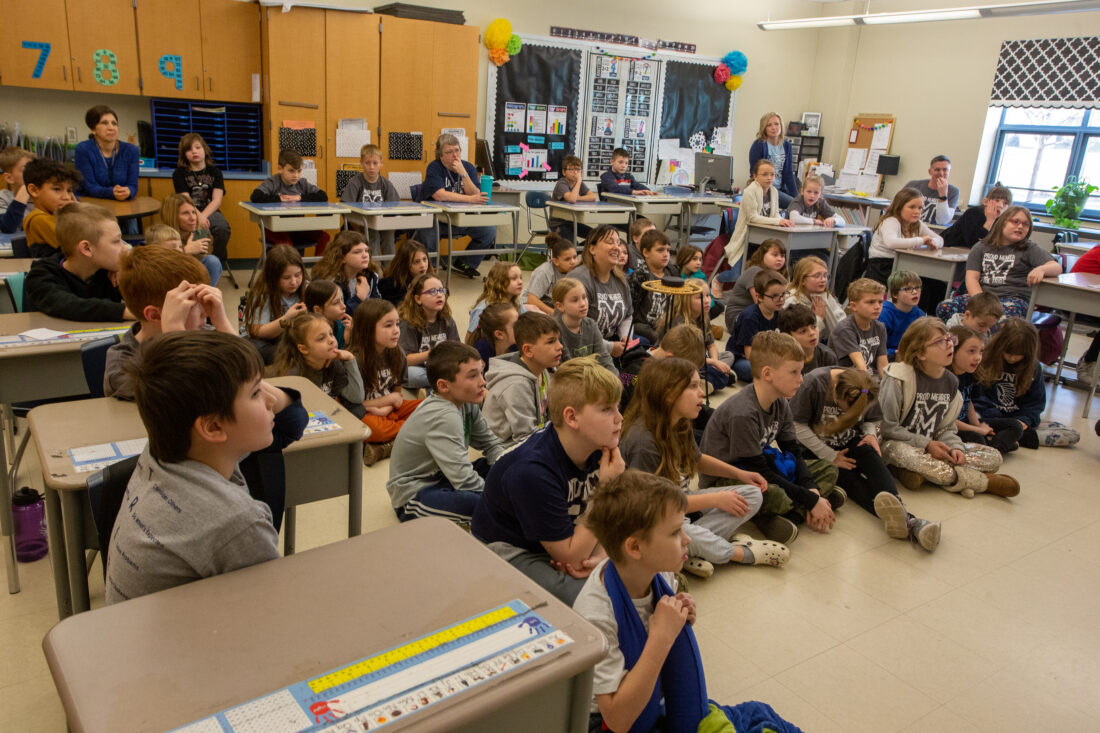
KAREN VIBERT-KENNEDY/Sun-Gazette Third graders at Muncy’s Ward L. Myers Elementary School sit in on a Zoom call with third graders at Urukundo Learning Center in Rwanda. The founder of the learning center, Mama Arlene, is the great-grandmother of Muncy student Mason Brown.
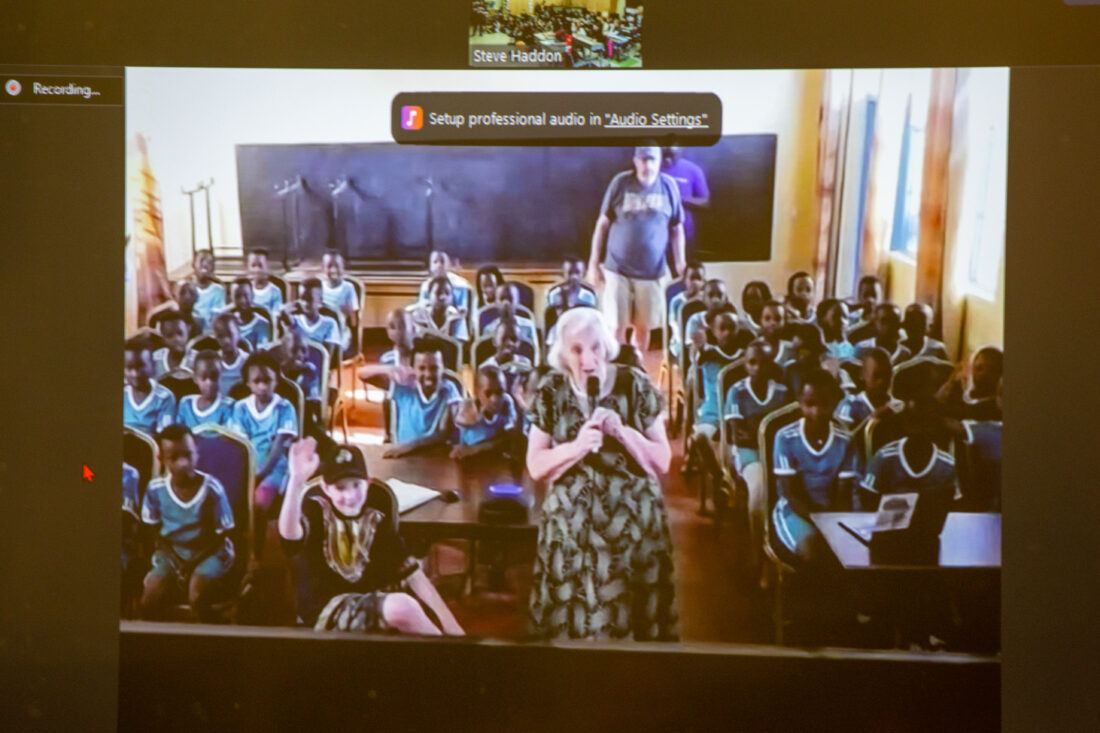
KAREN VIBERT-KENNEDY/Sun-Gazette Third graders at Muncy’s Ward L. Myers Elementary School sit in on a Zoom call with third graders at Urukundo Learning Center in Rwanda. The founder of the learning center, Mama Arlene, is the great-grandmother of Muncy student Mason Brown.
KAREN VIBERT-KENNEDY/Sun-Gazette Third graders at Muncy’s Ward L. Myers Elementary School sit in on a Zoom call with third graders at Urukundo Learning Center in Rwanda. The founder of the learning center, Mama Arlene, is the great-grandmother of Muncy student Mason Brown.
KAREN VIBERT-KENNEDY/Sun-Gazette Third graders at Muncy’s Ward L. Myers Elementary School sit in on a Zoom call with third graders at Urukundo Learning Center in Rwanda. The founder of the learning center, Mama Arlene, is the great-grandmother of Muncy student Mason Brown.
Trending
When Mason Brown went to visit his great-grandmother in Rwanda, his third-grade teacher saw it as an opportunity for students to learn that children are the same no matter what continent they live on.
"I thought it would be amazing for the kids to connect with kids from a different country and see how they're similar and how they're different," Maura Sleboda said.
All the third grade classes at Muncy's Ward L. Myers Elementary School spent time recently visiting third graders at Urukundo Learning Center, which was founded in 2010 by Mason's great-grandmother, Arlene Brown, or "Mama Arlene," as she is called.
As the Zoom session started, there was an air of excitement as the Rwandan students appeared on the monitor, especially when the Muncy students saw their classmate seated at the front in that far away school.
They shouted "I miss Mason," and waved as the students in Rwanda waved back. It was just after 9 a.m. here and students were just beginning their day, while in Rwanda it was 4 p.m. and the students had stayed after their classes ended so that they could visit with their friends in Pennsylvania.
Once the audio kinks were worked out, Mama Arlene shared that there are
currently 1,158 students enrolled at Urukundo, which elicited a unison response of "wow" from the local students. She spoke briefly about leaving her home in Williamsport in 2002 to travel to Rwanda in 2002.
And then the questions started flowing. The American students wanted to know if the Rwandan students spoke English -- yes, they were learning in order to be able to communicate with students in Muncy.
What foods do you eat, the local students wanted to know.
"The same foods that you eat," Mama Arlene replied, listing bread, rice, cereal and vegetables.
"The food is very much the same, but we use bananas as potatoes," she added.
Other questions the Muncy students asked included the climate (warm because of its location near the equator); what the students are studying (math and English); what sports they play (soccer, basketball); what they like to do after school (go to the beach.) They also like to play cornhole.
Then it was the Rwandan students' turn to ask questions. They wanted to know what American students do after school. Answers included jumping on a trampoline, playing soccer, basketball and video games. What do they like to eat? Pizza, tacos, ice cream and cheeseburgers.
One of the special treats offered by the Rwandan students were the songs they had prepared to sing for their friends in America.
"When those kids were singing, I got emotional because I just thought, 'That's just pure joy,'" Sleboda said.
"Just to see them performing for us and the smiles -- how special that was," she added.
That part of the visit also stood out for Mason Shaffer, 9, a Muncy student. He was amazed that the students here were talking to those so far away.
"That's a 17-hour plane flight," Shaffer said. "It's hard to imagine we're here and they're, like, way far away."
His fellow classmate, Liam Cooney, 8, was also impressed by the technology that brought the students together.
"I thought it was pretty cool seeing and 'Zoom-ing' with other kids from actually a different continent," Cooney said.
"I felt they were a lot like us," he added.
The third graders at the Muncy School had been studying the continents in social studies and they had been talking about climate in science, so the visit with their Rwandan counterparts had offered a chance to learn more from people living there. But, for Sleboda it wasn't just about her students learning facts, it was also about compassion.
"We read, we visited the website and we saw there's low income, no income and just how can we help," Sleboda said.
"It's just about being a good human being, citizenship and how to give back to others," she said.
Mama Arlene shared that the students need things like school supplies, crayons, coloring books, basketballs and jump ropes.
She also wanted to teach her students that they can accomplish great things, not just here in their community but out in the world.
Using Mama Arlene, who began her work in Rwanda later in life, as an example, Sleboda said it's important for kids "…to see that you can make a difference and go anywhere in the world, not necessarily in your community, but the whole wide world."
"What I learned was that kids are the same wherever and how we can be of service is the best thing because we are so fortunate here with what we have...and how we can share with them," she said of the experience.
"Friendship-wise too, not just material things, but also learning the life lessons about service to others and compassion and empathy," she added.