
Be the Match: Lycoming College student participates in life saving program
Trending
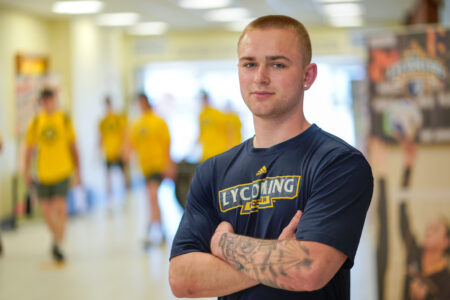
It was during the spring of 2022 when Lycoming men's soccer goalie Nick Wilke was having a lifting session at the school's recreation center when his strength coach told him about a registry for Be The Match. Wilke signed up since it was where the team was warming up and honestly didn't think twice about it.
He knew there was a chance he could be picked for a donation, but it was in the back of his mind for the following few months. Fast forward to October of that year, and that's when Wilke got a call from the organization to let him know that he was chosen, being a possible match for a woman who had acute myeloid leukemia.
That's when the process for Wilke began of becoming a donor through Be The Match and Lycoming's Get In The Game campaign for stem cell donations. Wilke was the latest Warrior athlete to be have been chosen for the Be The Match organization, which is a national non-profit organization founded in 1986 that helps find donors.
Lycoming became part of the program in 2016. It was in 2014 when assistant head football coach Tim Landis first brought the project up while being the coach at Bucknell.
Those who are interested in registering for Be The Match can visit the organization's website or scan the QR code embedded.
Lycoming has taken part in the program since 2016.
Wilke had stem cells taken after he was a match, something he's more than happy he did.
"For sure, I'm going to stay on the registry. Hopefully I can help someone again in the future. When I first saw that I was a match, I was kind of like skeptical about if I wanted to do it or not, and I think at the end of the day, you think if that was one of your family members and you would want someone to do it for them, which is why I chose to do it," Wilke said.
According to Be The Match organization, 85% of donations involve no surgery at all. For Wilke, the stem cell donation process lasted roughly 4-5 hours in one day and was no more intrusive than an IV or having blood drawn. Wilke mentioned he had a needle in his left hand and left arm, and a larger needle placed in his right arm for the stem cell collection.
Wilke noted it was more uncomfortable than painful.
"I wouldn't say it's extremely painful, just more a constant discomfort because you got to stay still. If you don't, the second you move, it starts beeping and it's not drawing," Wilke said.
Be The Match helps find donors for those with life-threatening blood cancers, which include leukemia and lymphoma.
"It's definitely rewarding being able to do something that will ultimately change someone's life forever," Wilke said. "I think if anyone has an opportunity to do something like that, it would be foolish to pass up on the opportunity."
Wilke is a member of the National Guard and Reserve Officers' Training Corps at Lycoming, meaning his donation process was a bit different than others. Because of his ROTC and National Guard ties, he had to be flown to Virginia and get the donation testing done through the Department of Defense.
When he joined the registry, the Be The Match organization used a Q-tip swab to see if he would be a potential match for someone in need. Once he got matched, the next step was to have blood work done to see from there if he was further a good match.
Wilke remembers everything about the week leading up to getting his stem cells donated. He had to get five days' worth of injections in the six days leading up to the donation itself.
"They inject you every morning for five days and that gives you flu-like symptoms. You have like body aches, sweating, stuff like that. And then you get your fifth one on the last day that you're going to be donating and then afterwards, it's kind of just fueling your body again with fluids," Wilke said of the process. "You feel tired, you feel sore, but I was out of physical activity for two weeks after."
The Lycoming soccer goalie didn't need much recovery time to get back into working out and going about his practices and offseason regiments. It was just a few days until he was back at it.
Having been through the program, Wilke knows the importance of it and what it can do. So when asked what he would say to people who are on the fence about registering, he didn't hesitate to stress how important it is.
"I would say to definitely do it because it is an opportunity you may not ever get again and when we're older, if something's wrong with us, we're going to sure hope they do it for us," Wilke said.
Lycoming football coach Mike Clark, who helped organize the campaign from its inception, stresses to all the athletes who sign up to the registry to be sure they want to be part of it because if they do get a call, they should be willing to say yes to go through the donation process and make that commitment.
Lycoming had five football players who were part of the 2015 team end up donating through the campaign.
Football standout Joe Pawlowski was the first Warrior football player to get matched for bone marrow in 2015. That donation — a bone marrow harvest from his hip — helped a 51-year-old man in California.
Defensive lineman Jon Rummel became a donor through the program in 2017 and backup quarterback Collin Wright became a match in 2017 for a 42-year-old woman. In 2016, linebacker and running back Brian Campbell was a match and he then was a match three years later as well. Both donations were for a 10-year-old girl.
Wide receiver Nick Costello — who is fourth all-time in Lycoming history with 2,440 receiving yards — became a donor in 2020 through Be The Match for bone marrow for a 71-year-old man.
According to Be The Match, the odds of donating are roughly 1 in 430, although 1 in 40 who register are called for additional testing.