
Hazardous air quality brings harmful impact to Greater Williamsport area
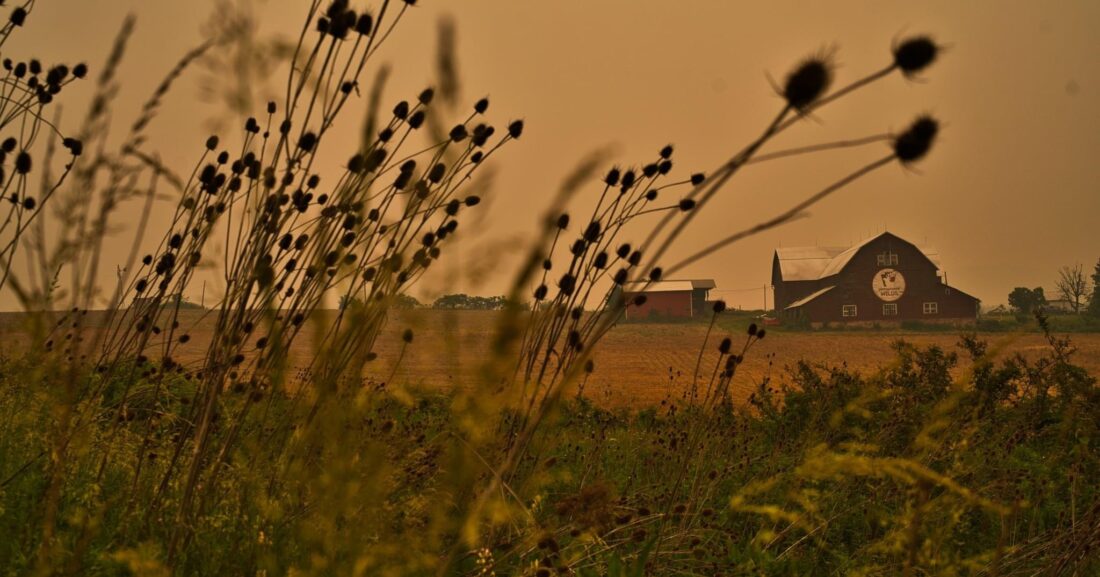
A blanket of smokey haze covers Pennsdale on Wednesday afternoon. DAVE KENNEDY/Sun-Gazette
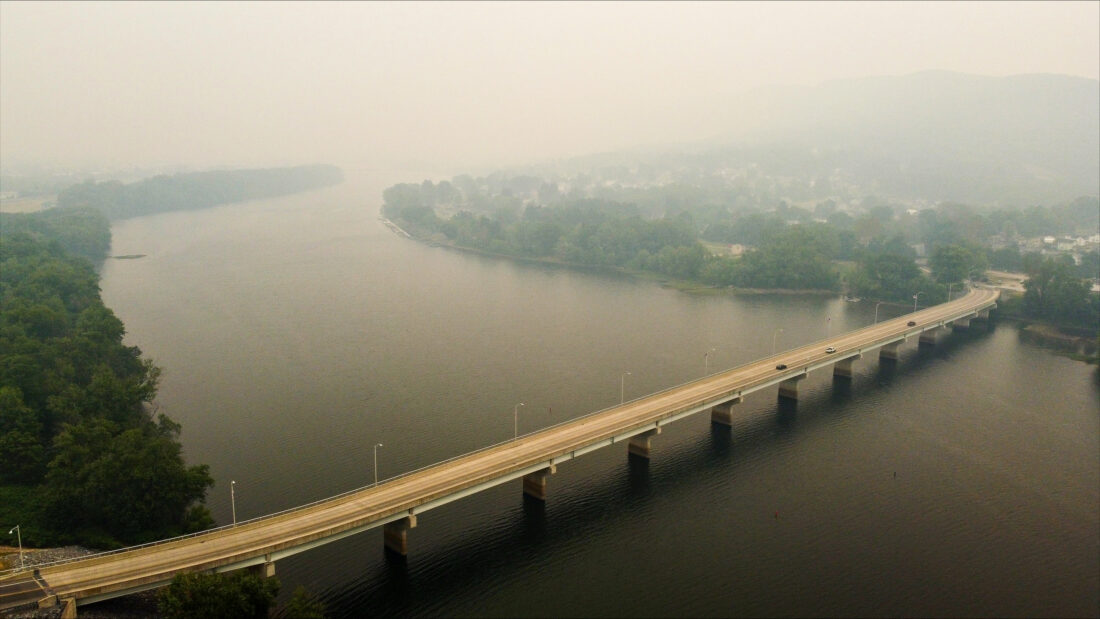
A smokey haze blankets the Susquehanna Valley on Wednesday seen here from above the Susquehanna State Park near the Lance Corporal Abraham Howard Bridge (Arch Street) in Williamsport on Wednesday. KAREN VIBERT-KENNEDY/Sun-Gazette
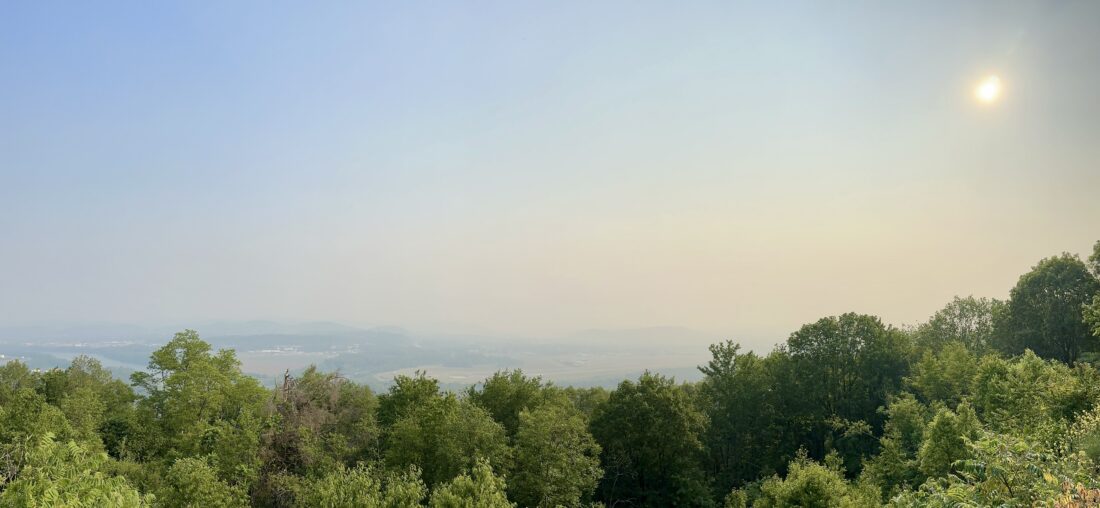
Smoke can be seen from the scenic overlook on Route 15 near South Williamsport on Wednesday morning. KAREN VIBERT-KENNEDY/Sun-Gazette
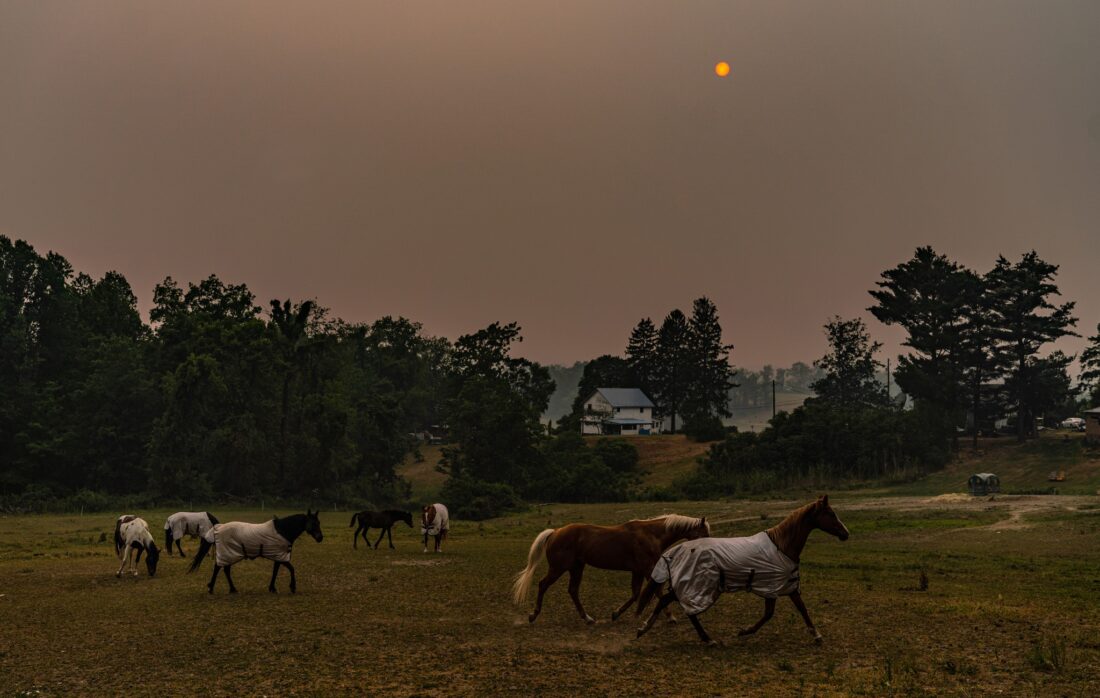
A thick blanket of smoke from fires in Canada dims the sunset and obscures the view of the valley below, Tuesday evening over eastern Lycoming County. DAVE KENNEDY/Sun-Gazette
A blanket of smokey haze covers Pennsdale on Wednesday afternoon. DAVE KENNEDY/Sun-Gazette
A smokey haze blankets the Susquehanna Valley on Wednesday seen here from above the Susquehanna State Park near the Lance Corporal Abraham Howard Bridge (Arch Street) in Williamsport on Wednesday. KAREN VIBERT-KENNEDY/Sun-Gazette
Smoke can be seen from the scenic overlook on Route 15 near South Williamsport on Wednesday morning. KAREN VIBERT-KENNEDY/Sun-Gazette
A thick blanket of smoke from fires in Canada dims the sunset and obscures the view of the valley below, Tuesday evening over eastern Lycoming County. DAVE KENNEDY/Sun-Gazette
Trending
A thick, yellow, acrid-smelling haze has settled over the West Branch valley, prompting a Code Red Air Quality alert by the Environmental Protection Agency.
Loyalsock Township School District dismissed early Wednesday because of the smoky haze. Determinations about whether to hold outdoor graduations at Williamsport Area and Montoursville High Schools had not been made as of the newspaper's deadline Wednesday.
Breathing the polluted air in the worst impacted areas of the Northeast for several hours can result in breathing in the same level of harmful air as smoking five to 10 cigarettes, according to a report from AccuWeather.
Fine particulate matter, which is defined as particles that are 2.5 microns or less in diameter (PM2.5), reduce visibility and cause a hazy appearance when levels are elevated. It is an air pollutant that is considered a health hazard to at-risk populations.
Smoke from wildfires burning in eastern Canada have been driven south by a low pressure system over that area and a high pressure system over the Hudson Bay region of Canada, according to a weather forecast from the EPA.
"The threat from the smoke is really the small particles," said Dr.Ganga Ranasuriya, pulmonologist at UPMC's Lung Center in Williamsport. "It's a complex mixture of gasses and fine particles in the air, which, of course travel very far, as we can tell it's traveled quite across the Northeast here all depending on the wind."
"The small particles are those fine microscopic particles which we sometimes refer to as particulate matter that's less than 2.5 micrometers in size. This is the most harmful to all -- all humans, and even our animals. The most vulnerable, I would say, are children and adults who already have pre-existing lung and heart conditions, particularly patients with asthma, COPD and have some degree of compromised heart or cardiovascular dysfunction. The reason being these fine particles, if they do get inhaled for a prolonged period of time, it gets pretty deep down into the lungs and can even enter the bloodstream and cause these adverse effects, mainly breathing trouble," she said.
The smoky haze obscured the sun for most of the day Wednesday and is expected to continue to impact air quality over the state until the weather pattern shifts tomorrow.
Light showers are predicted over the weekend, and the low pressure system, which is moving the smoke over the state, is expected to move out over the Atlantic.
Overall, the EPA is reporting that the worst air quality is expected today with gradually improving conditions moving toward the weekend. Good to moderate air quality is expected over the weekend into early next week.
"Unlike other wildfire smoke episodes in the Northeast, where the smoke was primarily present well above the ground, only resulting in hazy skies and more vivid sunrises and sunsets, the smoke in recent days has also been at ground level, resulting in poor air quality, low visibility and serious health risks to people, especially those outdoors," AccuWeather said.
The Air Quality Index goes from green, which is good, to yellow, which is moderate, to orange and then red, which is unhealthy. There are also two higher rates beyond red.
"The amount of particulate matter in the air -- this is what the air quality index is going to calculate, giving us a score. When you look at the Air Quality Index and this is something that you know, a lot of us will see either on the news or on our phones, there's apps for it on our smartphones and things that will tell you what the air quality index is that it gives you kind of grade of where we are at," Ranasuriya said.
"If we're in the green between zero to 50, we're fine," she said. "But, we are in the orange and red zone, which is rated at 150, and really that can affect everyone. Even a healthy person who is otherwise very active that goes off for a run every day, should be cautious of being outdoors at all, let alone doing that kind of strenuous activity that would allow us to inhale that really bad quality air into your lungs for a prolonged period of time. At this moment with the air quality it is right now, it is advisable to really stay indoors and avoid prolonged activity outside."
Many area districts are sending teams to playoffs over the next few days. As yet, there have been no changes announced for those games.
"It is advisable that they do not actually spend a lot of time outdoors until we have some data from weather reports and everything else that shows us the quality is getting better. This might take a few days, but this is something that is advisable to not be outdoors -- field trips, teams, just any outdoor activity that will keep our children out there for prolonged periods of time," Ranasuriya said.
If you must spend time outdoors, due to either work or a sports activity, you should be aware of signs that your body is under stress from the pollutants.
"When we are exposed to these kinds of, particularly wildfire smoke, even though we're so many miles away from it, the fine particles can actually cause several symptoms head-to-toe," she said. "The most likely are respiratory, meaning difficulty breathing, just a feeling of tightness in their chest. They might be coughing a little bit more than the irritation at the back of their throat and coughing. People with asthma, COPD, they will actually feel more short of breath and feel the need to use their rescue inhalers, emergency inhalers, more frequently."
Acknowledging that she had seen an increase in calls from patients wondering what they should do, Ranasuriya said that she advised that they have an in-date rescue inhaler on hand to make sure that they don't run out.
"Make sure you have something available to you to use preemptively to make sure that you don't run into an asthma attack. COPD is the same: They should be on top of use of their inhalers and rescue inhalers. The other things are just with the different types of gasses that are in the smoke, people can have headaches, they might even feel... needing to be indoors and basically not outside, they might feel more short of breath and even that can cause some degree of anxiety too," she said.
For people with pre-existing heart conditions, Ranasuriya urged them to be aware of chest pains and to alert their physician and seek medical care if they have increased pressure or pain in the chest.
Ranasuriya said that her office has received calls from patients who, such as those in the construction industry, have to be outdoors, no matter the weather.
"We do have a lot of patients who have called in who are outside and working, whether it's construction, any kind of activity that is outdoors where they were required to be, we have actually advised if it's possible to use N95 or KN95 masks. A lot of these N95 types of masks will filter out particles that are 0.1 to 0.3 micrometers in size, so they should be able to filter out the majority of these particles that will be problematic. So if it's unavoidable and you have to be outdoors in this weather, it will be advisable to use at least a KN95 or N95 quality mask," she said.
One last word of caution from Ranasuriya -- don't add to the pollution by using a gas stove, wood fireplace or burning candles. If you are indoors, close windows and doors and run fans to circulate the air.
"I am worried for people who also smoke on top of this too. There's even more pollution around as secondhand smoke because people might have more of a tendency to smoke indoors and add to the pollution that is around people who might not even be smokers," she said.