
Region faces third spongy moth outbreak
Trending
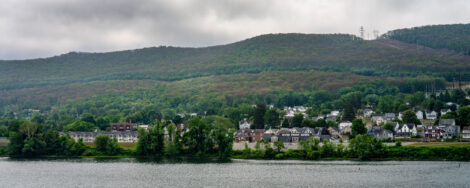
Recently, it has been noticed that there are some brown patches in the forest in the region's mountains.
The region's trees are being defoliated due to the population of spongy moth caterpillars that have been damaging leaves in our area for decades, according to the state Department of Conservation and Natural Resources.
Spongy moths, formerly known as gypsy moths, have been damaging Pennsylvania forests since their initial outbreak in the 1970s. The spongy moth population was initially introduced in the United States during the 1800s as an alternate silk source. Currently, we are experiencing the third spongy moth outbreak, which began in 2021, according to state records.
Spongy moths prefer oak trees, but the caterpillars will eat other species of trees such as apple, alder, aspen, basswood, birch, hawthorn, hemlock, tamarack (larch), pine, spruce, willow and witch hazel, DCNR's website said.
"If folks see masses of moths laying eggs, or patches of eggs on trees, they can scrape them off and put them in alcohol." Sarah Johnson, a forest health specialist with the state Bureau of Forestry. "Every little bit helps, but it is very hard to fight this individually."
There is hope, however, that the spongy moth population is on the decline. Unfortunately, due to the stress that has been put on the trees for decades, there could be many more dead trees seen according to the state.
"The trees are so stressed. There can be more dead trees popping up in the next five years." Johnson said.
The state has sprayed chemicals and biological pesticides in order to lower the population of spongy moths in over 18,000 acres in Lycoming County according to maps and records from the DCNR website. On the same map, neighboring Clinton County is shown to have over triple that amount of spraying with over 64,000 acres covered.
The state only sprays public lands and doesn't have any areas listed that it still plans to spray. Private landowners can call companies in to spray their lands for spongy moths as well.
"Right now, even if we were wanting to spray private land, we couldn't logistically do that. There's just too much to spray generally. The scale of the problem is just huge right now." Johnson said last year at a Lycoming County Commissioners meeting.
Pam Sarwell stated that the contractor for whom she works, Triple F Flying Inc. has already sprayed over 10,000 acres of private land in the Lycoming County area. Though Triple F Flying Inc. sprays in Clinton and Centre counties as well, their primary focus has been in Lycoming County, according to Sarwell.
"This year hasn't been any busier than last year," Sarwell told the Sun-Gazette.
If people are concerned for their own trees, there are ways to protect them from spongy moths. Insecticides can be sprayed over trees in the month of May to protect them.