
Trending
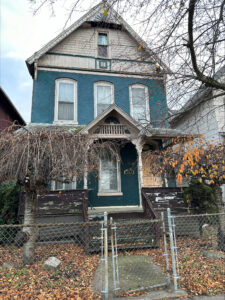
Residential, commercial and industrial blighted properties will be demolished, repaired by the owners or acquired with a renewed emphasis.
The city is going after such blight by using a large infusion of the American Rescue Plan funds for agencies such as the Redevelopment Authority, which is empowered to take the properties after several legal steps.
The matter resurfaced when Councilwoman Liz Miele noticed a larger budget line item for codes and its Clean and Seal program and emergency demolition.
She asked for an explanation from Gary Knarr, city zoning administrator and acting codes office manager and Mayor Derek Slaughter.
Knarr said he and the mayor discussed how best to go after the removal of blighted properties.
"We are going to be going after these properties that are blighted," he said.
As an example, a demolition at a home on Second Avenue -- which fell apart when the crane hit it -- is a property that was in urgent need of being razed, Knarr said.
There are other properties, such as one in the 700 block of Park Avenue, which is right across the street from the YMCA, he said.
"That is the whole purpose, hopefully, cutting down on the blight across the city," he said.
Miele asked about the transition of those properties to the authority.
"Are we getting reimbursed by the authority for clearing the properties, do they transition after that?" she asked.
The process is for the Bureau of Codes to identify that they are blighted properties and exhaust all avenues to basically get the people to fix them up, Knarr said. So, then the city Blighted Properties Review Committee makes a recommendation to move these properties to the RDA, he added.
"We send a notice to the owners of these properties, letting them know that they have 30 days to appeal," Knarr said.
If not, the matter goes to the RDA, which now has the ability to purchase them and get them back on the tax rolls.
For example, if the city spends $7,000 on a blighted property, RDA claims and turns it over to the contractor -- this goes back to the RDA to recuperate the cost and the city also gets back the cost of spending using the clean and seal program funds.
Sometimes, city will mow the grass and keep the weeds down, Knarr said.
That tabulated cost is sent to solicitor Norm Lubin who then puts a lien on the property and the city gets its money it spent in the Clean and Seal program, he said.
Miele asked to what extent the city is seeing contacted property owners who say they want to keep the property and fix it.
"We have nine properties on the RDA list with available funds to take them over," Knarr said.
"We had a few that started to fix their property," Slaughter said.
The legal process is straightforward but can take some months.
Currently, the city has had a few developers purchase blighted properties, flip those and they are no longer blighted and are now viable, liveable residences, Knarr said.
Nobody is surprised when the acquisition phase begins, as it takes six to nine months of communications before it gets to that point, council was told.
Miele received assurance that any proceeds from liens placed on properties will go into the general fund for the 2024 budget.