
Trending
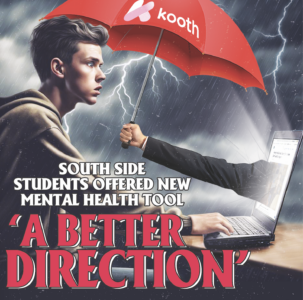
Students in the South Williamsport School District facing everyday stressors have an additional resource to turn to, as the district is participating in the pilot roll out of the Kooth program throughout the state.
Kooth began in the United Kingdom 23 years ago, but started providing services in the U.S. about two and a half years ago.
"Kooth is a digital mental health wellbeing application," Bob McCullough, vice president of Clinical Strategy, said. "We believe every user can benefit from building their resiliency skills and coping techniques by having early access to those tools and resources."
The program has three different pathways through which participants can get assistance.
The first of which is the availability of resources on how to cope with a variety of challenges, offering tools for self-assessment to help keep track of their progress.
The second path is by posting any issues they're currently facing to a moderated peer community forum.
"This gives users an opportunity to learn from each other in a safe, moderated environment," McCullough said.
Each post is vetted by the Kooth team to ensure they respect community guidelines and that no personal information is exchanged or bullying takes place.
"The third pathway is where users will have access to licensed counselors that they can engage in a chat-based counseling session," McCullough said. "About 65 to 70% of users get what they need from the self-guided or from the peer community."
Services in Pennsylvania are available to those 11 to 18 years old and are broken into three age groups.
"The chat-based counseling is available to all ages, starting at 14 because that is Pennsylvania's age of consent," McCullough said. "Anyone under 14 has to have parental consent before we allow them any access to Kooth."
Kooth is currently working to get team members into schools around the state to provide education about the program, as well as to create student ambassadors to further raise awareness of mental health.
"We work closely with guidance counselors and other resources, so that if there does need to be that expedited referral, we can help facilitate that," McCullough said.
McCullough said that Kooth has already started making a big impact in the state.
"In the first five months of being in Pennsylvania, we had 70 students identified as being at risk and needing de-escalation. Those are 70 lives that potentially we were able to intervene in and push in a better direction," he said.
"My focus has always been helping individuals reach their potential," McCullough said. "So often, trauma and other life circumstances can interrupt that journey, and we're trying to flip that script from being a treatment focused intervention that you can only access when there's an identified problem, to having those tools and resources at our fingertips, because we can all use them."
For Dr. Eric Briggs, superintendent for South Williamsport, the goal is to give his students as many resources as possible.
"Some students feel they have nobody they can turn to in regards to dealing with the day-to-day issues teenagers face," Dr. Eric Briggs said. "Kooth provides them with an outlet to be able to talk to somebody that's maybe dealing with similar issues."
"This is another tool in the mental health toolbox that we want to provide to our students, but it isn't the answer for all students," Briggs said. "The reality is youths today are faced with a variety of challenges, and I want to ensure that our students have another program at their disposal to help them with any sort of mental health needs that they have."
"Dr. Briggs is intensely aware of the mental health issues facing students in our area," said state Rep. Jamie Flick, R-South Williamsport, who approached Briggs about being among the first in the state to implement the program. "Tragically, we've lost a number of youths to suicide in the last several years. For any parent, teacher and superintendent, one loss is too many."
This past summer, Flick attended a meeting between all the superintendents of Lycoming County and the executive team from the county's mental health agency to discuss the need for more mental health professionals in area schools, and after returning to Harrisburg and meeting with members of the Mental Health Caucus and Human Services Committee to discuss the issue, Flick was made aware of Kooth.
A major selling point for Flick is that the legislature approved funding for the Kooth program with bipartisan support, through a grant from the Department of Human Services so that school districts, parents, and students can opt into the service at no cost.
"That's the key, it's an opt-in program and it's free," Flick said.
Flick said he has received very positive feedback, noting that there are nearly two dozen students in the district utilizing the platform. And, while almost half had only moderate needs, 19% have been assessed as having severe need of services related to stress and anxiety, family and parental relationships, learning difficulties and thoughts of self-harm.
Flick stresses that while the program is not a perfect fit for everyone, it is a vital tool for a much underserved community.
"Many of our rural school districts cannot find, or afford, a full-time mental health practitioner, so wait times are often six months to see a specialist. We need to have tools at our disposal that help kids in need before it reaches a crisis point," he said.