
Trending
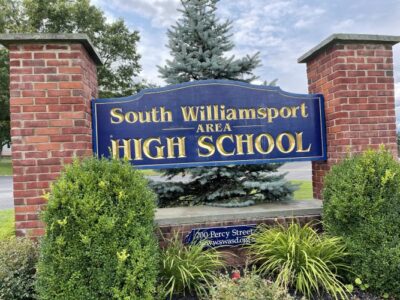
As he does every school year, South Williamsport School District Superintendent Dr. Eric Briggs recently gave the school board a mid-year report on challenges faced by not only his district, but others statewide.
"Each year, the Pennsylvania School Board Association gives out a survey to all 500 school districts, looking at the challenges we face both locally and throughout the Commonwealth," he explained.
276 of the 500 districts, or 56% responded to the survey this year.
Some of the challenges identified included student mental health, staffing shortages, academic challenges and budget pressures.
"Statewide, 79% of the respondent school districts rated student mental health as one of the biggest instructional challenges, with half of them responding that over 60% of their student population had mental health needs," Briggs said.
A number of mental health tools are available to students of the district, Briggs said, including the second-step curriculum for grades K through 5, and the panorama survey for grades 3 through 12. Thirty-one students 14 years and older are also enrolled in the Kooth program.
"We also have an email monitor program called Kaggle," Briggs said. "If a student uses words like suicide or kill, we get warnings on that and investigate them internally."
Face-to-face counseling is also available to all students, courtesy of Crossroads Counseling.
A shortage of those in the "teachers pipeline" was cited by Briggs as a major contributing factor in trying to fill vacant positions throughout the state.
"Just to put this in perspective, in 2010, Pennsylvania had 20,000 teachers that graduated with teaching certificates, as we sit here today, the second largest producer of teachers currently has 1,602 teachers in its pipeline."
Special education is among the hardest hit with only 31 students across the three campuses of Commonwealth University enrolled in a straight special education program, he said.
Briggs implored anyone with a four-year degree that is unhappy with their field of study to check out abcteach.com.
"If you have a four-year college degree, within a year and a half, you can attend Point Park University and get a teaching certificate by passing a nationally board certified teaching examination," he said.
Statewide, 77.3% of Superintendents report charter school tuition as their greatest challenge, with 52.7% citing special education costs, Briggs said.
In terms of academic struggles, Briggs reports that the district's teachers are facing that head on.
"I'm very proud of the work that our teachers are doing," he said, citing a 72% at or above the reading benchmark for the district's kindergartners.
Through Act 158, every student has five graduation pathways to choose from, Briggs explained.
"If you get proficient in all Keystone scores, you're able to graduate," he explained. "The second one breaks it down into a three score composite, with a certain subtotal that you need for a scaled score when you add your three composite scores up. Our third pathway is through industry based competency certifications, these are CTE students that go over to Williamsport High School, then you have an alternate assessment pathway, where kids can take a CTS, PSATs, ASVAB or other tests, and they can get through they can graduate that way. And lastly, they have the evidence based pathway."
Briggs stresses that much of the work of school counselors lies in pairing up the students with the proper pathway.
"That way when it comes to the end of their senior year, they're not panicking to figure out what pathway to put them into," he said.
A major hindrance over the past several years to maintaining students' academic progress has been chronic absenteeism.
"A student is considered chronically absent once they miss 10% or more of their days in school, so once they've missed their 18th or 19th day of school, they're considered chronically absent. Research shows once you're at 10%, you present challenges academically," he said.
Briggs told the board that the lowest rate of chronic absenteeism exists at the kindergarten level, with persistent attendance at 92%, with the highest rate of absenteeism occurring in ninth grade, with persistent attendance hovering around 69%. He also noted that 10th, 11th and 12th grades see rates of chronic absenteeism only slightly above the ninth grade level.
"We've made it a priority to attack truancy a little more aggressively this year," he said, adding that school officials have been working directly with the district magistrate to handle those cases.
He also cited significant attendance improvement in all three schools from the 2022-2023 school year to the present one with a 22.3%, 24.6%, and 11.4% increase for Central Elementary, Rommelt Elementary, and the Junior/Senior high school, respectively.
"We're trying to really incentivize attendance, and one way we do that each month is to offer reward assemblies or activities," Briggs said.
Of particular concern to the board was the level of chronic absenteeism at the Mountie Academy, a cyber learning extension of the school district, which is around 56% as of Feb. 6.
While acknowledging the challenges associated with the academy, Briggs told the board that the budgetary issues involved with ending the program would be too great, currently.
"It's just too risky for me to shut it down," he said. "You take those 37 kids and assign a number between $15,000 and $25,000. Right now, I think it's less than $5,000.