
Busy bees: Episcopalian churches care for creation with homes for pollinators
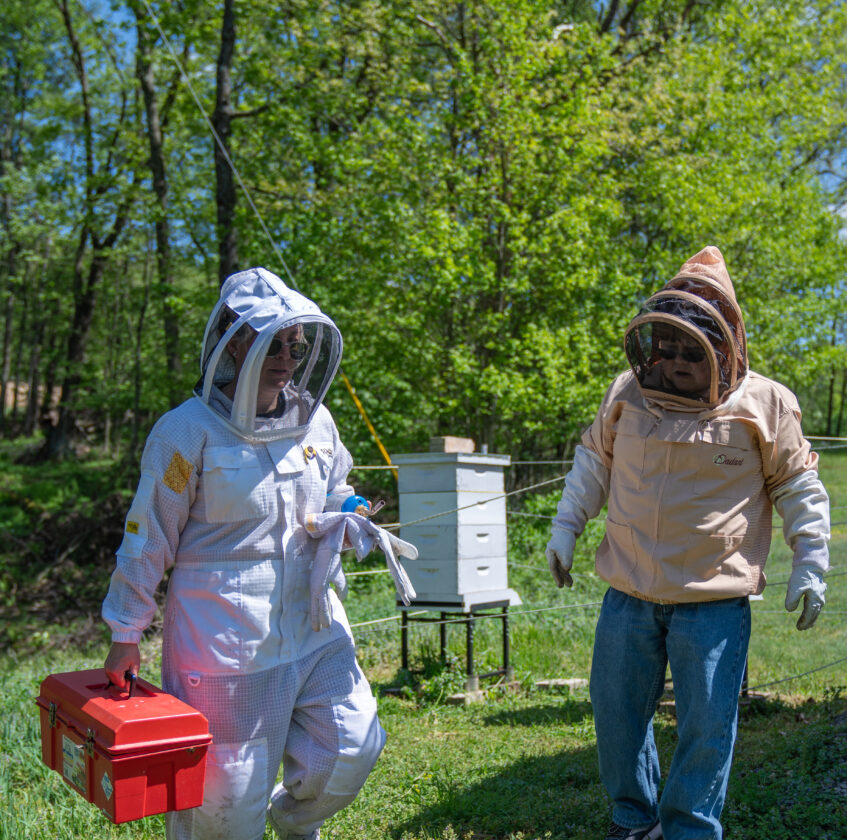
Sarah Reid and Lauri Kerr check the bee hives at Good Shepherd Episcopal Church recently. These hives are one of 4 locations where the West Branch Episcopal Apiary has hives that produce honey that they give away. DAVE KENNEDY/Sun-Gazette
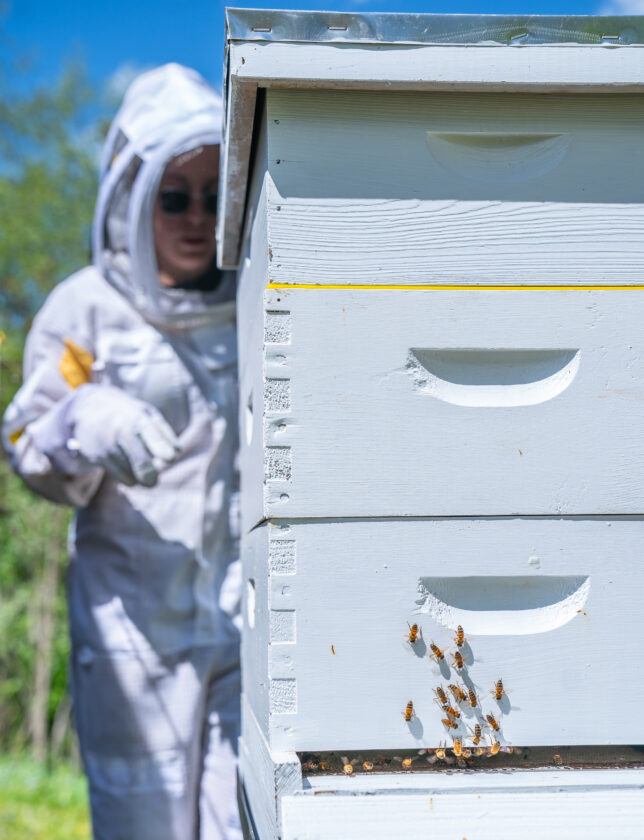
Sarah Reid checks the bee hives at Good Shepherd Episcopal Church recently. These hives are one of 4 locations where the West Branch Episcopal Apiary has hives that produce honey that they give away. DAVE KENNEDY/Sun-Gazette
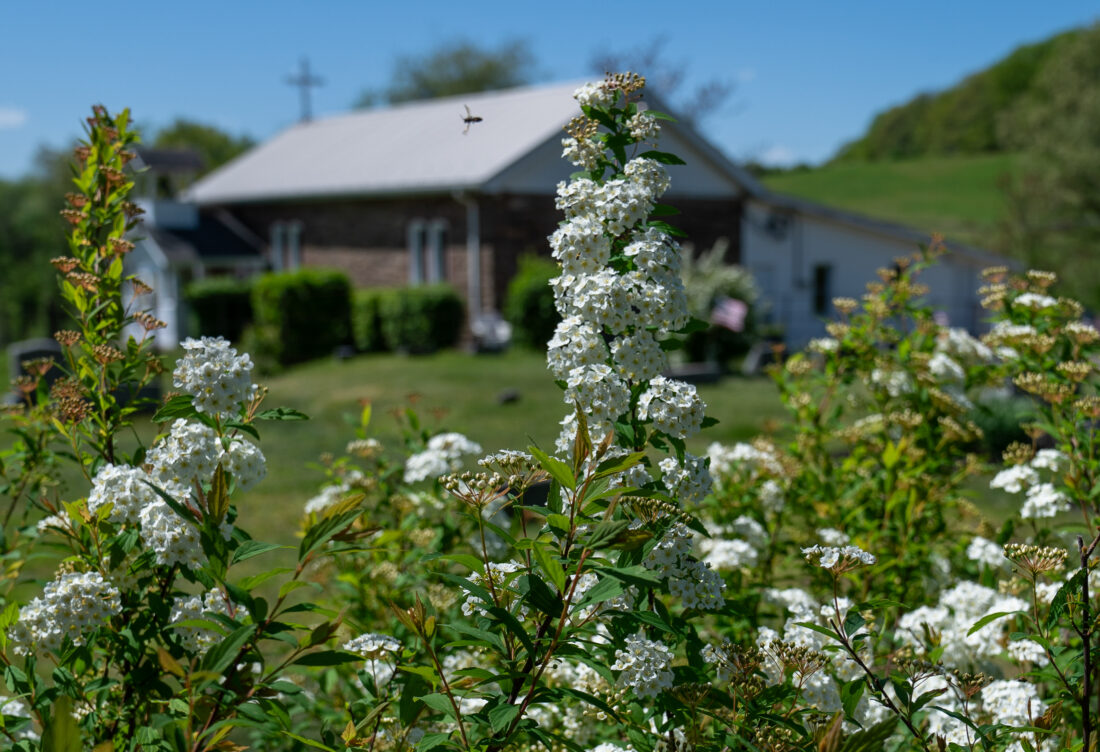
Pollinators of all types fly between flowers at Good Shepherd Episcopal Church recently. There are 4 locations in the area where the West Branch Episcopal Apiary has hives that produce honey that they give away. DAVE KENNEDY/Sun-Gazette
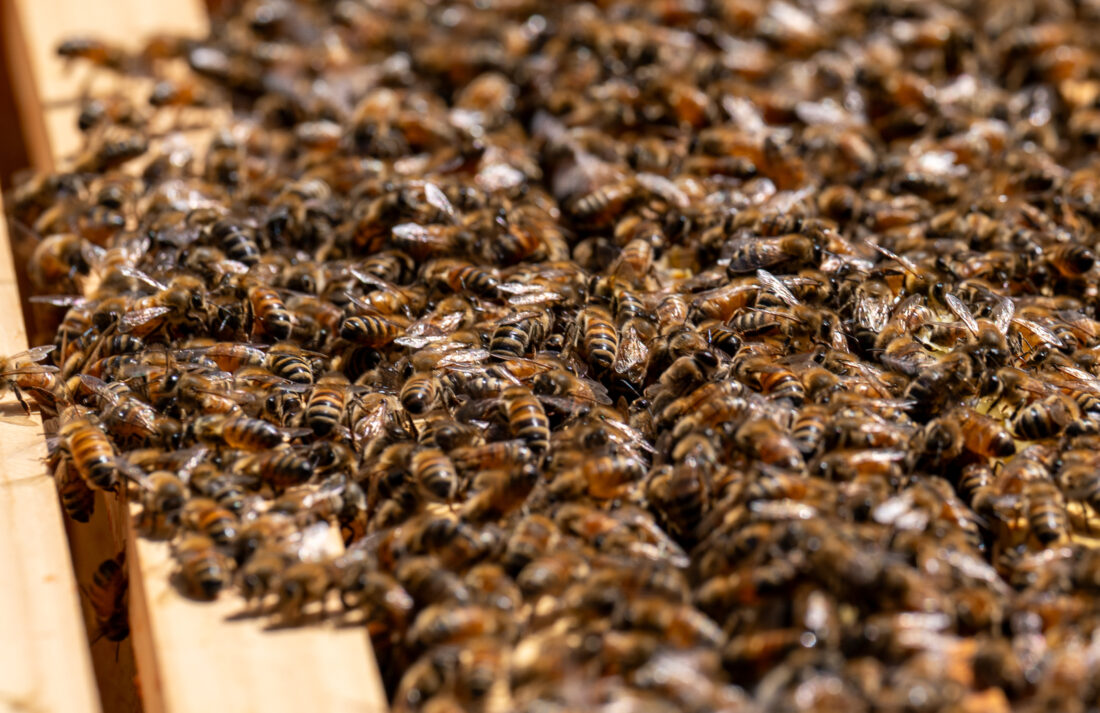
Bees crawl over each other on one of the open hives at Good Shepherd Episcopal Church recently. These hives are one of 4 locations where the West Branch Episcopal Apiary has hives that produce honey that they give away. DAVE KENNEDY/Sun-Gazette
Sarah Reid and Lauri Kerr check the bee hives at Good Shepherd Episcopal Church recently. These hives are one of 4 locations where the West Branch Episcopal Apiary has hives that produce honey that they give away. DAVE KENNEDY/Sun-Gazette
Sarah Reid checks the bee hives at Good Shepherd Episcopal Church recently. These hives are one of 4 locations where the West Branch Episcopal Apiary has hives that produce honey that they give away. DAVE KENNEDY/Sun-Gazette
Pollinators of all types fly between flowers at Good Shepherd Episcopal Church recently. There are 4 locations in the area where the West Branch Episcopal Apiary has hives that produce honey that they give away. DAVE KENNEDY/Sun-Gazette
Bees crawl over each other on one of the open hives at Good Shepherd Episcopal Church recently. These hives are one of 4 locations where the West Branch Episcopal Apiary has hives that produce honey that they give away. DAVE KENNEDY/Sun-Gazette
Trending
Trinity Episcopal Pro-Cathedral on West Fourth Street, takes seriously the mission of the faithful to be stewards of God's creation. Witnesses of this are the bees that live in a hive on the roof of the church, the community garden the church has opened and the native pollinator blooms they're planting to provide food for the bees.
"We got started with beekeeping at Trinity as part of our church. The Episcopal Church has a large movement in creation care and part of our responsibility as Christians and as Episcopalians is to care for the earth," said Sarah Reid, a member of the church and of the West Branch Apiary group of beekeepers.
"We decided that we had some beekeepers already in the church and so they thought about going and putting a hive on the roof of Trinity. And then we found that we had a lot of interest within the church. So we invited some of our friends to collaborate with us," she said.
Out of this collaboration, the West Branch Apiary was formed.
The group made it a larger project by inviting other churches to participate so that now there are three churches involved. There are two hives at Trinity, three at Cogan Station, two at Montoursville and one at Jersey Shore for a total of eight hives.
Not all of the hives are at churches. Two are at the homes of parishioners simply because the landscape of the church could not support a hive, Reid said.
The apiary group has some beekeepers, Reid said, who do the main work and education and are training more people in the outlying areas to be more independent.
"It's very collaborative," Reid said.
Maintaining the hives takes time. In addition to having the right equipment and clothing the hives need to be set up.
"First you have to order the bees and install them into the hive. There's a couple different ways to do that, but you can even get bees through the mail. We actually buy them here from a store in town, but you can order them in the mail and so they come in a cage with the queen. Then you put them into the boxes and then they kind of get to work building and creating combs on frames that we've provided for them," she explained.
"As they work throughout the spring and summer, we as the beekeepers, we kind of go in and make sure that things are being done in an organized fashion. We're making sure that the bees have plenty of food around. There are some kinds of dry spells where there's less pollen, and less things available as we get further in the summer towards the fall. So we may have to add food supplements to make sure they have plenty of water and that they're doing their work in an organized fashion," Reid said.
Beekeepers also make sure the colony has room to expand.
"We need to make sure that we add more space for them at appropriate times so that they have plenty of room. If there isn't plenty of room you may encounter a swarm and that causes a lot of difficulties," she added.
Trinity Pro-Cathedral is located along West Fourth Street in the city, not exactly the location where you would expect bee hives, but Reid noted that the reception in the neighborhood for the hives has been positive.
"We try to make sure we have lots of posters and educational opportunities inside the church for people to join with our community on a regular basis. I'm very enthusiastic about the honeybees. being up there. They're very high up, so it's not like a safety concern or anything like that. Most people I think probably don't notice them," Reid said.
"Overall because it is up so high you can't really see it easily from the street level. I would say we've really only encountered really positive feedback. We also have put out different types of knees on the ground level where we put a lot of signs, educational signs in the front yard of the church that are non stinging, and they're really fantastic pollinators as well. So people may have seen those signs," she added.
Trinity's creation ministry is not just about the bees but they have woven together the bees, a native plant garden and a community garden into a mutually beneficial ecosystem.
But, it began with the beehive on the roof. Some retirees at the church then came together to start the community garden, said the Rev. Canon Ken Wagner-Pizza, rector and provost at Trinity. Then some more parishioners who had retired from Penn State Extension and others who were involved in the Seed to Supper program got involved.
The church received a grant from the diocese creation care committee for the pollinator garden, which is being planted with native plants to help feed the bees. The bees then help pollinate all of the plants.
"It kind of interconnects with that and with our vegetables that can grow. We also have a police garden out there and a fireman's garden," he said.
The firemen and police use some of the produce, Wagner-Pizza said, but sometimes they just plant the gardens and tell the church to harvest the produce for their Thursday afternoon food programs. The plots in the community garden are used by people in the area to grow fresh vegetables enabling them to stretch their food budget.
The response to the garden has been good from the very beginning and there is actually a waiting list this year for people who would like to have a spot.
"We might have to expand at some point," Wagner-Pizza said, although he cautioned they don't want to get too big.
The garden is actually located on the neighboring Park Place property, so "it's a joint effort," he said.
The Episcopal Church had passed resolutions through the years regarding creation care, whether from installing solar panels on church buildings to being involved in the cleanup of the Chesapeake Bay -- all ways for the church to be stewards of the creation, he said.
"I think that in order to help educate and advocate for the earth. I feel like as a church, that is part of what we need to do. This is like a simple way: while we may not be having a global effect, by keeping a small number of bees, we are increasing people's understanding about how important pollinators in general are for our food supply and just for life," Reid said.
"Hopefully we're helping people just to understand that as a community we are responsible for the environment and for the world in which we live and we want others to take that seriously as well. We really want people to know that as Christians that we really do care about climate change. We care about food production, we care about justice, and equity. We care about all those things. We have just a small area where we can work but we can make a very positive change in that area," she said.