
$3 million expansion to bring more space, newer technology to Williamsport Area High School’s welding lab
Trending
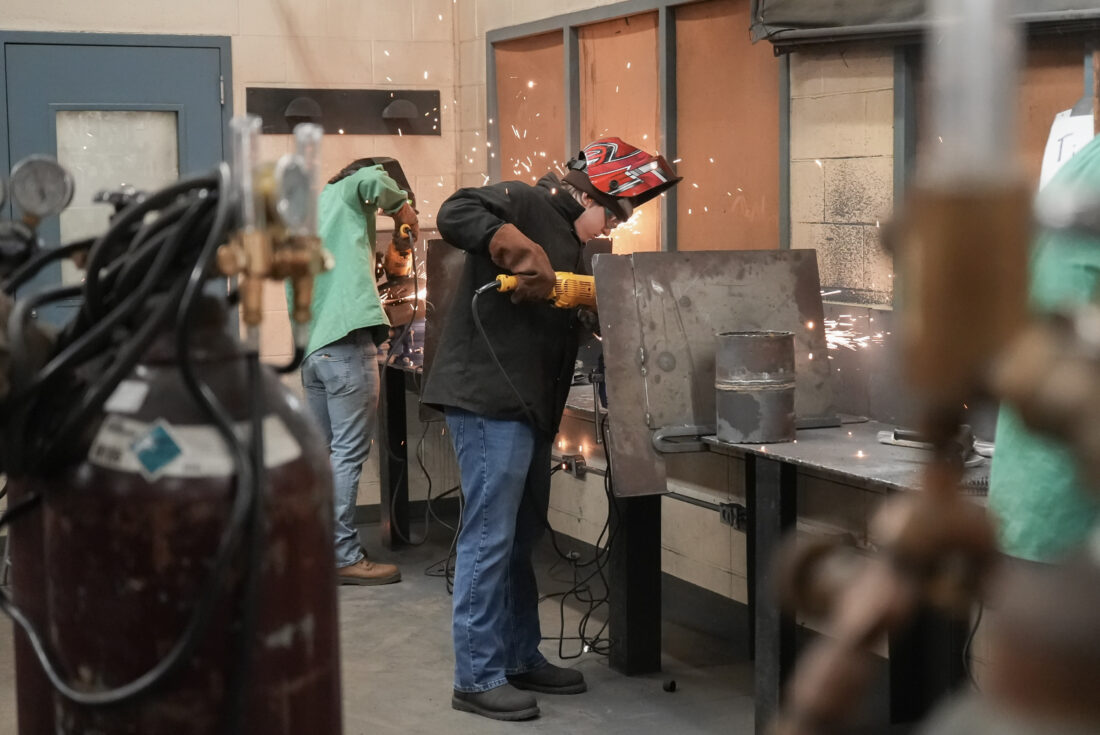
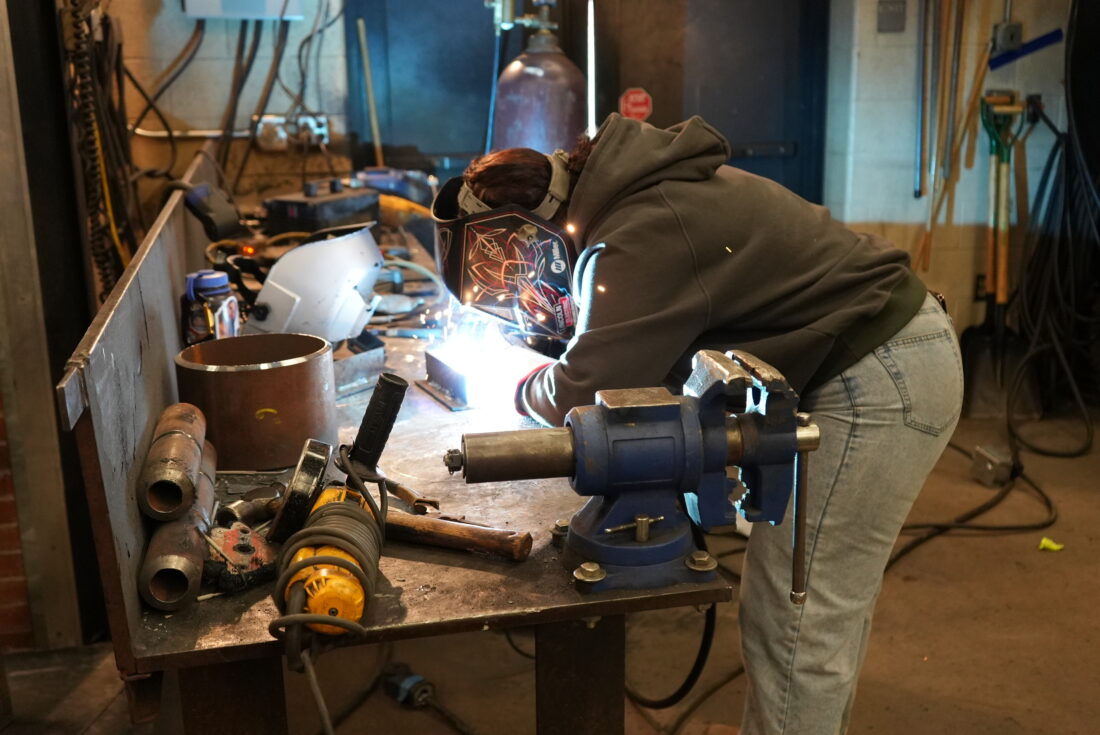
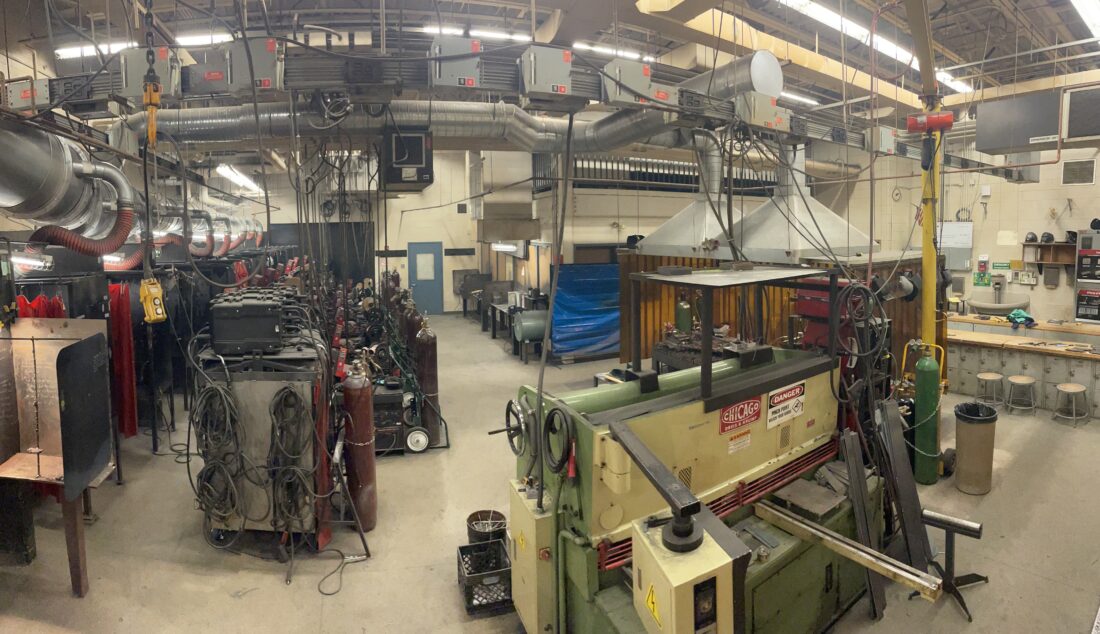
Since the early 2000s, the Williamsport Area High School has offered a program for students who want to become certified as welders. Also since that time, despite the program's growth, the classes have met in the same space. But that's about to change as the district embarks on a plan to expand the footprint of the welding lab, including a separate classroom for instruction and an improved ventilation system.
The $3 million project will add 1,700 square feet to the facility, bringing the total size of the lab to 2,500 square feet, with 1,800 square feet specifically for welding.
"The expansion is intended to accommodate growing student interest in the program while upgrading ventilation and incorporating industry-standard equipment," according to information from the district.
"I think the space has probably seen more kids than what the space was built for," said Matt Fisher, director of Career and Technical Education (CTE).
"This gives us an opportunity to pursue some more fabrication-type equipment and experiences," he added.
Most of the students in the welding program are there because of an interest in pursuing it as a career after high school, he explained.
Welding instructor Jeremiah D. Martin agreed with Fisher.
"Most of them are looking for a decent education, as far as after school careers to get into," Martin said.
"They might not go into the welding field, but I think that this gives them a good foundation to go any direction in the trades or just in life. This teaches them a good skill," Martin said.
The program also offers students the opportunity, after graduation, of moving right into the workforce, or others might work in the field while pursuing an advanced degree, such as Penn College offers.
The high school also offers a Cooperative Educational Program where the students work in a local industry while attending classes in welding.
Fisher offered several reasons why the need for students pursuing welding has grown.
"There are baby boomers that are retiring from the field, that have been there a long time. And so there's opportunities from that. I think the gas industry certainly played a role in it," he said, adding that opportunities in that sector may not be at the same level that they were in the past.
"I think Penn College has a really strong program in our backyard as well -- that's appealing for our students. And then I think just a growing manufacturing sector, or a continuous need in the manufacturing sector," Fisher said.
The new lab will also offer new Computer Numerical Control technology, which uses computers to control machine tools.
"Those are transferable skills that may be used in the machining setting or any other type of manufacturing," he said.
To say Martin is excited about the expansion of the welding lab is to seriously understate his enthusiasm.
In his second year as instructor, Martin detailed what is offered in the programs during the three years -- 10th through 12th grades -- that the students are there.
Each year builds on the knowledge gained the year before -- always emphasizing the safety aspects of welding.
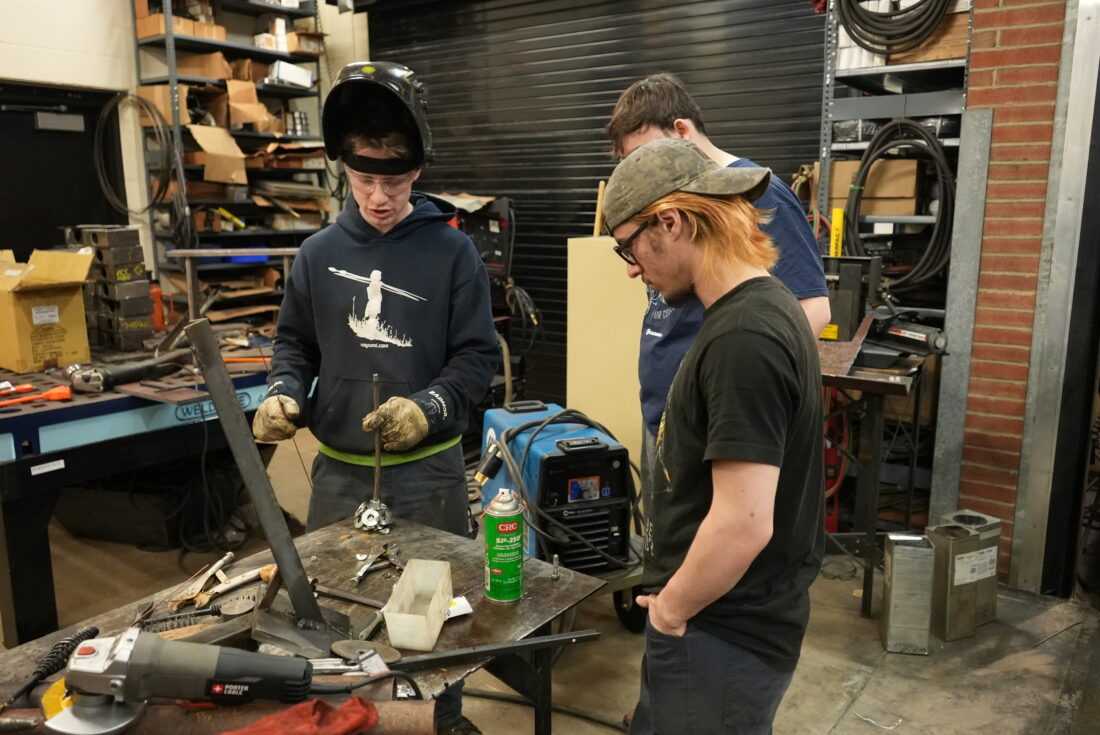
It's a thorough curriculum, utilizing both hands-on and classroom instruction in the different tools and processes for welding until by level two they do small fabrication projects from blueprints they're given.
"We do probably 5, 6, 7, 8 of these, depending on the class, how motivated they are, their skill level, where that leads them," Martin said.
"Some students are much more advanced than others. When they get done soon, we just kind of work on cool stuff-stuff that I don't really teach the whole class -- if there's an advanced student who wants to further on," he said.
By level three, the students get into TIG (tungsten inert gas) welding, which is a more of a specialty welding, Martin explained.
"It's very clean, very precise, it's your strongest form of welding. (It) takes pretty good skill. We do that with steel, aluminum and stainless steel. We get into CAC, which is carbon arc cutting or gouging. Then we get into a lot of review from all three levels for our NOCTI exam," he said.
The NOCTI exams are six-hour state tests composed of about 200 questions for the written portion and then the other half is spent in the shop performing about six different welding jobs, Martin said.
In all, it's a very extensive program offered at the high school level and Martin sees only good things coming with the expansion.
Right now, there are 16 welding booths and the level one classes usually total about 21 students, so there is always booth sharing, in fact Martin has built what he calls semi-booths for students that he "trusts to work out in the open a little bit more."
There are also some pieces of equipment that date back to when the lab originally opened. A few have been upgraded but most of it is pushing the 23-year time frame.
"In 2002-2003, we all had flip phones, now we all have computers in our pocket," he said, referring to smart phones. "That's the same technology in the welding industry. Our welders weld fine...but the new technology is very interesting and that's what they're going to see when they get out in the workplace."
"I'm very excited for our new technology. We'll have more space and that's going to allow us to do some bigger projects, do some more group projects, maybe do some projects for the public," he said.
"You know, if we can help out somebody, or get the students to bring in some of their projects that they want to build or work on, because I found that students really give a lot more interest when it's their idea and their project versus my project my ideas. So does it pertain to what I'm trying to teach all the time. No, but sometimes I have to sit back, let my stuff sink in while they're actively working on their stuff. And if and if our two paths cross, that's what we're after," he said.
The expansion is expected to start in March with the outside and then at the end of the school year, the lab will probably be shut down a week or two early to start renovations there. The lab is expected to be ready for students in the fall.