
‘A little boost’: Real-life ‘Rosie the Riveter’ addresses history, importance of women’s rights
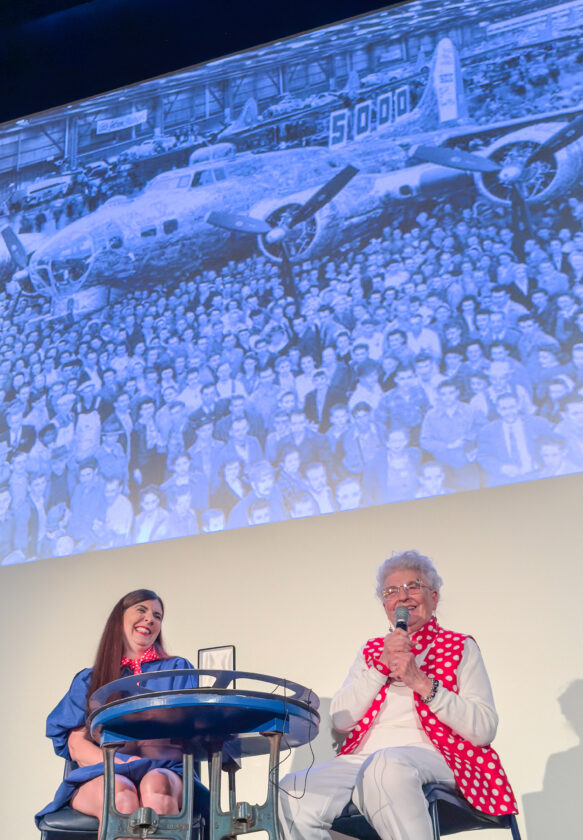
Mae Krier talks about her experiences during WWII helping in the war effort by making bombers. Krier is one of many “Rosie the riveters” who went to work during the war, now she advocates for equal rights for women and girls. DAVE KENNEDY/Sun-Gazette
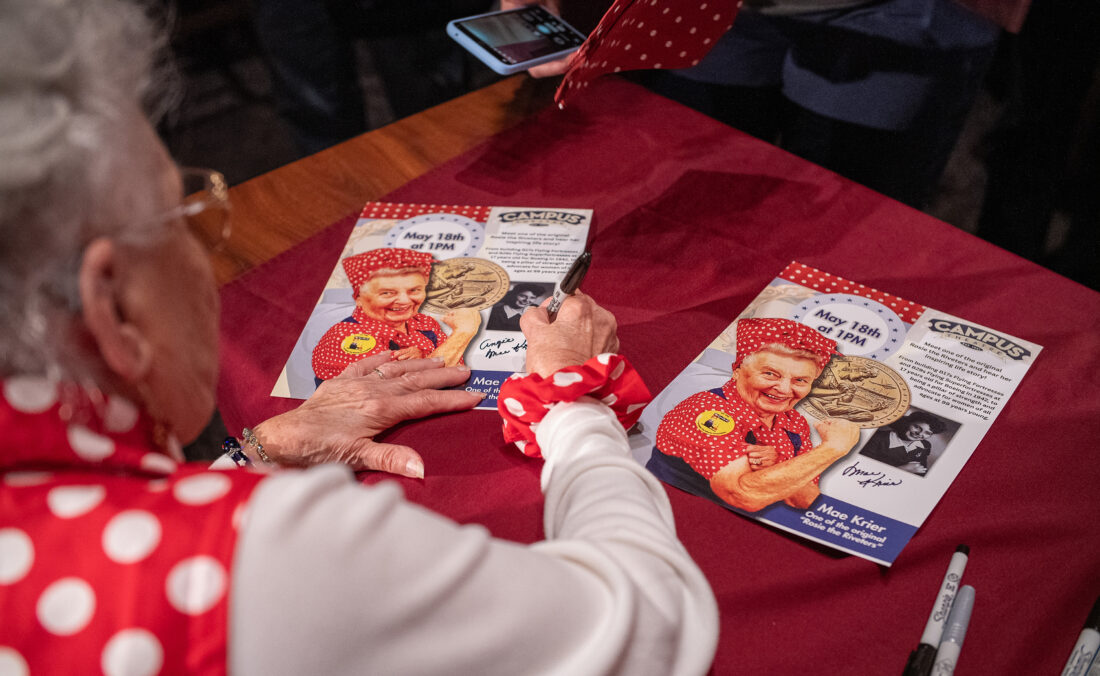
Mae Krier signs a small poster with her picture on it as she talks with people who came to hear her speak about her experiences during WWII helping in the war effort by making bombers. Krier is one of many “Rosie the riveters” who went to work during the war, now she advocates for equal rights for women and girls. DAVE KENNEDY/Sun-Gazette
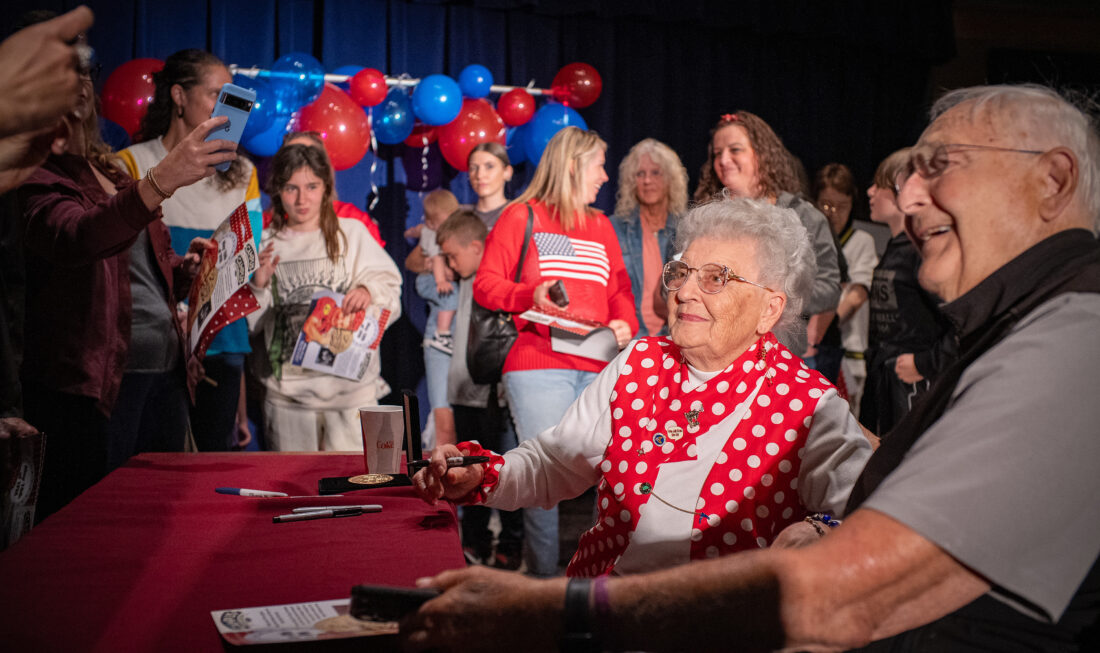
Mae Krier talks with people who came to hear her speak about her experiences during WWII helping in the war effort by making bombers. Krier is one of many “Rosie the riveters” who went to work during the war, now she advocates for equal rights for women and girls. DAVE KENNEDY/Sun-Gazette
Mae Krier talks about her experiences during WWII helping in the war effort by making bombers. Krier is one of many “Rosie the riveters” who went to work during the war, now she advocates for equal rights for women and girls. DAVE KENNEDY/Sun-Gazette
Mae Krier signs a small poster with her picture on it as she talks with people who came to hear her speak about her experiences during WWII helping in the war effort by making bombers. Krier is one of many “Rosie the riveters” who went to work during the war, now she advocates for equal rights for women and girls. DAVE KENNEDY/Sun-Gazette
Mae Krier talks with people who came to hear her speak about her experiences during WWII helping in the war effort by making bombers. Krier is one of many “Rosie the riveters” who went to work during the war, now she advocates for equal rights for women and girls. DAVE KENNEDY/Sun-Gazette
Trending
"When the war was over, the men came home to parades and flying flags, Rosie the Riveter came home with a pink slip," said 99-year-old Mae Krier.
Krier knows something about those pink slips, as she was a real-life Rosie the Riveter, helping make Boeing B-17s Flying Fortresses and B-29s Flying Superfortresses during World War II.
"There was no acknowledgement, they didn't give us credit for anything. I thought that was so unfair," said Krier.
She made a trip to the Campus Theater in Lewisburg recently to share her story of assisting with the war effort and her passion for women's rights and the recognition of all the "Rosies."
In 1943 a just out of high school 17-year-old Krier began working at Boeing Aircraft in Seattle.
"We had two weeks training," said Krier.
"After two weeks training, you're right back there working on these huge planes," she added.
"We didn't have any rights yet, even when we went to work at Boeing, We were every bit as good at riveting as the men, and the men got paid more. So it wasn't fair but we didn't fight it at that time. Since then I've done a lot of work on that," said Krier.
"I put a lot of rivets in the wing of that plane," said Krier, proudly pointing to a photo of the 5000th B-17 that was produced at the Boeing factory in Seattle, after Pearl Harbor.
Krier's signature and the signatures of her fellow men and women who built it are on that airplane.
She has lobbied for years to get all the Rosie the Riveters, including the women who helped in other areas on the homefront recognized.
Her travels have taken her to Normandy, the halls of Congress, the Pentagon, the Queen Mary, even taking a ride in a B-17.
"It only took me 70 years to get a ride," she shared with a laugh.
Krier received the Congressional Gold Medal in 2024, which is the oldest and highest civilian award in the United States for her work in getting all of the "Rosies" recognition.
She not only received the award but had a hand in its design, which depicts a range of women who assisted in the war effort.
Krier visited the mint in Philadelphia to meet the artist designing the medal, making sure every woman was recognized.
Her work fighting for women's equality is not done, she shared.
"We are probably 90 percent there but we still aren't 100 percent there with equal pay, " said Krier.
"I have been fighting this for about 40 or 50 years to get the women equal pay and to get the young girls the right to do what you want to do. It's opening doors, and that's so important." said Krier.
"Look at what the women are doing today, it's fantastic. We're astronauts. In my day we would have never even considered it," she added.
"So many of the young girls don't realize how capable they are, they just need a little boost or encouragement," shared Krier with a smile.