
Trending
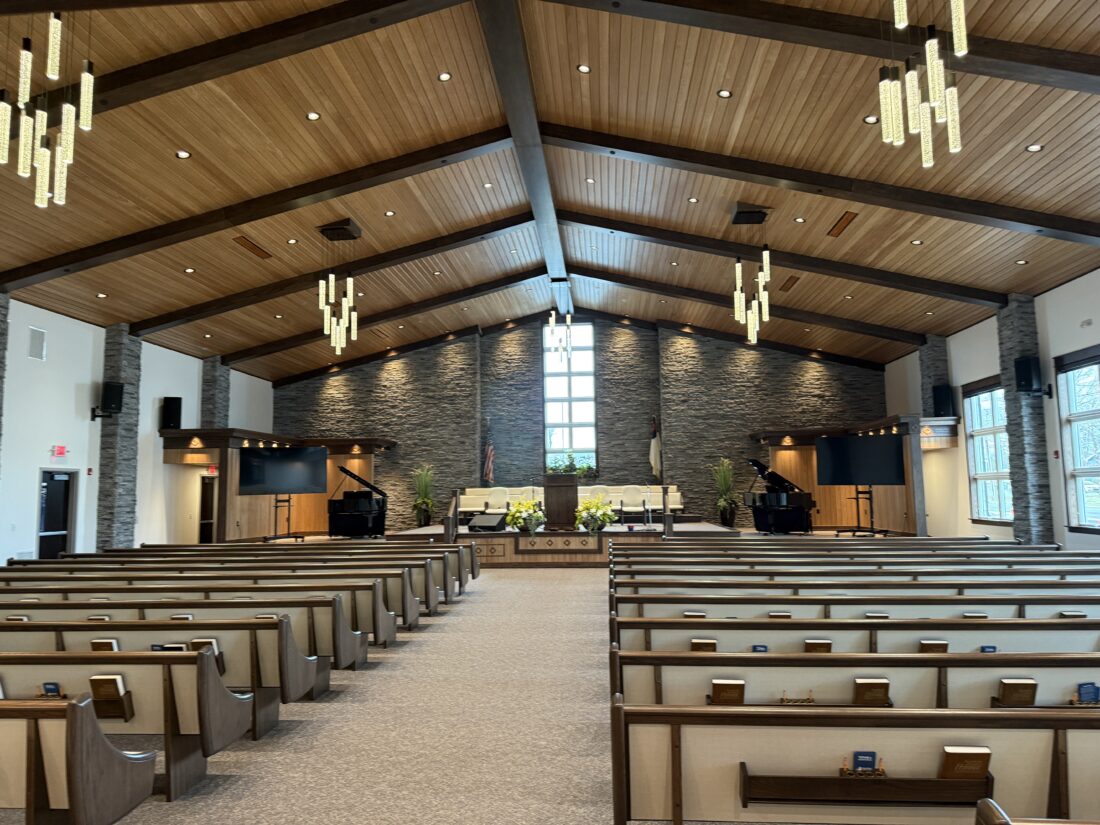
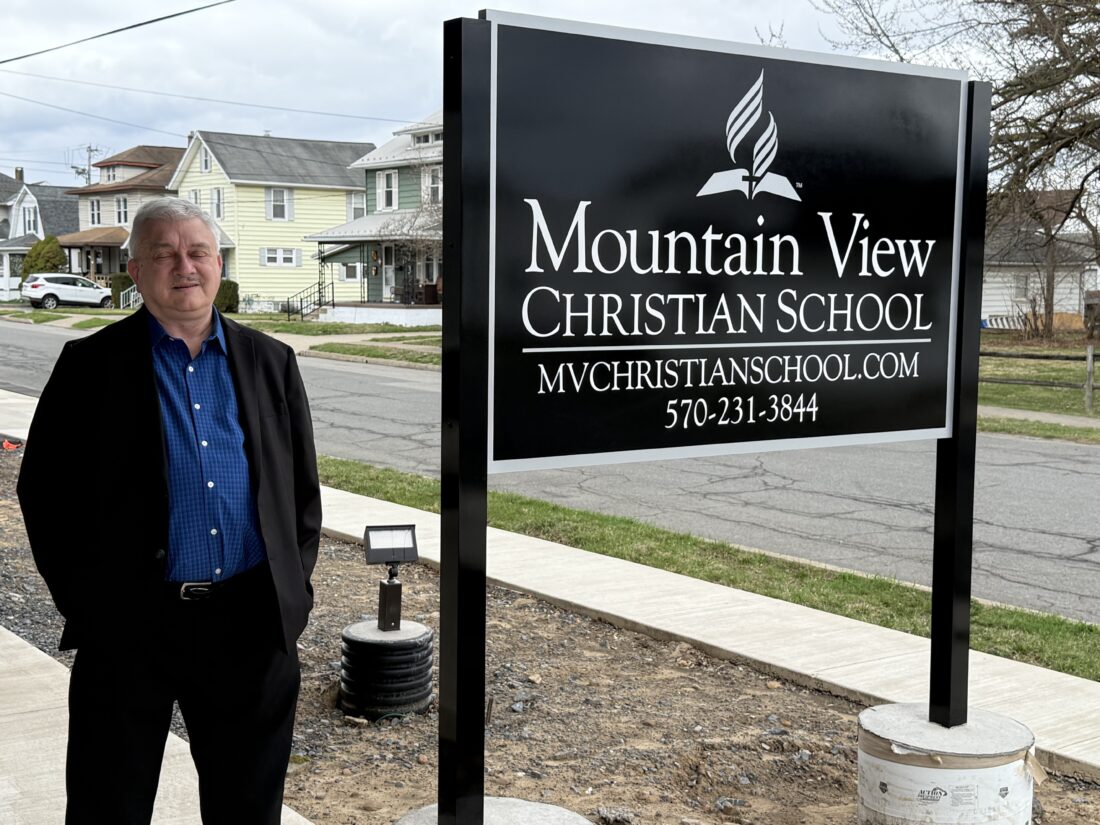
In operation for over 100 years, the Mountain View Christian School is looking ahead to expanding their enrollment now that they have opened in a new 35,000-square-foot building which includes both the school and the Seventh Day Adventist Church that runs the school.
While the previous school, because of the limited space, could only accommodate 30 to 40 students, the new school has the capability of having 100 students, said Pastor Roy Weeden.
The current school year was the first that students spent in the new facility.
The school is attached to the church with those facilities, including the chapel, at one end of the new complex at 470 E. Southern Ave., South Williamsport, and the school in the other.
"This is the seventh iteration or
version of the Williamsport Seventh Day Adventist Church," Weeden said.
"For years before we got into that beautiful stone building over there at the bridge we were on the other side of the river and we were in a different place," he said.
The stone building that Weeden referred to was the church that was located just across the Market Street bridge in South Williamsport. It was razed and Muncy Bank (now Journey Bank) constructed a facility there.
In August of 2021, the first shovel of ground was turned at the church's new location. Then the construction project slowed, some of the delays were caused by COVID. The problem was that the congregation had moved from the older church and had no idea where they would be meeting to worship.
"We tried all sorts of places. We thought we found some places to temporarily worship and then there was some conflict with city codes whether we could or couldn't," Weeden said.
The congregation even considered relocating to the former Lycoming Mall.
Then a church on the west side of Williamsport, which was winding down, Weeden said, became available. The Seventh Day Adventist congregation relocated there for the next two and half years until early in 2024.
Then they moved to the old school at the corner of Fleming and Southern avenues.
"The church was kind of cohabitating. We had everything in storage containers and cargo containers. We would just drag things out in order to have church services in the old gymnasium which is a small facility," Weeden said. The congregation stayed there until almost August last year.
Even though they were still putting finishing touches on the new church and then in November the new building was dedicated.
The church parking lot is actually on the site where the school was formerly located. The school was then moved to its new location and opened at the same time that the church did.
Seventh Day Adventists had worshiped at their former site for 66 years, so Weeden expressed some nostalgia about the move.
"A lot of memories had been built in there," he admitted, noting that the Adventist church had actually had it longer than the original occupants.
The church was built in 1908 by the Episcopal Church and the Seventh Day Adventists acquired in 1955.
When the bank had the ribbon cutting for their new bank on the church's former site, members of the church were invited.
"It was kind of weird, being on the spot where we had been worshipping and now it's a four-story bank," weeden said.
"We went up on the mezzanine and were able to look at the river and the folks were gracious to us," he added.
So, fast forward to now as the school and church look ahead to year two in their new spaces.
One thing that Weeden is really excited about is the way for parents to be able to afford sending their children to the school because of an alternative way of looking at funding through the Educational Improvement Tax Credit (EITC) program in the state.
The way it works is that the Seventh Day Adventist network of schools are registered as Scholarship Organizations, or SOs. Businesses can contribute to the SO's and in return receive tax credits from the state.
In the traditional way of determining costs, schools determine the amount that can be charged to families for educating their child and then decide what will be needed from other sources, such as churches, other donors and fundraisers to close the gap to be able to operate a school, Weeden explained.
"All schools pretty much operate that way, but what we did was when we realized what this program was, we simply said let's start with what it actually costs to operate a school," he said.
"So we said from soup to nuts, what does it cost to operate a whole school -- our school, anyways," he said.
"We figured out what that number was and then we divided it by the number of projected students that we expected to have," he said.
The number they came up with was $18,000 per year per student to be able to finance everything from staffing, to insurance to supplies, materials, and transportation, to name a few costs.
"Now we knew what we needed to do," he said.
Weeden, who comes from a business background, said that when he was first introduced to the EITC program he "couldn't believe my eyes."
The school had checked out other programs across the country, such as vouchers and states giving credits, but here was this program in Pennsylvania, which had been in operation for around 24 years.
"It was the most incredible thing I'd ever seen," he said.
So now, part of his job is operating two churches-the one in South Williamsport and another in Watsontown-and working with businesses to encourage their participation in the EITC program.
"I basically will approach a business person that I get acquainted with and then I'll say. Do you know how much you gave the state of Pennsylvania in income tax last year for your business," he said.
"Let's say they say $10,000. I say, can I have your tax liability," he added.
Sometimes they wonder why and so, he said he explains.
"If you give me the $10,000 for my school, the state will give you a 90 percent credit against your tax liability for this tax year," he said.
"In other words, the person writes a $10,000 check. They get a K-1 form from the state that says you're a donor, you're participating in the program," he said.
In essence, most of the money they put in is reimbursed by the state. The smallest amount that can be donated is $500 and the maximum is $750,000.
Last year, tuition at the school was $4,500. They have since restructured their tuition and the cost is now $18,000 a year. But if a child is accepted into the school they are automatically given a $14,000 scholarship because of the EITC program which brings the tuition down to $4,000 per year per student. EITC funds can only be used for tuition costs.
Weeden added that if there are financial challenges in the household, application can be made for additional assistance.
The money is essentially coming from corporations and companies in the area that have, as Weeden shared, "dropped a significant amount of their tax liability in our lap."
"They in turn are getting credit back from the state," he said.
"This is the first time ever in which we basically had the full year pre-funded before we opened the doors," he added.
Attending the school does not require membership in the church, but he noted that parents should understand that the school teaches Christian principles.
"If your family is not comfortable with that, maybe this isn't the right fit," he said.
"It's not that we're trying to exclude, but we want teachers and parents to work together for the education of their children," he added.
The Seventh Day Adventists have been in education since the 1800's, with the local school in operation since 1885. Right now the school offers grades Pre-K through 8, but Weeden said that with the larger facility he would like to be able to add 9th grade students..
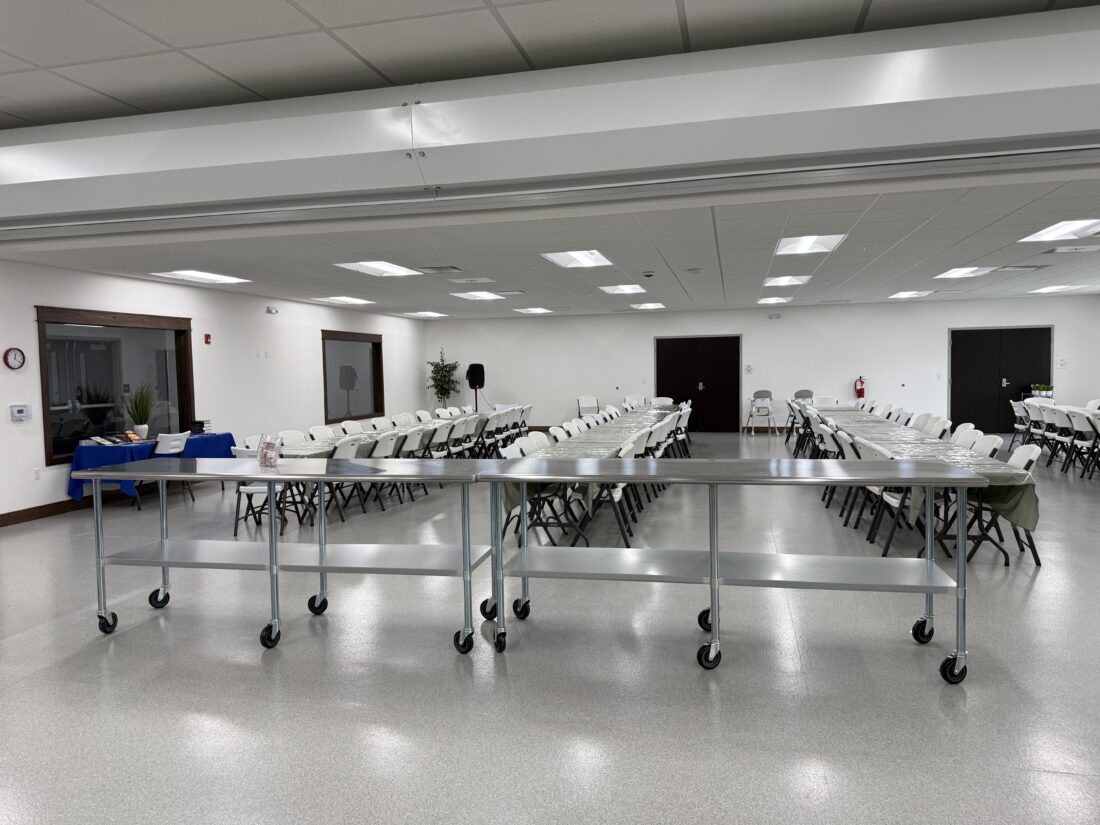
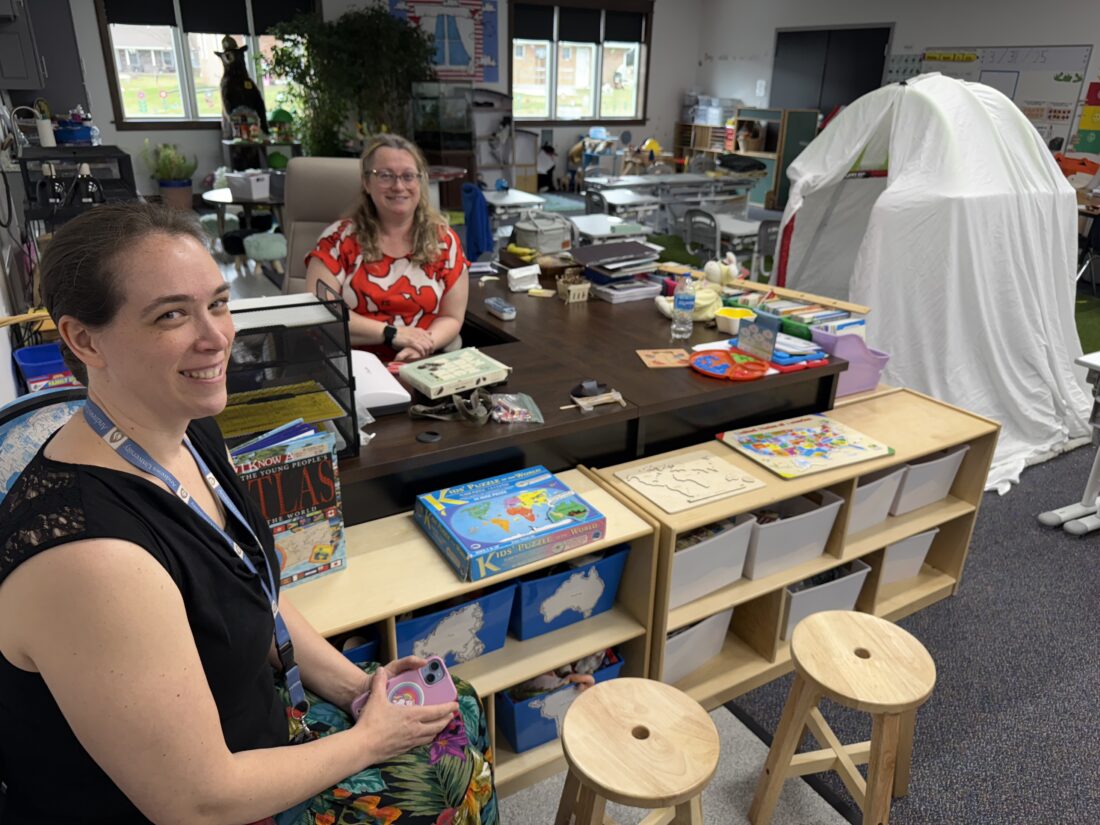
A tour of the new facility shows spacious classrooms, a large gymnasium and a chef-style kitchen. Plans are to offer cooking demonstrations in the kitchen. The church also offers a community meal once a month in the dining area next to the kitchen with attendance ranging from 60 to 80 people.
The school emphasizes the basics of education, Weeden said, particularly making sure that students are literate.
"It's a huge thing for us that kids are literate and at appropriate grade level coming out," Weeden said.
He said that what they're finding, because of what he attributes to television, social media or just technology, is that students are struggling with the basic iteration of words and dealing with numbers and symbols.
He stressed that it's not an indication of intelligence, but comes from the "environment around us."
"That's one of the reasons that...we put a special emphasis on getting these kids to be able to do basic reading comprehension," he said.
"Critical thinking is a big thing here. We don't want kids just to know stuff, but to actually think their way through things," he said.
"So when these kids leave her, they may not all be doctors or rocket scientists, but they can probably go out in the community and hold their own and hold jobs and be leaders in their teams because that's generally who we produce," he added.
An open house will be held at the school June 3, from 5 to 8 p.m. and on June 6, from 3 to 6 p.m.