
‘Borrowing too much’: Lycoming County landfill operating at loss
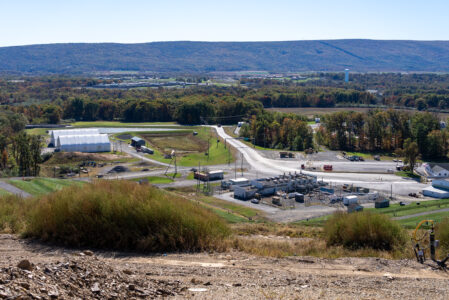
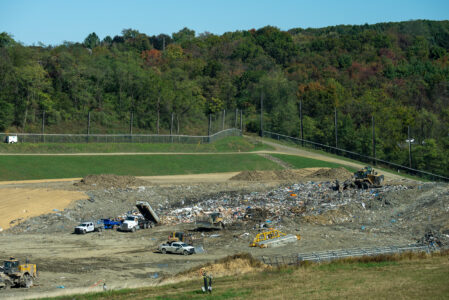
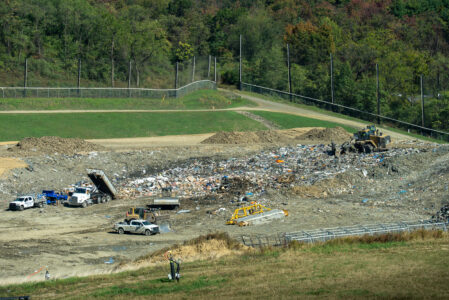
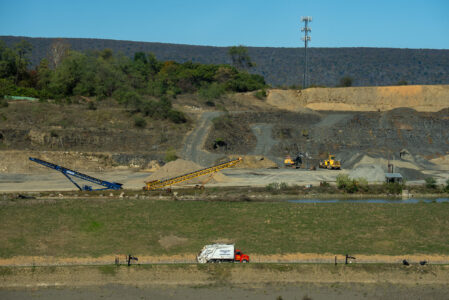
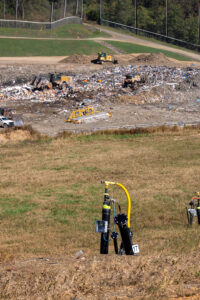
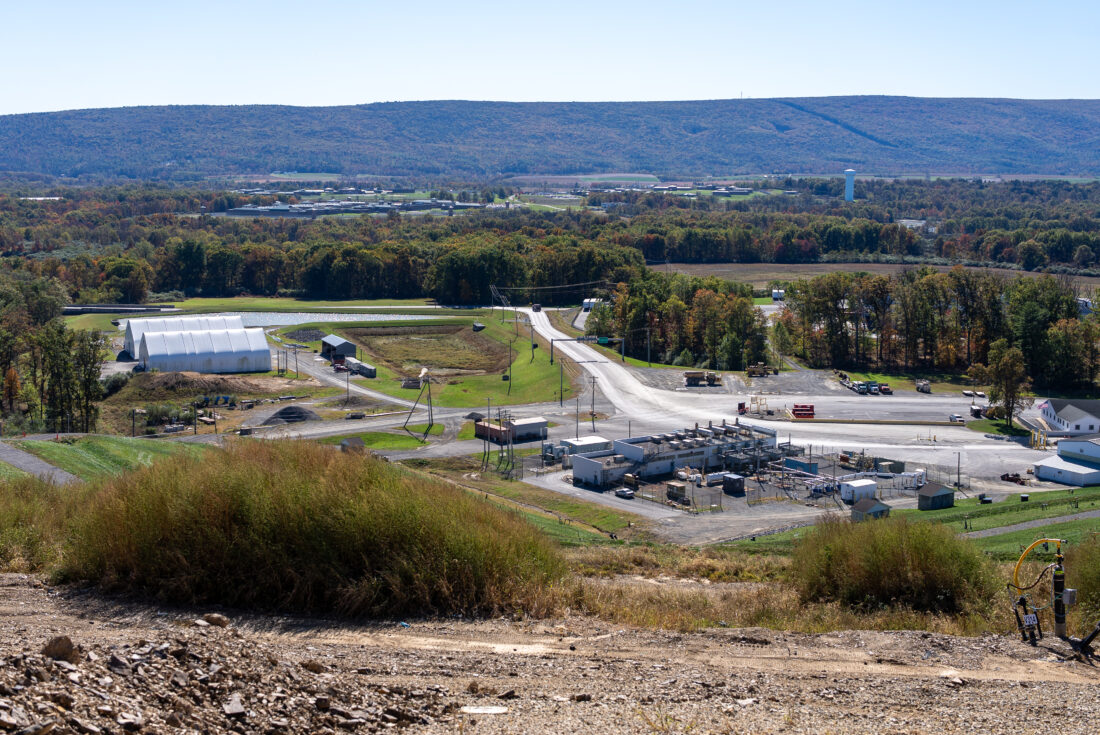
The question most often asked by county residents of the Lycoming County commissioners is, “How did the landfill go from supposedly being the county’s cash cow to suddenly operating at a loss?”
For years during the weekly commissioner meetings, costs at the landfill were said to be covered by the profits from that department. The belief was that, if not making a profit, at the least, the landfill was self-sustaining. The news came out earlier this year that not only was the landfill not making money, it was actually carrying a huge debt and there were rumors that the county was looking at selling the facility to recoup its losses.
Commissioner Marc Sortman regularly reiterates that the landfill is not making money, but still residents question the validity of his remarks.
Sortman referred to a comment online that accused the commissioners of stealing money from the landfill.
“We’re not stealing a dime from them. In all reality, the landfill has taken $27 million from the commissioners to operate over the last 20 years,” he said.
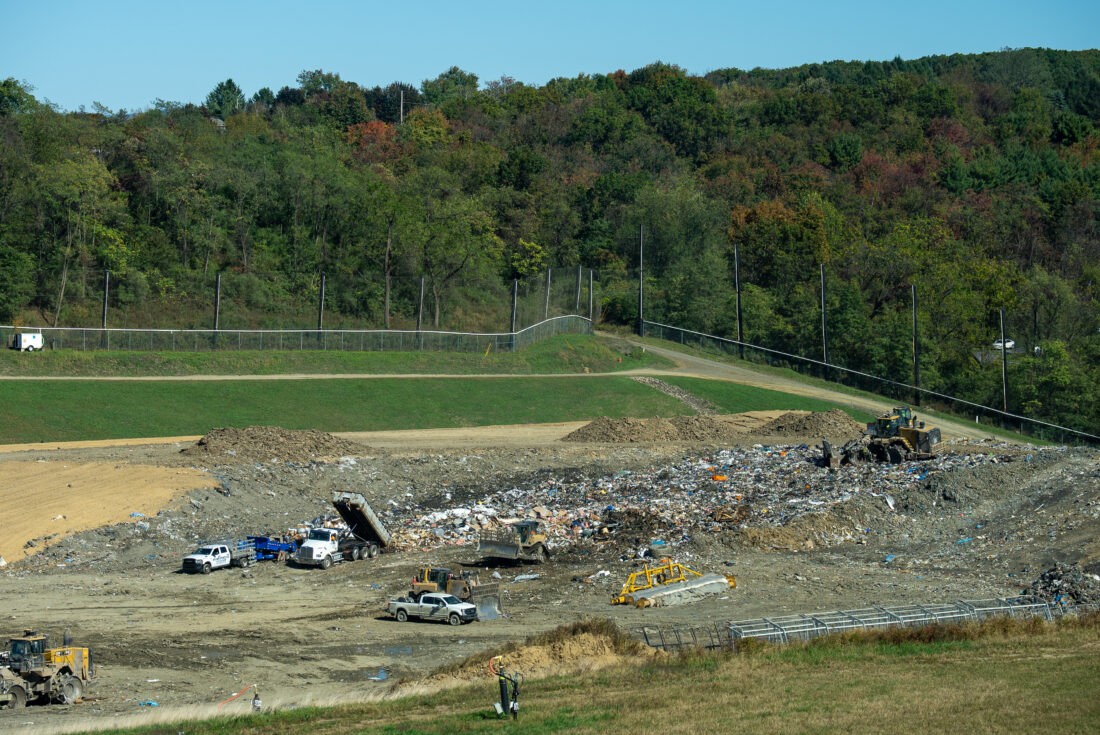
The Resource Management Services (RMS) Department oversees operation of both the landfill and the transfer station. Their proposed budget for 2026 initially represented a $4.5 million loss.
“Of course, we had to rework that…we got it down to a break even, basically on paper,” Sortman said.
“But a lot of their losses, and, I don’t know who did it in the past, when you look at some of the stuff, but there’s so many bonds. They were funding themselves through bonds,” he said.
The landfill pays a $1.5 million host fee to the county, but a closer examination of the books revealed that, although that money was coming in, about $3 million was going out of the general fund to pay bills at the facility.
“So they never really were making that $1.5 million either. So we made a decision, we’re not going to charge the host fee. So you get back on your feet to get things turned around, and we separated the account so we could truly see the numbers. And then once you truly see the numbers, is when it starts turning on and you go, OK, they’re not making money,” he said.
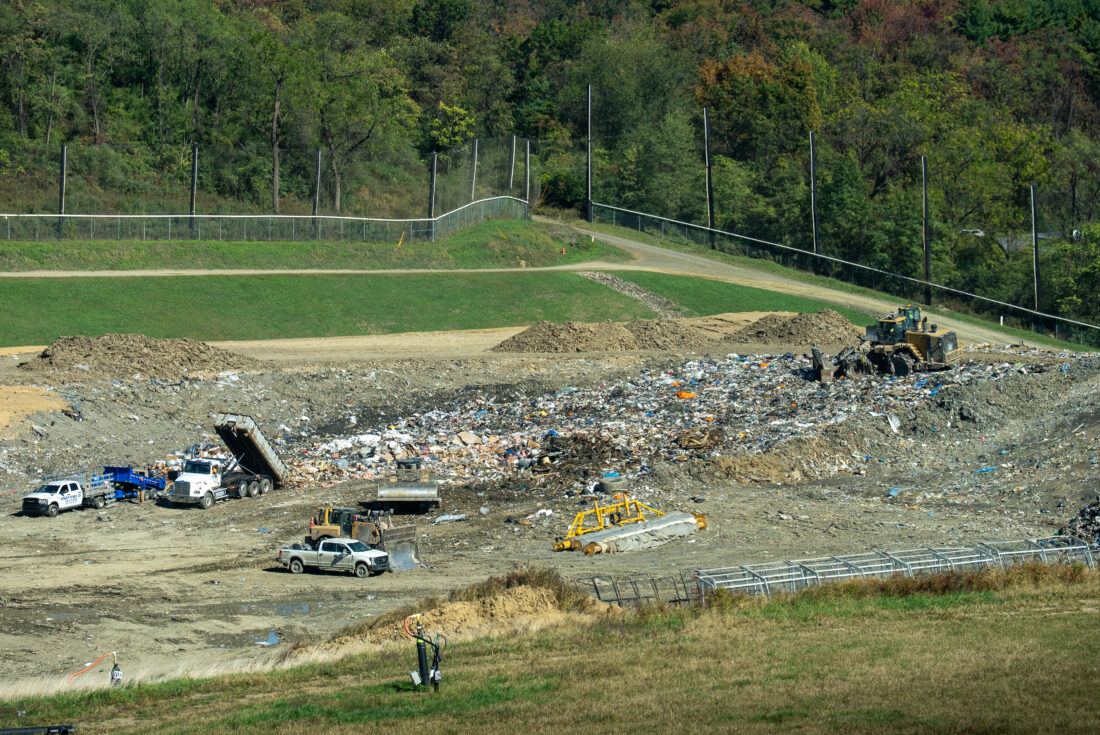
One reason that was not detected sooner is because everything in county government goes into the general fund, even though it was in separate accounts.
“Everything gets paid out of the general fund,” said Commissioner Scott Metzger.
“It was like that forever. I’m thinking, this is a business that should have its own separate account, but it was coming out of the general fund. All the equipment was coming out of the general fund. All the weighs, everything. Now we have it separated so it’s on all its own, where we can watch it,” Metzger added.
“We found out two weeks ago at a meeting talking about trying to get our heads wrapped around the landfill, and how to move forward with it, that these bonds that add up to $27 million, there isn’t enough space in the concurrent footprint to pay those bonds off. There’s not enough airspace or land space,” Metzger said.
“So the management who’s the business over this was borrowing too much to cover their expenses at their current rates,” Metzger said.
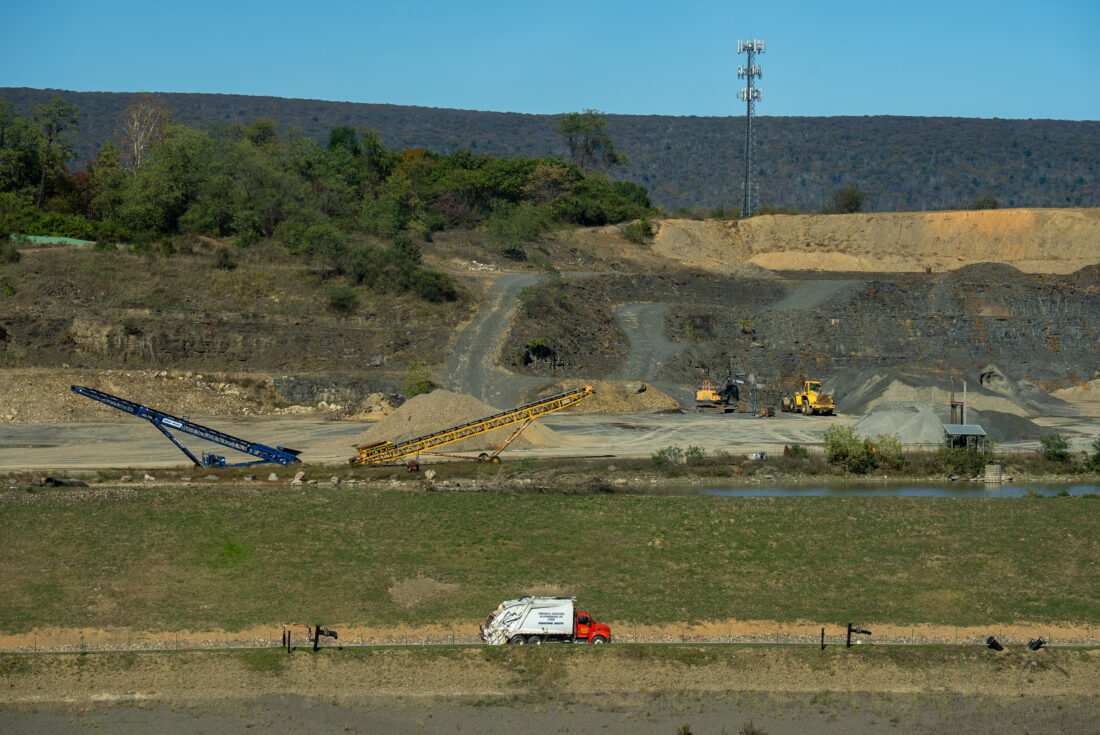
And that was part of the problem, since the current rates at the landfill had not gone up since 2008.
“They’re the only landfill in the nation that hadn’t raised their fees since COVID he said.
Another issue was that the landfill was underperforming.
“They’re operating at 1,200 tons per day on average when they’re equipped to handle 2,000 tons. So if you’re a business and you’re operating at 55% capacity with your overhead, that is what it is, plus your debt, you’ll never make a profit,” Metzger said.
Because of its current size, the landfill does not have the capacity to grow in order to pay off the debts they have accrued. In order to increase their footprint, they need to apply for a permit to extend the life of the landfill out 60 years.
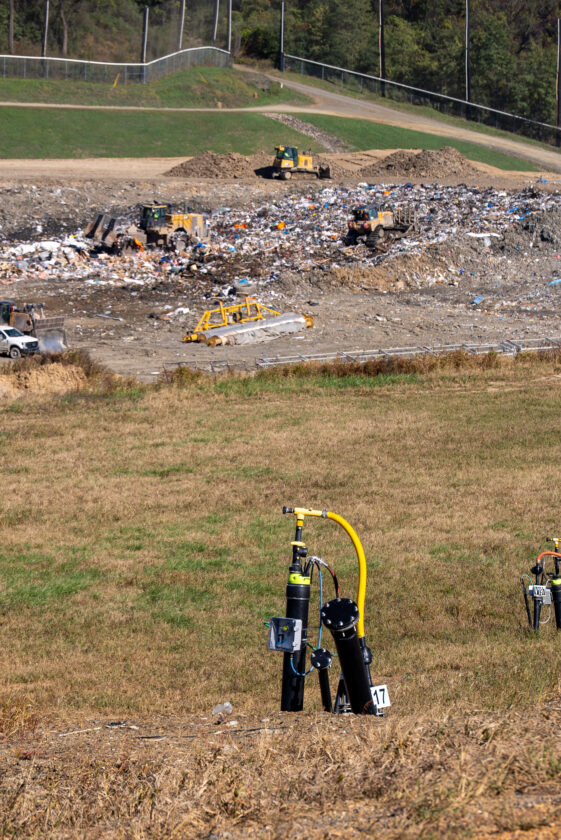
“Then they’ll be fine to pay that debt,” Metzger said.
Right now the landfill has about 12 years left before it reaches its capacity. Each stage has to be permitted.
“Right now, we’re permitted for the 2,000 tons a day. If we go out and get a permit, the next step would be to ask for 3,000 tons a day. Ultimately, if you listen to a private industry, we should be bringing in five to 7,000 tons a day at that facility,” Sortman said.
It takes three to five years to get the permit. Although it costs nothing to apply, the entire process costs around $5 million which means another bond to cover that.
“Apply for the permit. Once the permit, they can apply, they can get all that started. It’s not gonna cost them the money to get started,” Metzger said.
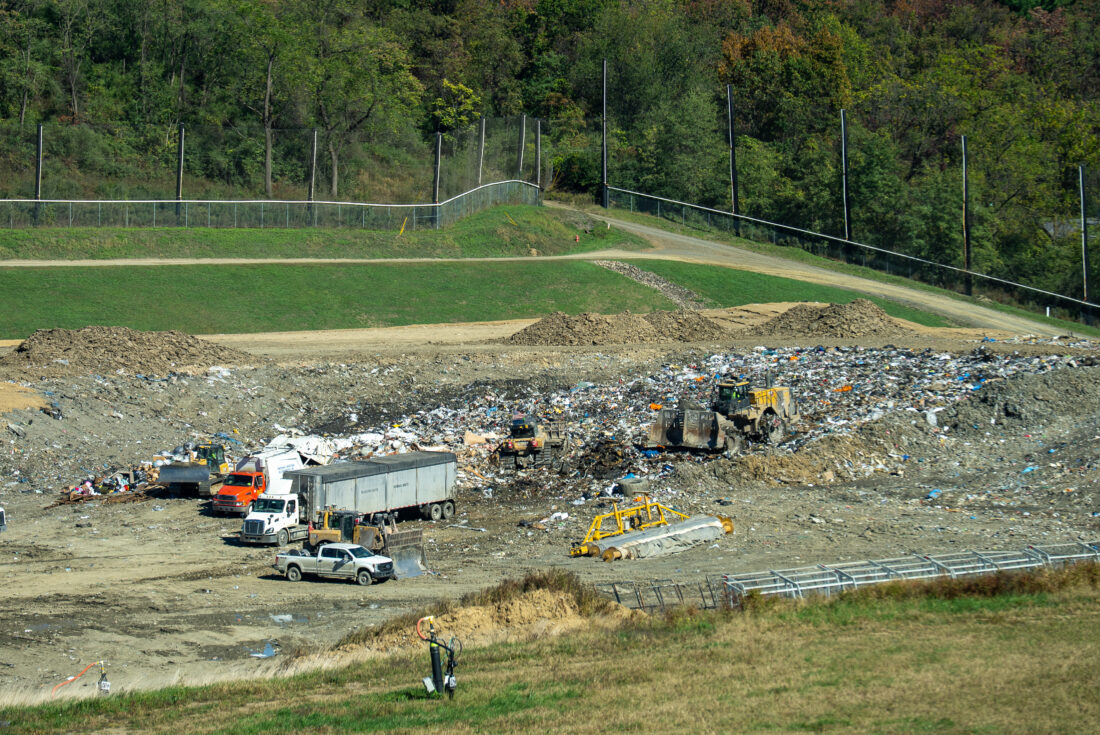
“Some of the problems at the landfill have been, always brand new equipment, always high-end,” Sortmans said.
“We have a water truck that is a $200,000 water truck to have the big tank of water, because legally, you have to be wetting it down, that’s any landfill. So you go up north there to the little one up in upstate New York, and the guy’s got an old, beat up Dodge pickup truck that has a flat bed on it that they put a water tank on the back and they spray. So he’s got 12 grand invested, and we got $200,000 invested, and ours is going to quit someday, and they’re going to want another $200,000. His truck’s going to quit someday and he’s going to take the tank off that one and put it on the next piece of crap truck that he’s not using somewhere else. And that’s the difference between private and government,” Sortman said.
There are specific needs at both the landfill and the transfer station in order for the entire operation to be profitable.
At the landfill, the leachate needs to be piped. The pipe cost $2 million. The transfer station needs a new belt and scale and they have requested a truck.
“Those total up to over almost half a million dollars worth of expenses at a transfer station that loses money,” Sortman said.
But to not do these things, the commissioners know, is like shooting yourself in the foot
“If we don’t get that leachate pipe in…it’s very expensive to haul. So we’re never going to become more profitable to get that done. But if you don’t have the profits to pay for it, so you go out for another bond, but do you go for a bond when you have $27 million already in bonds that you know you don’t have the life of a landfill to pay for,” Sortman said.
“That was a scary thing to learn… I would say operating the way, if we were to continue, which we’ve already made changes, but continue to operate the way we’re operating, we don’t have enough life in the landfill to pay off the $27 million. If we can get things changed, stop buying all these brand new equipment, raise our rates, which we did,” he said.
Even though the rates have not increased in years, the negative reaction from local haulers was swift and loud.
As the commissioners had explained at one of their meetings when the increases were proposed, the issue is who pays for the garbage to finally get to the landfill. If it goes to the transfer station then the county pays to have it hauled to the landfill. By raising rates at the transfer station the hope is that the haulers will go to the landfill themselves.
“They go up to the transfer station instead of going over the mountain, and then we have to haul from the transfer station over the landfill. So taxpayers are paying, giving them actually a break by hauling their garbage over there, instead of them taking it,” Metzger said.
“We’re doing the work at the taxpayers expense, not at the haulers expense,” Sortman said.
“I watched it too. I mean, I don’t say some of this stuff up, just out of stupidity, I went up there every day, most haulers are all done by one o’clock. So you go up there at 11: 30 and the whole line will be haulers sitting there, and it saves them the 20 minutes and the wear and tear on their vehicle. I said to a lot of them, if you just went over there, don’t worry about what I should double this charge at the transfer station to force you to drive over the mountain, because as long as it’s the same, because they want it to be the same, they don’t want to pay any more at the transfer station than they pay at the landfill. Well, as long as it’s the same, why would you,” he said.
Metzger admitted that he had wondered what was happening at the landfill for years. So, when Sortman was elected he asked him to take a look at the operation.
Sortman too had always heard about how profitable it was.
“Everyone wants to know where the change happened. But honestly, I think the change happened ten years ago. The change didn’t happen because of the three of us in office, the change happened 10 years ago. It just wasn’t being watched and, I really, truly wonder…who’s, watching these numbers, because things were just sliding through, you know,” Sortman said.
“And I get, you know I came from Loyalsock, where it’s a little different and and our management team there watched money like it was their own. And I get counties, you know, I knew I was going to go from this to that…so I knew there’d be changes that way, but I didn’t expect a director to fudge numbers or lie. That was new to me, because, you know, we’re supposed to be the team doing the right thing. And there were probably plenty of times at Loyalsock where, you know, whatever — oil came across — and I just signed off on it, because I didn’t look to see, what are we paying per gallon for oil? I expected someone to know how to do that. And I think that happened way too often in the county, whereas commissioners, the bills come through, and you just said yes to them,” he continued.
“So, until the three of us started looking a little deeper at that bill, and then all of a sudden you’re looking at going, Wait a minute, why would we spend that, you know? I mean, why are you trying to put up a-and I don’t mean to pick on the landfill with that. Why do you want to put up a new fueling station that costs $150,000 can’t we do that for less,” he said.
Sortman shared that at one point the commissioners had brought in another landfill owner to tour the county facility to give his opinion of the operation.
“When the tour was done, the comment was made, great operation, way more people than you need, and way more equipment than you need, and all your equipment was top of the line,” Sortman said.
Metzger interjected that the man’s landfill does seven times the tonnage of the county’s with ten fewer employees.
“His assumption of the whole place was so you are prepared-staff and equipment-for the ultimate, worst day you could ever have, or best day, however you want to view it. And in a private industry, you can’t work that way. You have to work with what you do on average, and then the days you get a little bit more, you just struggle to make it happen.You can’t have the equipment and personnel just waiting for the day you have a great day,” Sortman said.
Metzger was quick to say, “It’s nothing against the workers. The workers are doing their job. They’re given what’s given to them, and they’re working hard. It’s the management above them that’s making these decisions.”
When asked if he felt that the management was just in over their heads and doing the best they could, Sortman replied, “I think they feel like they’re doing the best.”
“What I was very discouraged by and I told him this…you’re doing 11, 1200 tons on average per day. I said you were permitted to do 2,000. We got to get to 2,000. Their answer was, oh, my God, we can’t, because what if we go over,” he said.
“It’s an average. So it’s a 2,000 ton per day average. So you can have a day that you do 2,500, you’re not going to get fined by DEP (Department of Environmental Protection) because of that, you know. And that’s a DEP requirement. So I said, let’s get to 1,800 and then we’ll talk,” Sortman said.
“They literally did not feel like they needed or could go above what they’re currently doing. My conversation back with Scott, was we’re in trouble…I can’t go over there and fire every employee and start fresh,” he said.
“No, we can’t fire everybody. We have to make them understand we have to increase capacity,” Metzger said.
Top News
Williamsport voters will have option of home rule on primary ballot
Voters this primary election will get the opportunity to approve by ballot question putting a government study ...
One killed in crash near Antes Fort on Thursday
ANTES FORT — One person was killed Thursday night in a violent crash on Route 44, near Morgan Valley Road, in ...
‘Borrowing too much’: Lycoming County landfill operating at loss
City of Williamsport avoids cutting firefighter position
A retiring Williamsport fire chief recently implored City Council not to cut a first-year firefighter position by ...
Nonprofits serving Lycoming County residents receive over $74K
Rep. Jamie Flick, R-South Williamsport, recently announced more than $74,000 has been awarded to nonprofits serving ...
Teens charged with robbery of National Range indicted by grand jury
Two teenagers awaiting trial for their alleged involvement in stealing two rifles in a June 6 burglary at a city ...