‘A real loss’: Appraiser testifies proposed chicken and solar farm could devalue neighboring homes in Muncy Creek Township
-

- Samuel Wiser, attorney for the applicant, questions John Kilpatrick (a witness for the coalition) during the conditional use hearing by the Muncy Creek Township Supervisors in Muncy. DAVE KENNEDY/Sun-Gazette
-

- Samuel Wiser, attorney for the applicant, questions John Kilpatrick (a witness for the coalition) during the conditional use hearing by the Muncy Creek Township Supervisors in Muncy. DAVE KENNEDY/Sun-Gazette
-

- Samuel Wiser, attorney for the applicant, questions John Kilpatrick (a witness for the coalition) during the conditional use hearing by the Muncy Creek Township Supervisors in Muncy. DAVE KENNEDY/Sun-Gazette
-
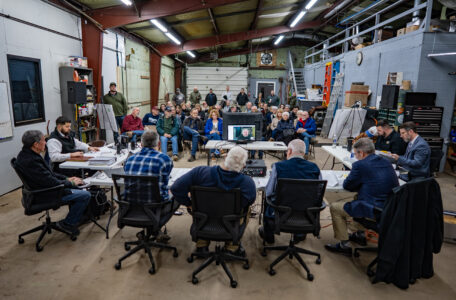
- John Kilpatrick (a witness for the coalition) answers questions during the conditional use hearing by the Muncy Creek Township Supervisors in Muncy. DAVE KENNEDY/Sun-Gazette
-
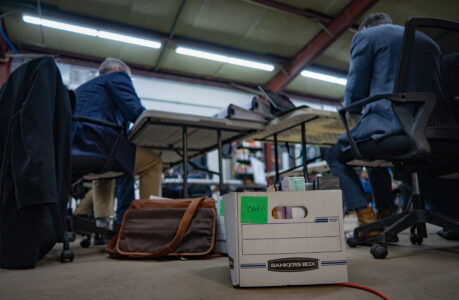
- A box labeled “CAFO” filled with documents sits next to Samuel Wiser, attorney for the applicant, during the conditional use hearing by the Muncy Creek Township Supervisors in Muncy. DAVE KENNEDY/Sun-Gazette
-
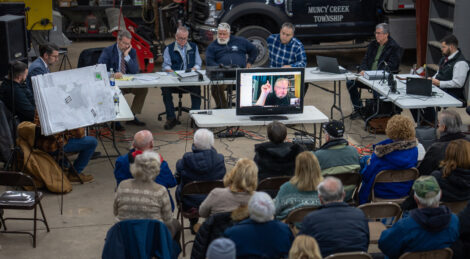
- John Kilpatrick (a witness for the coalition) answers questions during the conditional use hearing by the Muncy Creek Township Supervisors in Muncy. DAVE KENNEDY/Sun-Gazette

Samuel Wiser, attorney for the applicant, questions John Kilpatrick (a witness for the coalition) during the conditional use hearing by the Muncy Creek Township Supervisors in Muncy. DAVE KENNEDY/Sun-Gazette
More than 1,000 residential property owners who would live near a large chicken farm proposed in Muncy Creek Township could not only experience nuisances such as odor, flies, truck noise and dust but also could lose out on the price of their homes, an expert real estate appraiser said during a conditional use hearing on the project.
“Why put it there?” asked Dr. John A. Kilpatrick, a specialist in appraisal who testified Wednesday before the township supervisors about such devaluation for homeowners during a conditional use hearing for the proposal by Sunny Side Up Farms LLC.
The meeting included testimony on Bollinger Solar’s plan to bring 11 separate solar panel array sections generating 33 megawatts of electricity.
The approximate 164-acre site zoned for agriculture conservation and residential purposes requires the applicants to get conditional use from supervisors Eric Newcomer, chair, and Harley Fry II.
Proximity a problem

Samuel Wiser, attorney for the applicant, questions John Kilpatrick (a witness for the coalition) during the conditional use hearing by the Muncy Creek Township Supervisors in Muncy. DAVE KENNEDY/Sun-Gazette
About 1,092 residential properties are within one mile of the site, according to Kilpatrick, who said he visited the area.
Kilpatrick, who said he grew up on a farm in South Carolina and is “pro-farm,” was blunt as he presented empirical evidence including data from comparable studies.
“Go out in the woods, find a similar piece of property not near anybody, and put the CAFO there,” he said to a vocal show of support from those in the packed room.
Kilpatrick cited one home sale that fell through about one mile from the proposed township site.
In that sale, the buyer and seller were aware of the proposed CAFO. At the time of the sale the property was reduced by 11%, he said.

Samuel Wiser, attorney for the applicant, questions John Kilpatrick (a witness for the coalition) during the conditional use hearing by the Muncy Creek Township Supervisors in Muncy. DAVE KENNEDY/Sun-Gazette
These are homes with a median value of $225,000, he said.
Homeowners living near such CAFOs who appeal property taxes generally also can see “a real loss of value,” he said.
He suggested there were a lot of other agricultural uses to do with this land that would not be as “obnoxious.”
One of those, he said, would be a Christmas tree farm — which the former owner had on a large part of the property, Brown’s Tree Farm.
The site is “not appropriate, highly not appropriate,” he said.
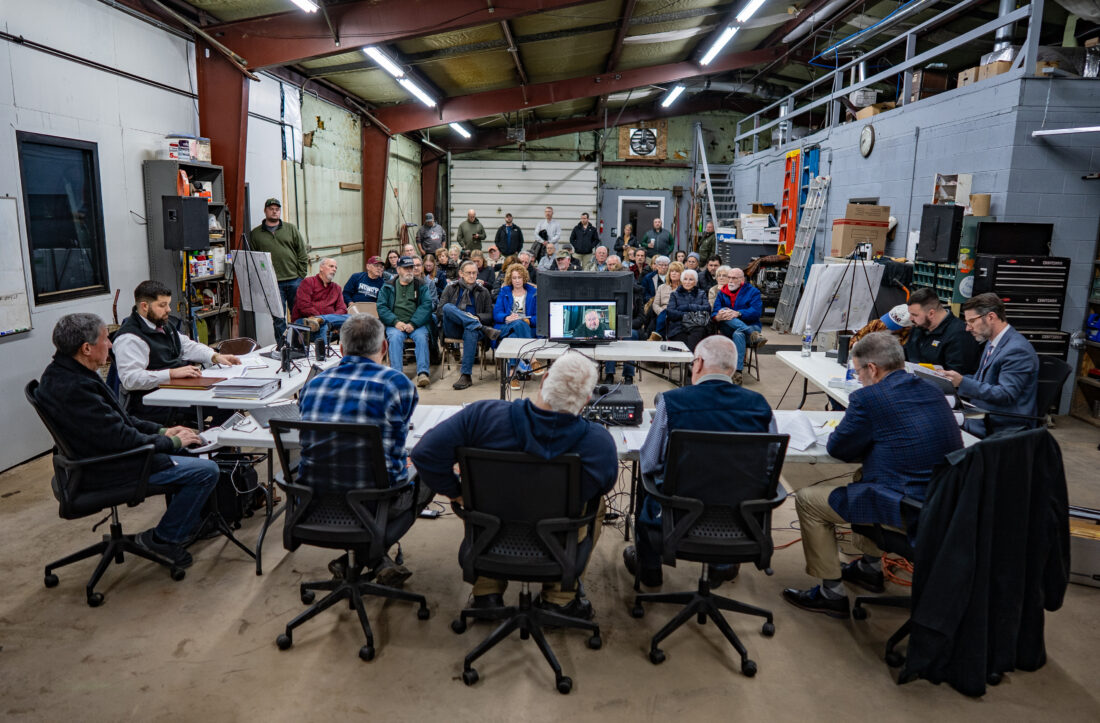
John Kilpatrick (a witness for the coalition) answers questions during the conditional use hearing by the Muncy Creek Township Supervisors in Muncy. DAVE KENNEDY/Sun-Gazette
For most of the two-hours of testimony, Kilpatrick presented information gleaned from his knowledge and a report revealing many data points taken from various studies – all of which seemed to reveal that the proximity of those living near these types of animal farms is an important factor in determining their real estate value.
His testimony was not solely based on his own life experiences, but was supplemented by written materials, data in text books, articles on real estate and in the Appraisal Journal – in that body of knowledge there are two articles about the impact of CAFOs on property values. I wrote both of them,” he said.
“As far as the appraisal concern, I am the expert on CAFOS,” he stressed. “I am not trying to blow my own horn here, but I think it is important to know where I stand in the appraisal profession,” he said.
What he wrote was added to using other comparable case studies, other journal articles that appeared in other professional and scholarly journals.
“I looked at case studies that came from other appraisers as well as some that were in our own files,” he said. “Then I got on an airplane and came to Muncy Creek Parish (Parish being a southern term for the municipality).”
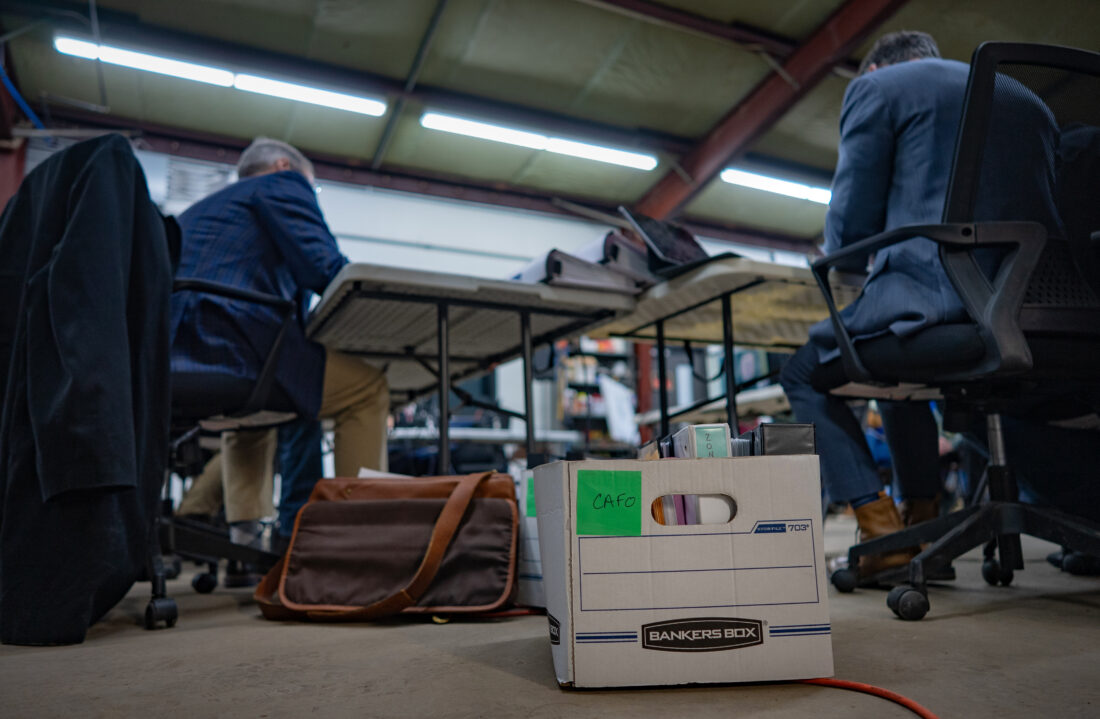
A box labeled “CAFO” filled with documents sits next to Samuel Wiser, attorney for the applicant, during the conditional use hearing by the Muncy Creek Township Supervisors in Muncy. DAVE KENNEDY/Sun-Gazette
He said he looked at the site, took a look at its proximity to residential neighborhoods, and then declared he – “got a feel for what impact this nuisance is going to have on these houses. Then he said he memorialized all of that into a report.”
Properties can anticipate loss in value
“In your report you reach a conclusion on whether or not the proposed CAFOs would have an impact on residential real estate?” attorney Zachary DuGan, with the Muncy Area Neighborhood Preservation Coalition, a citizens advocacy group opposed to the projects, asked.
“I do, and this is based on identically the same material that I’ve used when I was asked to appraise an individual property,” he said. “It is the sort of material that an appraiser would be expected to use if called upon to appraise any one of the 1,092 properties within a mile of this proposed CAFO.”
For a property within a half mile, there is probably a 25 % or more loss in value, he said. There are properties immediately adjacent to the site that are probably a lot worse than that, he added.
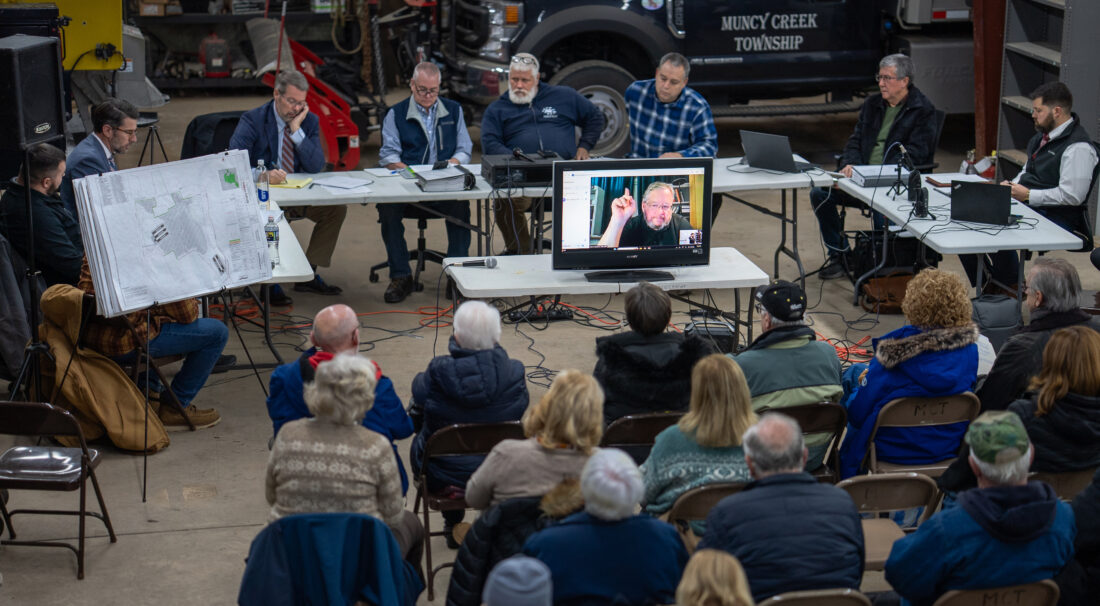
John Kilpatrick (a witness for the coalition) answers questions during the conditional use hearing by the Muncy Creek Township Supervisors in Muncy. DAVE KENNEDY/Sun-Gazette
Properties within the half mile to one mile, those properties would probably be impacted by about 20 %. “If that is 20 % to 25 % of the median value of a home in this neck of the woods, do the math and you find that you’ve got about $50 million worth of property that is going to be impacted by this CAFO,” he said.
With that, Kilpatrick said he believed it was against all precepts for a positive real estate valuation to “put this thing next to residential neighborhoods.”
In fact, he noted, if it becomes a reality, Muncy Creek Township, Lycoming County and Muncy School District could experience a loss of $800,000 annually in tax revenue. Members of the Muncy Area School District school board were at the meeting. Kilpatrick’s testimony included referencing various studies showing possible comparable data.
More loss of property values, and sickness incurred
Results of the studies:
A Michigan State University study found CAFOs caused property value losses up to five miles away.
A University of Missouri-Columbia study found a 6.6 % loss three miles away.
Colorado College did two studies, the first study found significant property tax reductions across the U.S., he said. A second study found 40 % loss in value at a half a mile, 30 % loss at a mile, 40 % loss at a mile and a half and a 10 % loss at two miles.
“I can go on and on,” he said.
He also described what he perceived to be an interesting study out of Minnesota that did not quantify the market value losses, but he said he included it as evidence.
“The homeowners were pro-CAFO,” he said. “They wanted a CAFO,” he said.
But when they started to get sick, doctors came in and did a test and found they were being poisoned by hydrogen sulfide gas that was being emitted from the manure that was being piled up, he said.
“People had to abandon their house,” he said. “They had to move away.”
Kilpatrick said the proposal presented potential nuisances from the flies, manure, odors and unsightly view for neighbors and used his wry sense of humor to say the operators would have to figure out how to keep the flies inside the barns.
CAFOS can produce such nuisances as odor, flies, chemical contamination and these nuisances can have a stigmatizing effect. These are considered types of “negative externalities” in the real estate market.
He cited an example of a “badly managed composting facility,” he later identified, where residents complained that the noise and vibrations from the trucks became such a nuisance that they could not sleep.
He also cited an example of the Seattle-Tacoma (Sea-Tac) International Airport’s plans to add a third runway as part of an expansion, and because of this a significant amount of money has been spent to compensate nearby property owners.
He noted how mitigation of nuisances such as manure, flies, and odor was not fully going to remove them.
Samuel E. Wiser Jr., attorney for the applicant, asked several cross examination questions that attempted to show fault in comparing studies Kilpatrick used in his presentation to this specific project. Wiser, furthermore, pointed out that the average age of the studies used were 23 years old.
“I prepared a report about real estate values not specific to one property,” Kilpatrick said.
Wiser asked him if he was aware the manure was going to be stored (in a silo) and exported off-site. “I don’t know,” Kilpatrick said, clarifying he was not an expert in the nutrient management plan but had read the Pennsylvania act.
In terms of the unsightliness of the project, Wiser asked Kilpatrick – “Isn’t beauty in the eye of the beholder?”
Wiser asked Kilpatrick if he knew the difference between layer and broiler hens (in terms of manure production), and he asked about the reference to the only Pennsylvania study presented in Kilpatrick’s report, one study out of Berks County referenced, Wiser asked Kilpatrick if he knew the data taken from the study was not to be extrapolated outside the county.
He also questioned him about the former testimony of appraiser Carl Nolan who said on record that having a properly operated CAFO could be a negative or positive depending on a number of variables. Kilpatrick said he was unfamiliar with Nolan’s testimony.
Solar proposal
During the solar part of the hearing, Harvey Stauffer, a former planning commission member, asked: “Does the applicant have a correct owner on the application?” Stauffer said if it is not on there the application is “invalid.”
Separately, Stauffer brought up testimony from the applicants who said the solar array would be 42 megawatts, then 33 megawatts, and now 32 megawatts. He also noted how a stormwater management plan has to be in the application for the proposed solar project and wanted answers to questions on the noise emitted by the inverters.
“You have no idea what is there and how you are going to do it and they don’t either,” Stauffer said.
The next meeting for the CAFO and solar applications was scheduled for 7 p.m. on Feb. 18 at the township building.
Top News
Officials offer prep advice for weekend winter storm
City of Williamsport and area road crew workers and borough officials are asking residents to not only prepare for ...
Montgomery school board appoints new solicitor
The Montgomery Area School District appointed a new solicitor at their monthly meeting Tuesday night. McCormick ...
‘A real loss’: Appraiser testifies proposed chicken and solar farm could devalue neighboring homes in Muncy Creek Township

Huge US winter storm to bring crippling snow, sleet and ice from Texas to Boston

Connector road project moves forward at Williamsport Regional Airport