
‘I have what I call a mantra…’: Montgomery veteran brings home bronze medal in Paralympics
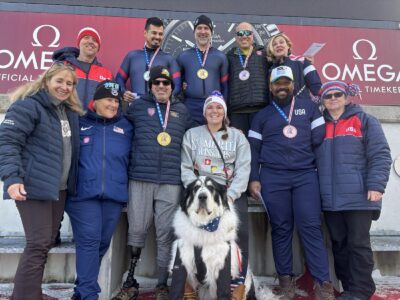
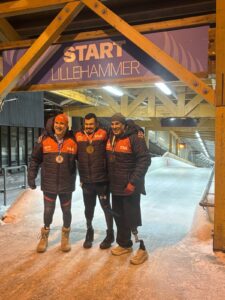
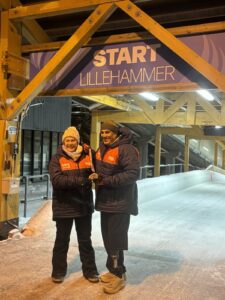
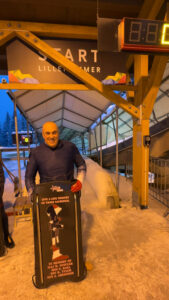
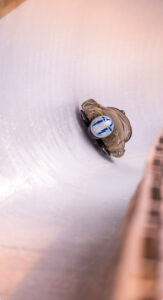
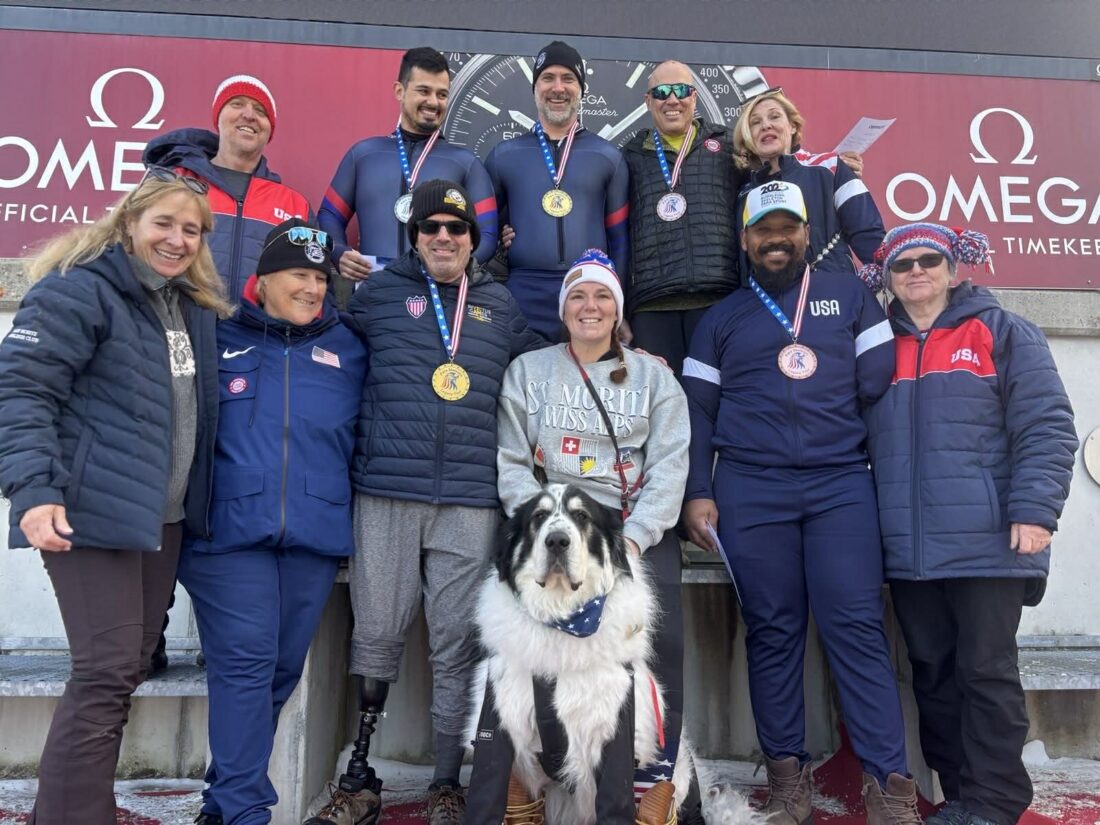
Despite being retired for nearly a decade after 34 years in the armed forces, U.S. Army Sgt. Major Kevin Bittenbender is not one to be content resting on his laurels, with his latest endeavor leading him to secure two bronze medals while competing in Winter Paralympics World Cup events in Norway and Switzerland just weeks ago.
Graduating from Misericordia in 1988 with a bachelor’s degree in music education, Bittenbender, originally of Bangor, began his military career based on a dare from one of his fraternity brothers.
Although he was incredulous at first, after some friendly competitive jabbing over who would make it through basic training, both enlisted and retired as Sergeants Major, with Bittenbender taking a slight edge.
“He retired at 33 years, I retired at 34 years, and trust me, I take every opportunity to give him a call and say, ‘hey, who outlasted who on that dare,'” he said, while stressing that the camaraderie for his fellow service members and his love of country is what kept him in enlisted beyond a simple dare.
“Looking after your brothers and sisters, not only in non-combat situations, but combat, it’s a partnership and a relationship,” he said.
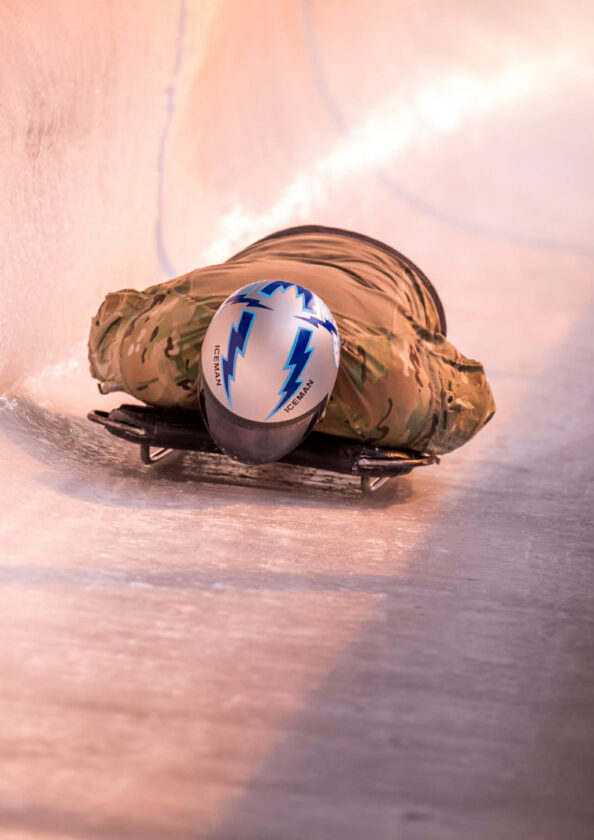
“In August 2007, while I was stationed in Afghanistan, I lost three brothers that I served with. I carry them forth every day of my life. Inside of every one of my prosthetics, I have what I call a mantra that I look at every day that I put my leg on, and it says, ‘live a life worthy of their sacrifice,’ and I try to do that every day, while I’m walking this earth in everything that I do,” Bittenbender explained.
Bittenbender would retire in 2018 as an e9 Sergeant Major after 34 years in the service and three deployments, one of them for 18 months in Afghanistan, where he was exposed to burn pits. That deployment would ultimately lead to the amputation of his left leg, following neurological issues that began with his foot in 2014, though he would continue his military service post-amputation.
Being an open book when it comes to his experiences, Bittenbender has given lectures on his life with PTSD, TBI and as a suicide survivor. He also works with several military and veteran support groups, including Joint Task Force 22 to Zero, Gold Star Families, and is the Director of Military Affairs for Pocono Raceway.
Bittenbender and his wife Molly settled in Montgomery in 2010, along with daughter Caitlin, who graduated from the district and later Pennsylvania College of Technology, and currently works as an RN.
Always looking to make a positive impact on his community, Bittenbender has been a dedicated member of the Clinton Township Volunteer Fire Company for four years, and a year ago, advanced from Lieutenant to Captain of the Fire Police.
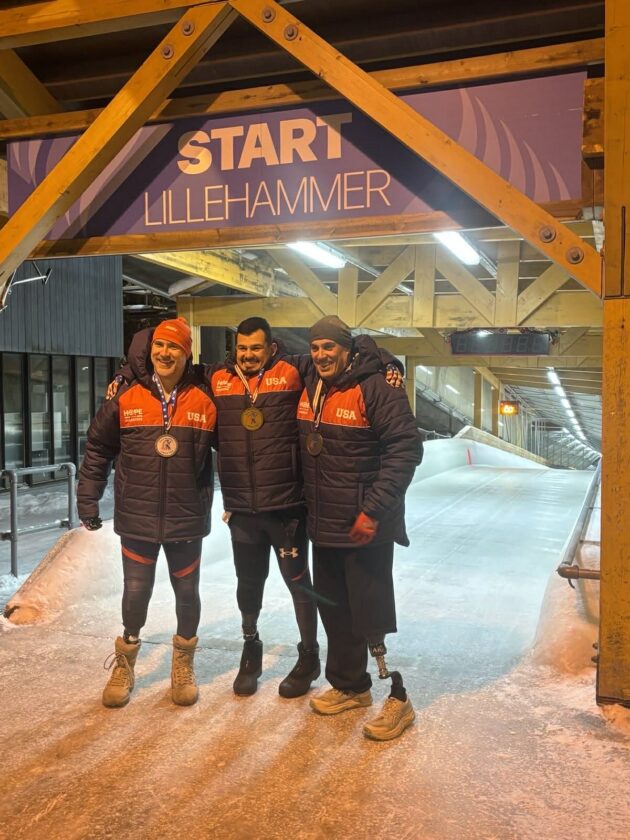
More recently, Bittenbender’s athletics have kept him busy as well.
“I always had aspirations of competing in the Olympics,” he said, having been a bi-athlete in cross country skiing and target shooting with the military.
It would be a call from one of Bittenbender’s military brothers, asking him to lend his expertise to two injured veterans, Andy Soule and Dan Cnossen, who were competing in the Nordic Biathlon as part of the U.S. Paralympic team. Soule would go on to become the first U.S. biathlete to win a Paralympic medal taking home the bronze in his first competition in the 2010 winter games in Vancouver.
This experience would help Bittenbender cope with his own amputation.
“It really helped me transition into moving forward and seeing that they’re able to do things and I said to myself, ‘if they can do it, I can do it as an amputee as well. It made me a better coach, a better soldier, a better individual,” he said.
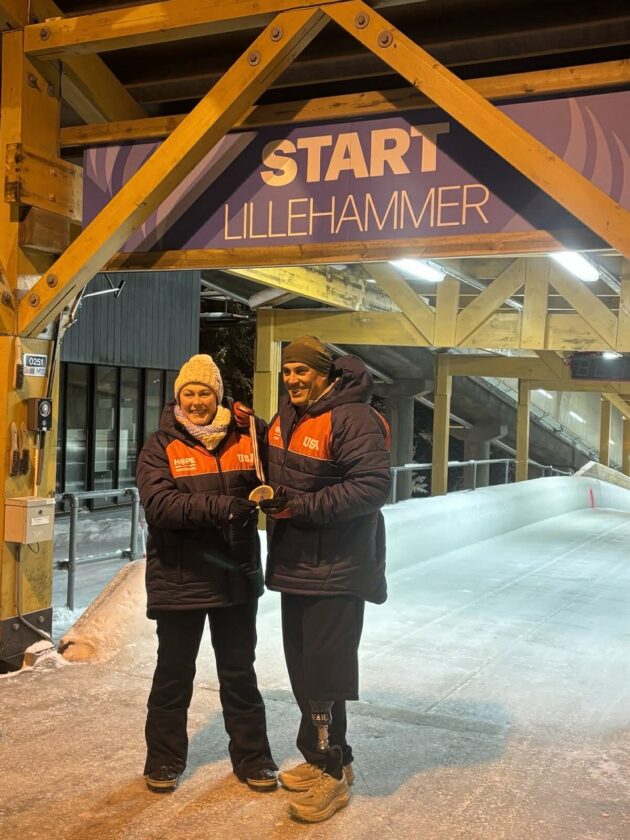
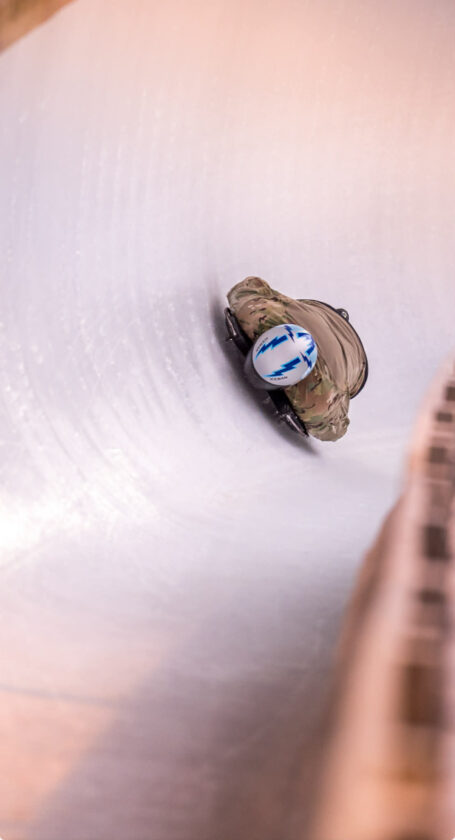
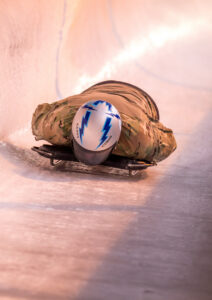
Bittenbender would subsequently take an interest in bobsledding, which led him to the Paralympics World Cup in 2025 as part of the Paris Skeleton Tour, after the Invictus Games, begun by Prince Harry, which offered skeleton bobsledding in their winter debut competition.
“Because of Invictus offering skeleton bobsled racing, there’s a huge drive in interest,” he explained.
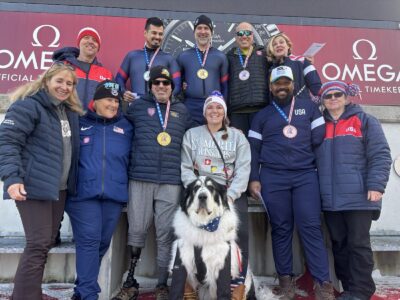
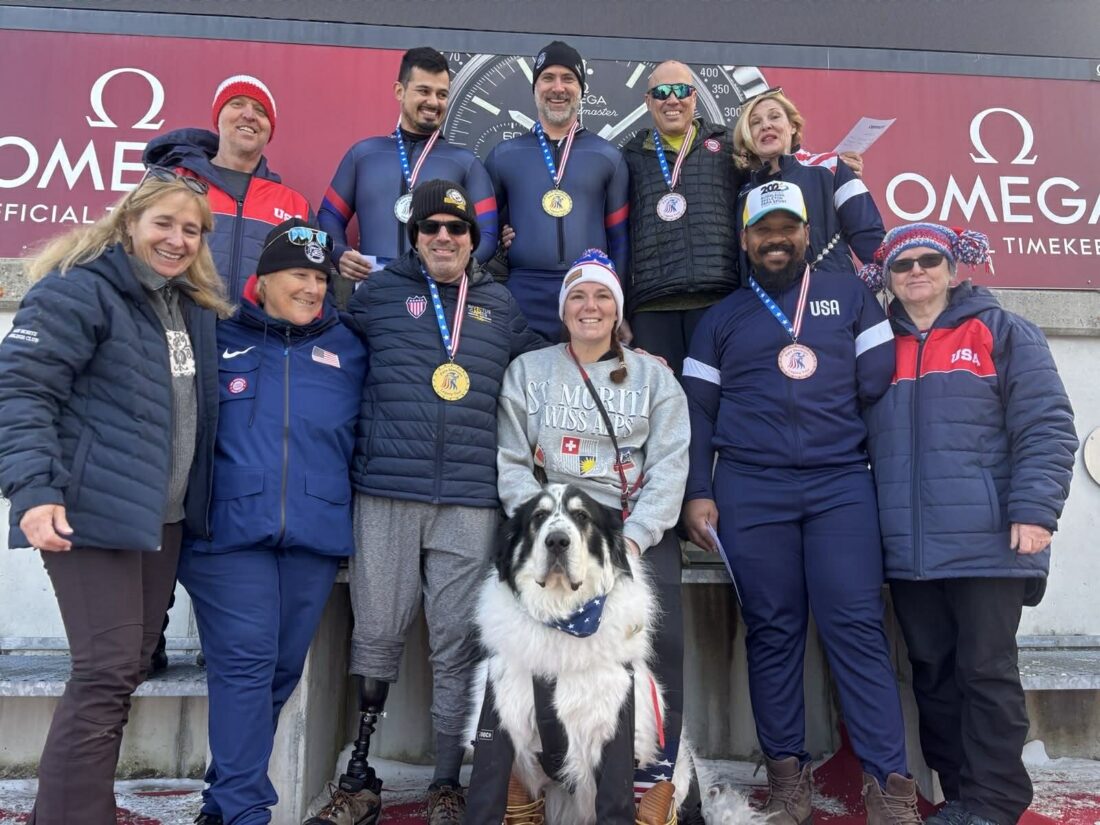
His team members would include U.S. Army Sgt. Chris Tarte (retired), Army SPC. Michael Villagran (retired), Air Force Maj. Lee Kuxhaus (retired) and coach Kim Seevers.
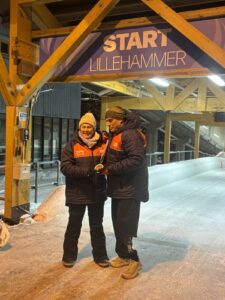
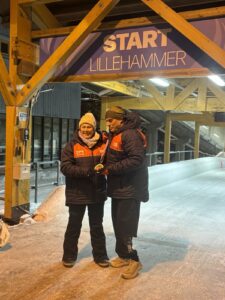
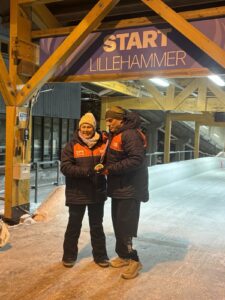
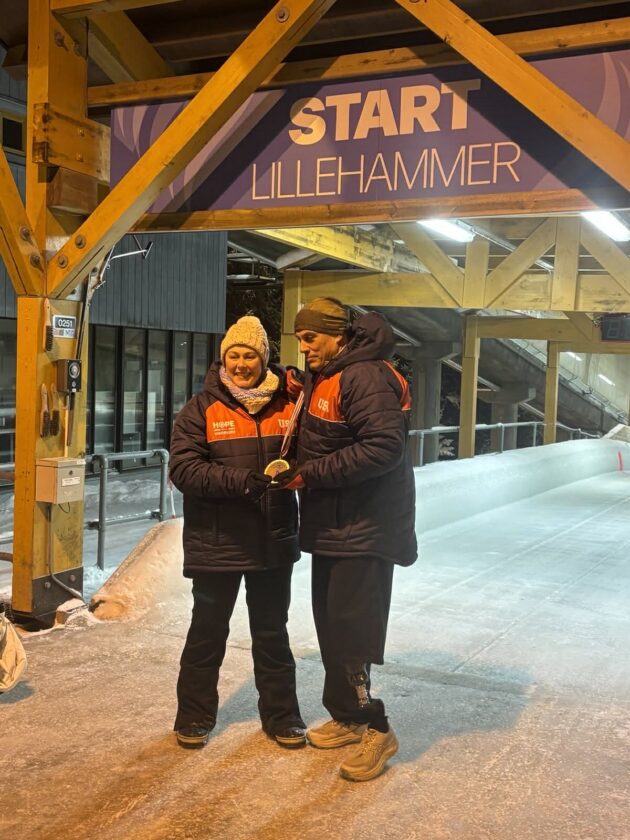
Bittenbender would ultimately bring home the bronze medal from both Lillehammer, Norway and St. Moritz, Switzerland.
“St. Moritz is actually the track where bobsledding began, and it’s a beautiful track. It’s the only handmade track, meaning every year it kind of changes because it’s carved by hand,” Bittenbender said.
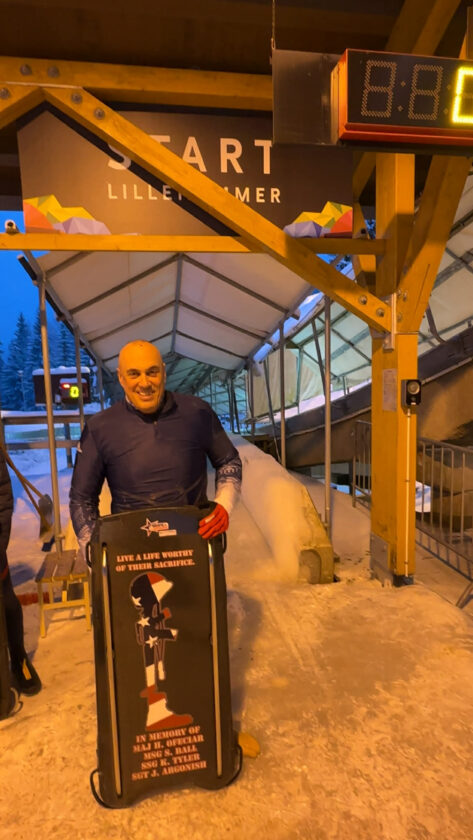
“The course is really cool, because you start in one little town and you end up in another town,” he said, adding that the course includes 19 turns, with sledders reaching speeds of up to 70 miles per hour.
“It was very exhilarating,” he said.
“Lillehammer is just this cute little town, located about two hours north of Oslo. It’s where they held the Olympics, and a lot of these tracks were previous Olympic venues,” he said.
Bittenbender said the support he received during the competition was “phenomenal” from both the public and organizations such as Hope for the Warriors and the Challenge Athlete Foundation.
Although his involvement in skeleton began as a hobby, it quickly took on a deeper impact.
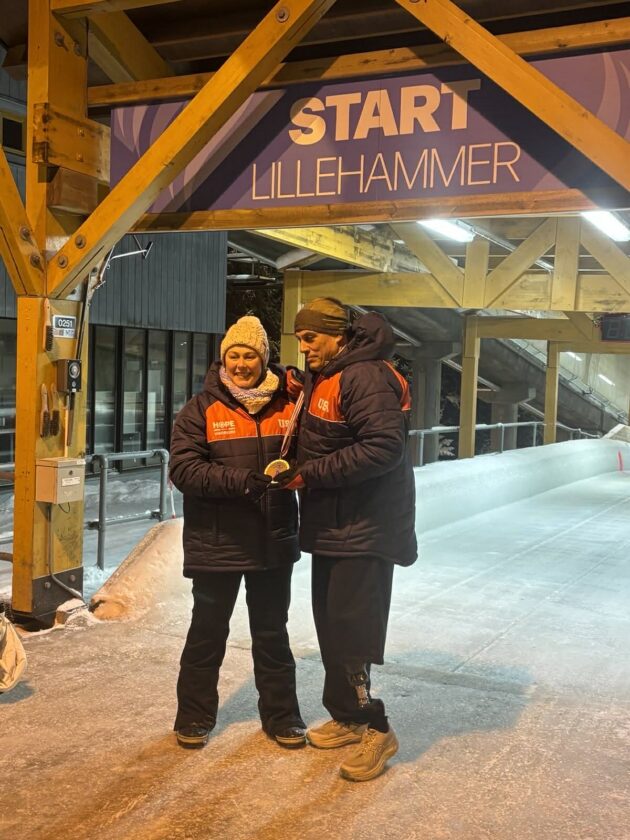
While the sport will not be part of the 2026 Paralympic Winter Games, to be held in Milano, Italy, Bittenbender hopes it can be fully incorporated when the winter games return in 2030.
“I thoroughly enjoy it, the camaraderie of being around other injured veterans,” he said, one of them being David Snypes Jr., the first upper arm amputee to ever slide off the top of St. Moritz.
“The International Bobsled Skeleton Federation noticed this interest, and has now said, ‘we need to make this more inclusive,’ so starting next year, we’re going to be in competition when they host the para Bobsled World Cup,” Bittenbender said, adding that greater accessibility will make a huge impact on veterans and civilians alike facing their own challenges.
“I think the focus on learning the track takes away the focus of the negative things that I cope with,” he said.
“Having PTSD, it’s helped to be around other fellow veterans that are also coping with PTSD, talking about our issues, but also encouraging each other to do our best,” Bittenbender said.
“That’s why I love the Paralympics,” he said.
“It doesn’t matter the disability, and that goes for anyone. Whether you’re visually impaired or have an amputation, I think that it’s important to find something that you can build into a passion and to help you navigate that disability to where it becomes not just a disability, but an ability,” Bittenbender said.
Along with his focus on sports, Bittenbender is aided by his service dog Kirby, who he acquired through the Houston Texans and Kroger grocery, plays a major role in helping to maintain his mental health.
Kirby was trained by America’s VetDogs and was the 2022 MVP of the annual Puppy Bowl, Bittenbender said.
“Kirby’s doing awesome,” he said.
“I didn’t want to do the seven hour time difference, getting him off his routine, so I didn’t take him on my trip over to Europe,” Bittenbender explained.
Bittenbender’s next stops will be in Lake Placid, N.Y. for the World Cup U.S. Nationals in skeleton at Lake Placid, N.Y., before moving onto the World Championships at Park City, Utah in March, complete with his sidekick, Kirby in tow.
In the meantime, Bittenbender will be continuing his outreach work and preparing for his other upcoming athletic ventures.
An avid hand cyclist since his amputation, this year Bittenbender plans to compete in all six major military races, including the Navy 10 miler, the Coast Guard marathon, the Air Force marathon, Marine Corps Marathon, the army 10 miler, and the Space Force 10 miler.
“Along with the Boston Marathon, I’m going to do a New York City marathon, and I’ve done a couple majors, internationals, and the Detroit marathon two years in a row,” he said.
Bittenbender plans to continue his athletic endeavors for as long as his body will allow.
“I’ll be 61 next month, but as long as my bones hold up, I enjoy doing what I do. Whether it’s transitioning over as a coach to help other veterans, I want to do everything I possibly can because sports helped me, and I want to ensure that the sport continues to be there to help others,” he said, urging any veterans facing hardships to reach out to the many resources available.
“If there’s veterans that are going through some trials and tribulations that are looking for something, an activity to do, there’s organizations out there that can help channel that and help introduce them to sports and outdoor activity,” he said.
“Pick the phone up, reach out and call someone. I always like to remind folks to reach out to your battle buddies, because it only takes that one phone call. You may not think they need it, but maybe you need it,” Bittenbender stressed.
For anyone who wishes to follow along with Bittenbender’s many ventures, check out his public Instagram page at @sgm_bittenbender.
Top News
No paper delivery slated for Monday as snowstorm draws near
As of Friday, there was an increased confidence by forecasters with the National Weather Service in State College ...
Eagles Mere brings back toboggan slide
‘I have what I call a mantra…’: Montgomery veteran brings home bronze medal in Paralympics
State encourages residents to be prepared for weekend snowstorm
Officials offer prep advice for weekend winter storm
Montgomery school board appoints new solicitor
The Montgomery Area School District appointed a new solicitor at their monthly meeting Tuesday night. McCormick ...