Coroner, Lycoming County commissioners discuss office’s new facility
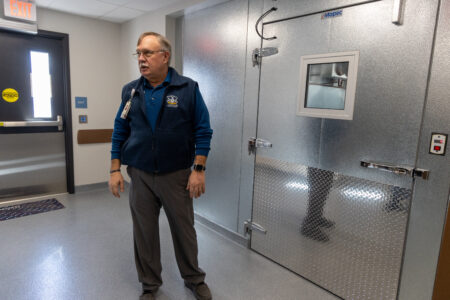
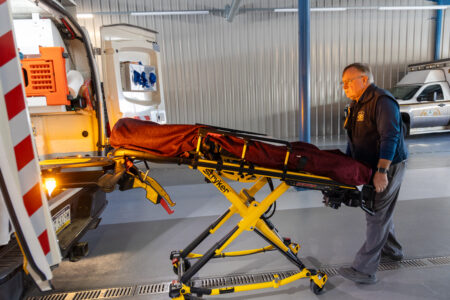
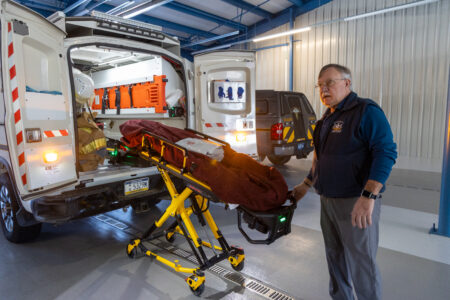
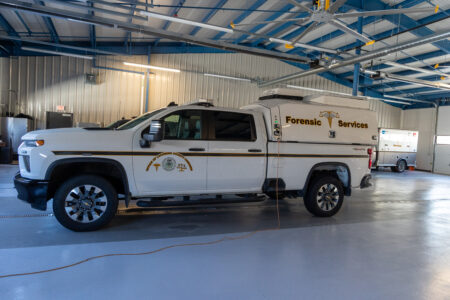
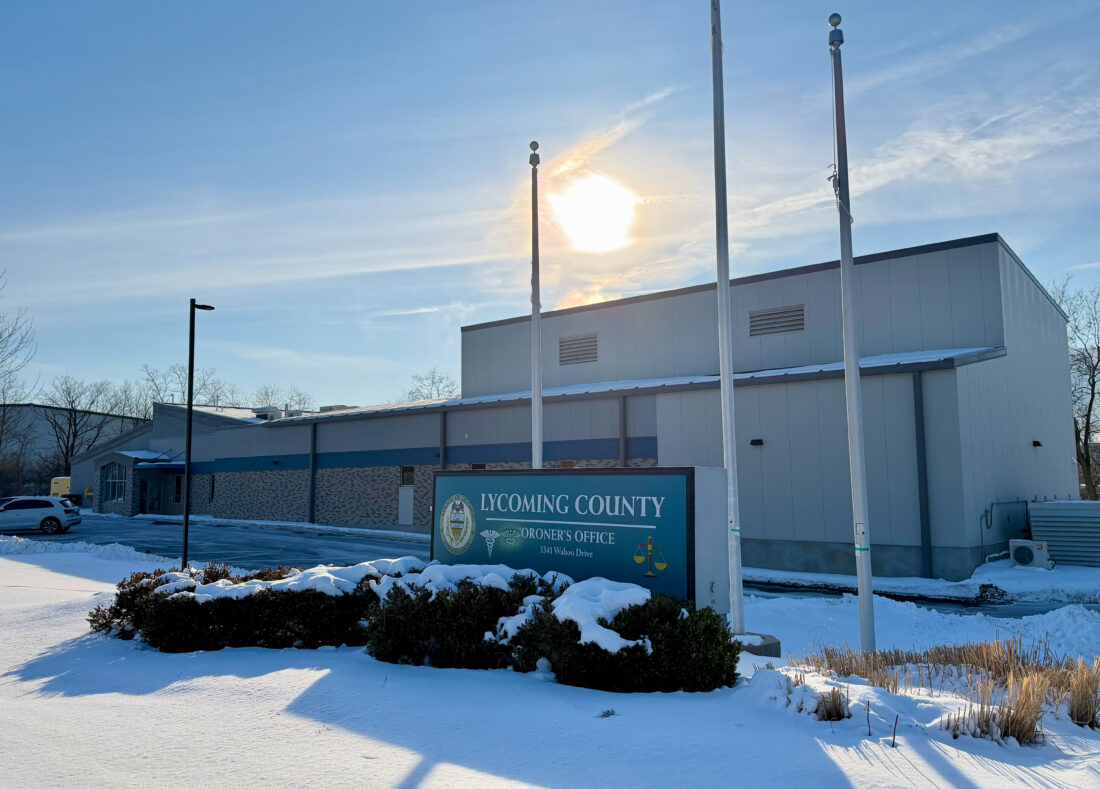
Lycoming County Coroner Charles Kiessling finally has the facility he has wanted for over 14 years and he admits that it’s like a weight has been lifted off his shoulders.
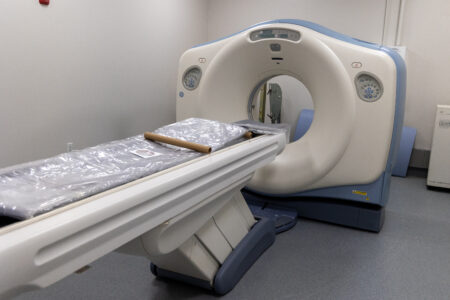
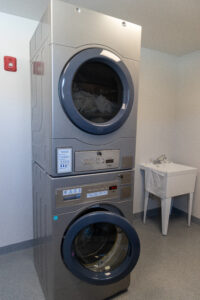
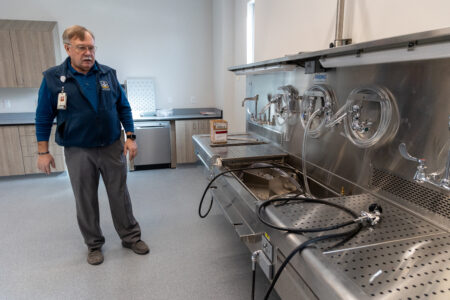
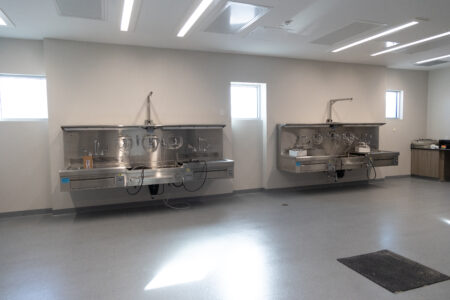
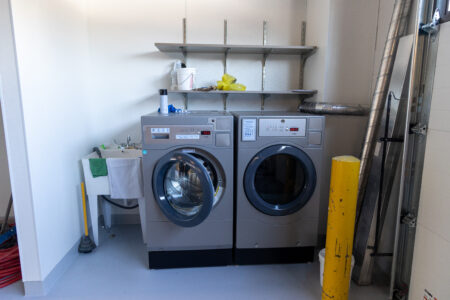
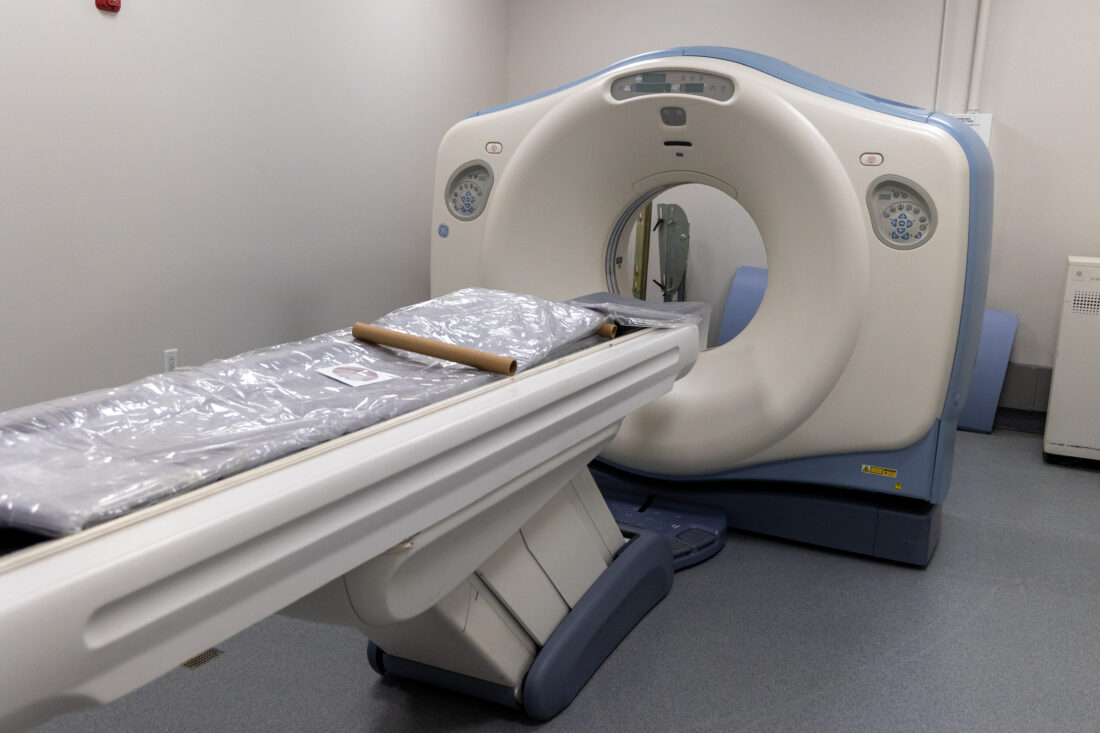
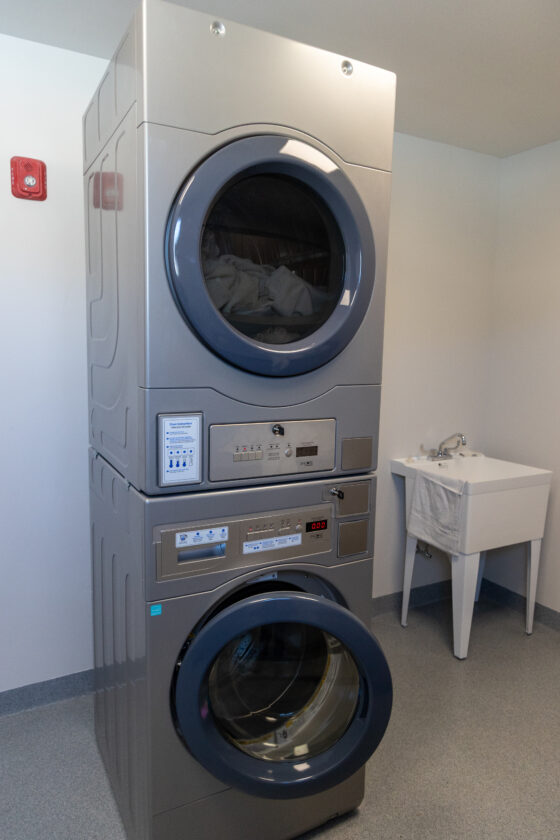
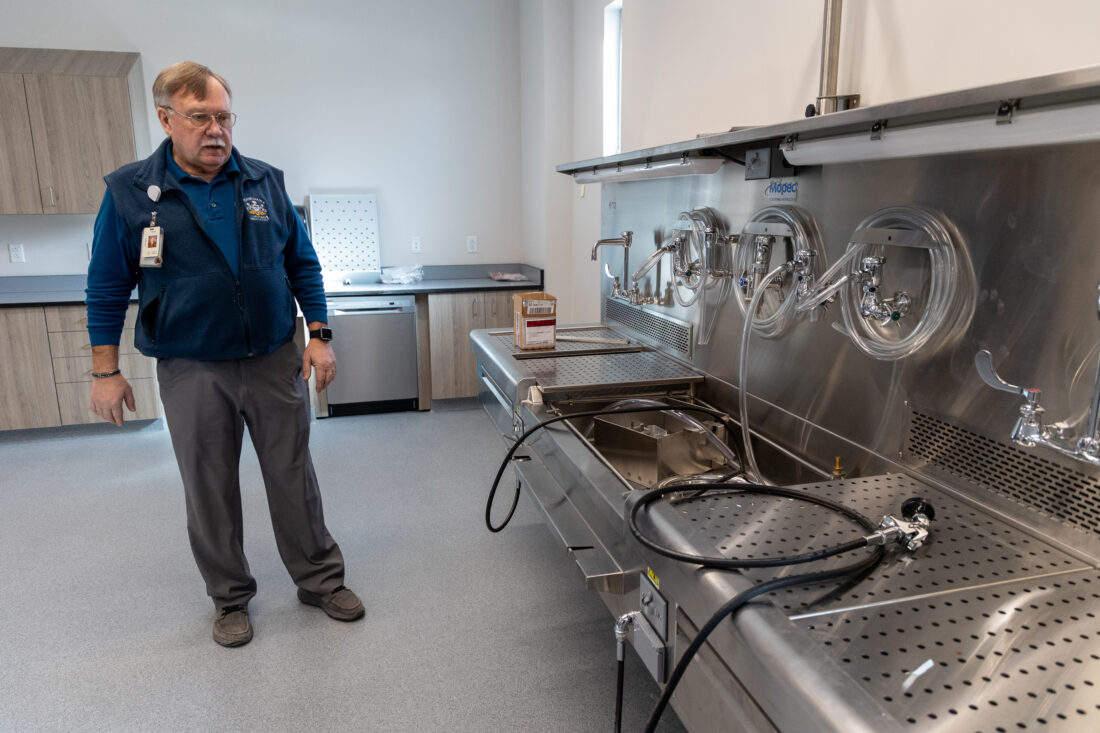
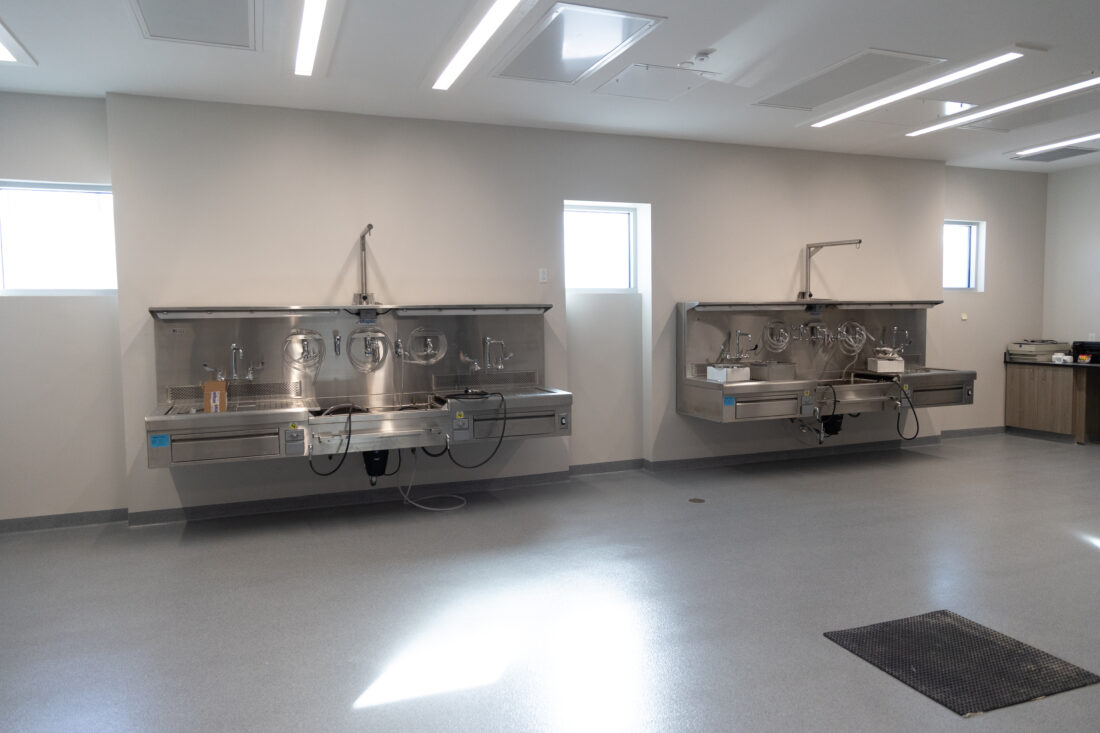
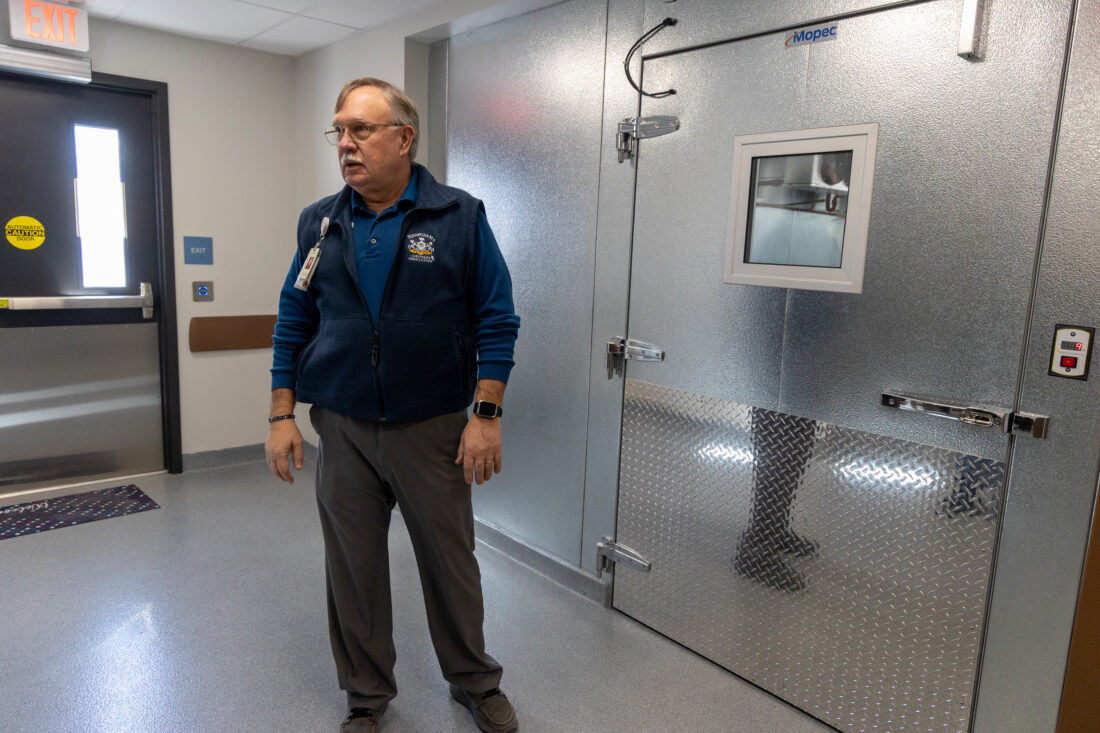
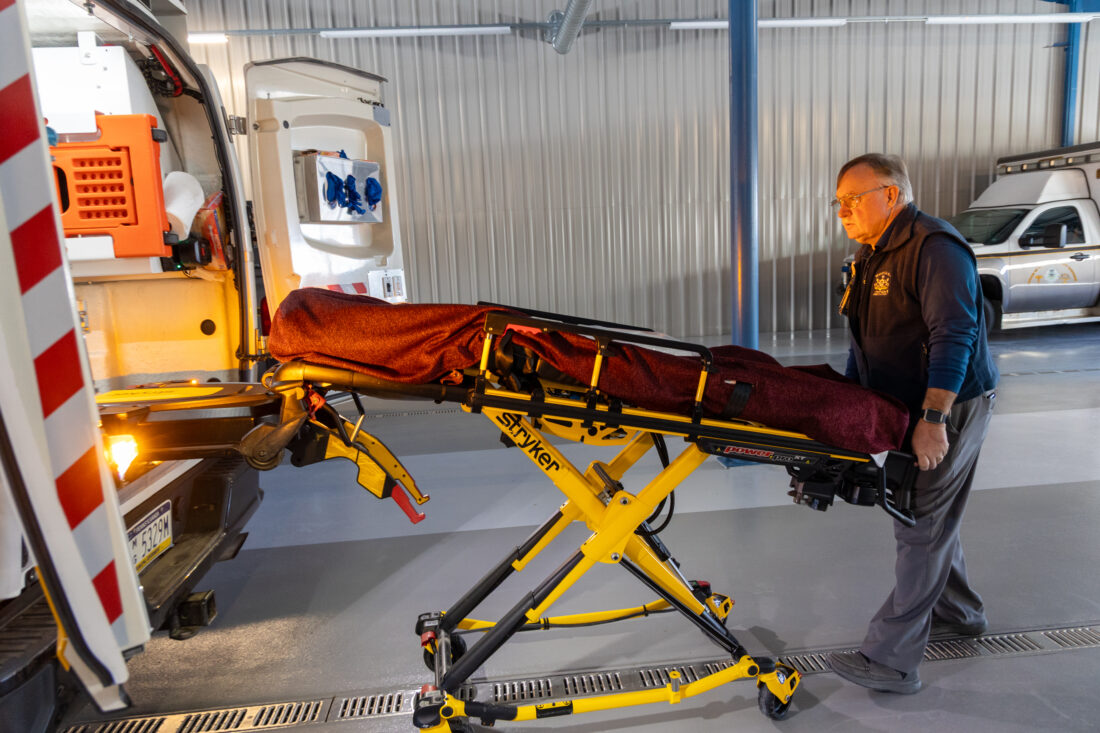
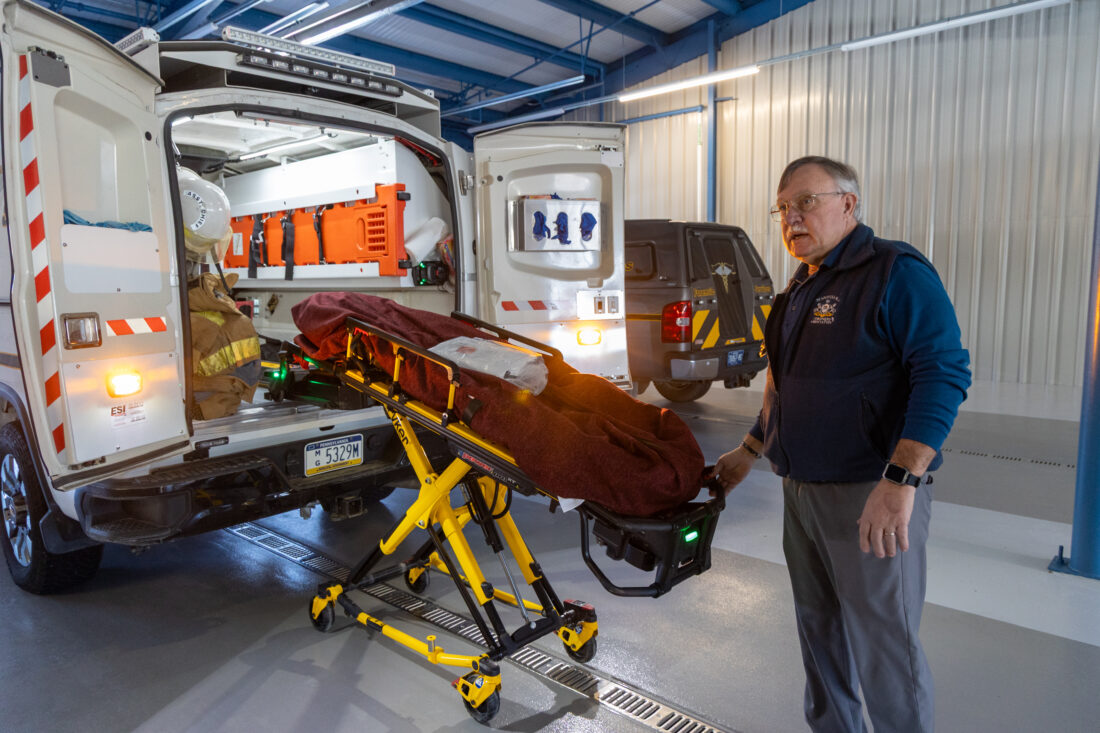
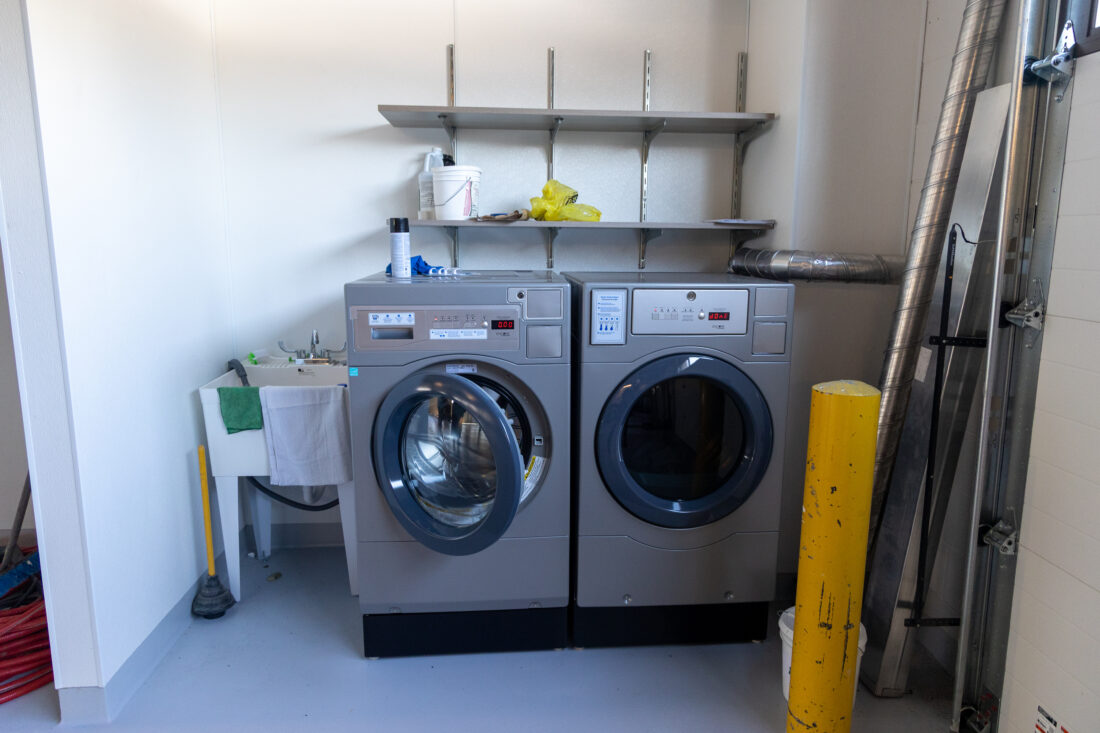
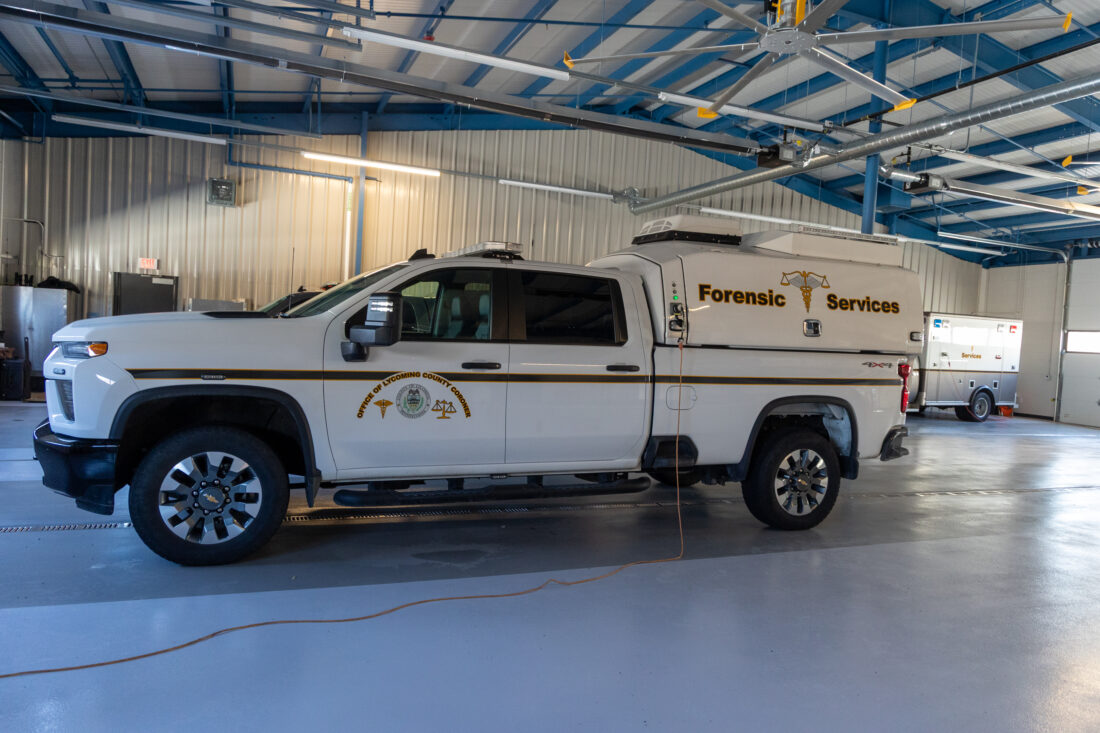
There is space to house and clean vehicles; a place for staff to clean up, themselves and their clothes, if needed; ample room to store bodies in refrigerated areas; and a CAT scan to aid in identifying medical conditions non-invasively. There is also a large room with everything needed to do autopsies. The only thing missing is a forensic pathologist to perform those autopsies.
And that is the sticking point for county commissioners Marc Sortman and Scott Metzger who argue that the original plan was for a coroner’s building and not a forensic center and that costs have increased with the addition of too many wants instead of needs.
It is a clash of visions and what it costs to achieve them.
It all began in 2012 when a feasibility study was commissioned for a forensic center in Lycoming County.
According to L.R. Kimball the firm tasked with the study, “The purpose of this study is to document for the County Commissioners and the Coroner the need or validation of building a new Forensic Science Center.”
It’s not just a matter of semantics that the study was for a forensic science center and not a coroner’s building. The scope of the project changes when forensic services are added.
The study stated that it was important to think about whether there was a need for a regional facility in the northcentral region of the state with the most significant factor being would the number of autopsies performed there warrant the additional cost of staffing and equipping the facility for forensic capabilities.
Currently when an autopsy is needed, bodies are taken to a facility near Allentown. Someone from the coroner’s office must accompany the body, as well as members of law enforcement to ensure the chain of custody for evidentiary purposes.
“Every time we go down there, at least one of my staff, if myself, or one of my deputies, or two, depending on the size of the person – they don’t move themselves, even with the equipment we have. It’s a criminal investigator for the police agency where the death occurred. It’s a forensic service person from the police agency, most likely city or state police. They’re on the road with us. So there’s three, four vehicles going to Allentown for a whole day for all of this,” Kiessling explained.
“If they could come here and do the autopsy, they can be back to work in two hours,” he added.
The commissioners argue that there just aren’t enough autopsies performed in the county to justify the cost of the facility, plus the salary for a forensic pathologist, which could be from $200,000 to $300,000 per year, for the number of autopsies that are done.
According to data from the county, from 2021 to 2025 the following number of autopsies were performed at Allentown and the costs for just the autopsies were: 2021, eight, $16,221; 2022, seven, $18,612; 2023, 12, $32 943; 2024, nine, $27,520; and 2025, four, $19,482.
Well below the maximum 250 annually that the National Association of Medical Examiners recommends a single pathologist perform at a forensic center, as noted in the feasibility study.
So, the commissioners are not wrong in their thinking that the volume is not there.
“We were all in favor of a coroners building. We needed a coroner’s building – everybody agreed to that-which would include parking, office space, coolers, all that was necessary. Where we got into the difference of philosophy was the coroner wanted a forensic center. We wanted a coroner’s building,” said Metzger.
Kiessling sees it differently. He is thinking about the regional aspect, pulling other counties in to increase the number of autopsies that would be handled here, rather than at Allentown. The feasibility study supported that concept.
The study found that “while this number will not justify a coroner’s facility for Lycoming County alone, a regional fee-for-service center may. As a regional facility supporting the counties depicted below within the red outlined, Lycoming County is ideally situated to be a central Forensic Center with one Board Certified Pathologist initially.”
The counties cited in the study included Lycoming, Sullivan, Potter, Clinton, Tioga, Bradford, Columbia, Snyder, Union, Mifflin, Northumberland – essentially the central part of the state.
Although there are no recent statistics, at the time of the study, it was estimated that those counties conducted a total of 148 autopsies.
Kiessling pointed out that those figures were from 2012 and “we’re not getting any less busy, if you look at the news.”
At a time when the county is dealing with a deficit, the commissioners are looking at the cost of everything and asking departments to assess what they’re spending taxpayer dollars on.
For them, the goal is to get spending under control now.
The original cost of the coroner’s facility, which was purchased from Penn College, was $425,000. With expansion of the building to accommodate and purchase of equipment and furnishings, the cost is up to about $8.5 million.
“You have construction costs, things like that,that go up, and we understand that the coroner had $5 million in his budget to work with, and he knew that, and the building cost is about eight and a half million right now. So we’re way over that,” Metzger said.
There were issues with the construction that put the cost over the original budget.
“The awarded construction budget, okay, was $6,492,000 the additional building cost from Senko, who was the contractor, ended up with an additional $1,469,450 so those are the change orders and all the stuff that came along with and it was things like that. I don’t know how they were missed,” Sortman said.
“Some of these things I just find are people taking advantage of government. One of the comments was that…when we went to do the construction, the soil was bad, so we had to remove the soil and put new soil in. Now, I have been around construction. Scott’s been around construction – what the hell is that. How was the ground bad in a designated industrial park of the city of Williamsport,” Sortman said.
Kiessling pointed out that the approval for additional funding came from the commissioners and not from him.
“They signed over $7.1 million in contracts. I had nothing to do with contracts. I don’t approve contracts, I don’t write contracts, I don’t sign contracts. That was all done by the commissioners back in ’23 and ’24 before the project got started… I could see this was going to be costly, because, like I said, before they had to take the roof off the building, they had to take out all the concrete, you know, that to me, was going to be a lot of money. But, you know, I was pretty much told, if we’re going to have the building, this is the one we’re getting,” Kiessling said.
Kiessling noted that he had given the commissioners other, less costly, options over the years and had come up with possible grants to help with the costs.
“Then all of a sudden, no, we don’t have the funds. We don’t have the funds. We don’t have the funds. Well, you know, it’s been like since 2012 when the feasibility study was done for this facility, and it identified basically this type of format, this layout that was a 15,000-square-foot building, and it was proposed at that time to cost $5 million,” he said.
He said that the study had identified a building that would have been built from the ground up and not an existing building that would require demo work which can be costly.
“If we had just bought the big piece of ground across the road here, something started from scratch it probably would have been cheaper, but I didn’t have any say in that. I was pretty much told that if we’re going to have a building, this is where we were going to go,” he said.
Funding for the additional costs has come from various sources such as grants for specific things as well as
“I don’t see all of the finances on this whole project. A lot of it, there were contracts done. Bills come in, they all go to budget and finance people. They pay the bills. I don’t even see a lot of this stuff because it’s building related. If it’s autopsies and work related stuff, they all come across my desk. If it’s facility type stuff that goes through the maintenance facilities department and the commissioners, and I don’t see it,” he said.
Through discussions with Rep. Jamie Flick, R-South Williamsport, Kiessling said that he was able to get $100,000 toward the purchase of the building and another $500,000 for the project, because the legislator, he said, sees it as a regional asset.
“So if any of the other counties need help with anything we’re here, we can do a lot of stuff here, and if we have a major incident, you know, God forbid, you know, some nut job anywhere in the region goes out, like you’re seeing in the news, people with weapons, we would have the ability to process and we could bring in the forensic pathologist, bring in whatever we need to do and work out of here to handle these things,” Kiessling said.
Other funding has come from a First Community Foundation Partnership grant for $250,000 and an LSA (Local Share Account) grant which helped purchase evidence carts, washer and dryers, half of the autopsy tables, vending cabinets, and a CT scanner.
“In total, I’ve got like, $1.2 million in grants. I’m quite sure that nobody went to Bill Solomon, you know, the district justice Solomon, and said, Hey, you got to find money to build your building. Or now we’re looking at (District Judge) Dieter, I don’t think she’s out looking for money to build her building,” he said.
“I think, as an elected official, I’ve gone above and beyond to try and for 15 years, to try and do this is, you know…and be as sensible as I could with the building,” he added.
The commissioners contend that the building is bigger than anticipated which has possibly increased costs.
“Could that have been made smaller? Because we want a coroner’s building that houses what it needed compared to what the coroner wanted in a forensic center. Could have been reduced, and that reduced the cost and stayed within the budget,” Metzger questioned.
“We have a CAT scan machine,” Metzger added.
And that is a major sticking point for the commissioners. They question the need for the machine which increased costs to the building because of the safety measures needed to be incorporated into construction, even though the actual CAT scan machine was purchased through a grant.
“That should never have happened,” Sortman said, adding, “In my personal opinion, we’ve never had a CAT scan before, and that leans towards the forensic side,”
“The CAT scan was purchased on a grant, they’re saying it’s free. So it was, it was free to the county in the purchase to bring it in. The cost that went along with this and I don’t know the exact numbers, but there’s costs involved with building a room with lead walls and lead ceilings and lead doors, because you have to have that. The CAT scan is X ray. There is, unfortunately, a $45,000 annual maintenance fee on the CAT scan machine, which is a new cost to the taxpayers of Lycoming County,” Sortman said.
The budgeted amount per year for autopsies at Allentown is $25,000 and according to the figures cited earlier in this story, there was only one year that amount was exceeded by about $2,000. The commissioners did not have the cost for manpower hours for the trips, which would be part of the coroner’s budget for payroll.
“That’s what we’re going to have to look at. We will, as a board today,monitor, was there any type of savings in how many autopsies did we not do because we had the CAT scan? It still is never going to offset it because we’re paying too much for the annual maintenance fee,” Sortman said.
Kiessling contends the scanner is useful as another tool for determining causes of death in decedents other than an autopsy.
But, the commissioners see the CAT scan as part of the vision of the facility being a forensic center and not just a coroner’s building.
“You’re looking at a forensic coming in that would cost anywhere from $200 to $300,000 per year to have a forensic pathologist here. Now, from discussions in the past, the coroner says, well, we can bring other counties here to do their autopsies, but to date, we don’t have one county that has approached us. We don’t have any contracts to help offset those costs,” Metzger said.
The commissioners have also heard comments about the local hospital possibly supporting a forensic pathologist here.
“I did reach out to the president of UPMC, and there is no financial support coming from the hospital to finance that,” Sortman said.
Kiessling offered another solution.
“One of the things I’ve been looking at is to try and get the pathology group at Lehigh to consider maybe hiring a pathologist and put them up here, because then they become a satellite operation of their facility,” Kiessling said.
“I’m looking at, how can we do this and make it more efficient…if we have to continue to do these trips to Allentown, we’re going to continue to do it,” he added.
He also pointed out that with the three local hospitals designated as trauma centers, that possibly they could join in supporting a forensic pathologist.
“I think it makes sense, just looking at the whole format of the state, and we’re the only area that doesn’t have the resources, and maybe we can come up with some grant funding to at least start up costs,” Kiessling said.
The commissioners are adamant that a forensic center is not on the books for now.
“I can say for the record, with the three current commissioners, there is no advancement to a forensic center in Lycoming County. That will not happen under the three of us,” Sortman said.
After dealing with the devastation of COVID, Kiessling tends to look ahead cautiously and say what if, whereas the commissioners are focused on this is what we’re dealing with now. However, they stress that it is not a critique of the coroner or his staff.
“He’s a great guy, and you can quote me on that. He’s a great guy,” said Metzger.
“This is not about Chuck being a bad coroner. This is about Chuck having a vision of forensic pathologies in Lycoming County that doesn’t match with the vision of the commissioners,” Sortman said.
“It’s just two different visions and what we can afford,” Metzger added.
Top News
Coroner, Lycoming County commissioners discuss office’s new facility
Mobile Agriculture Education Science Lab rolls on — at least, for now
Although funding was found by the Lycoming County commissioners to support the Mobile Agriculture Education Science ...
Montoursville Area High School hires football coach
The Montoursville Area School Board at its recent meeting hired a football coach and took a step toward improving ...
Williamsport/Lycoming Chamber of Commerce recognizes award winners at annual banquet

Williamsport Rotary’s annual Indoor Mini-Golf Classic returns to Genetti Hotel