Shapiro wants Pa. to be a ‘national leader’ on home construction
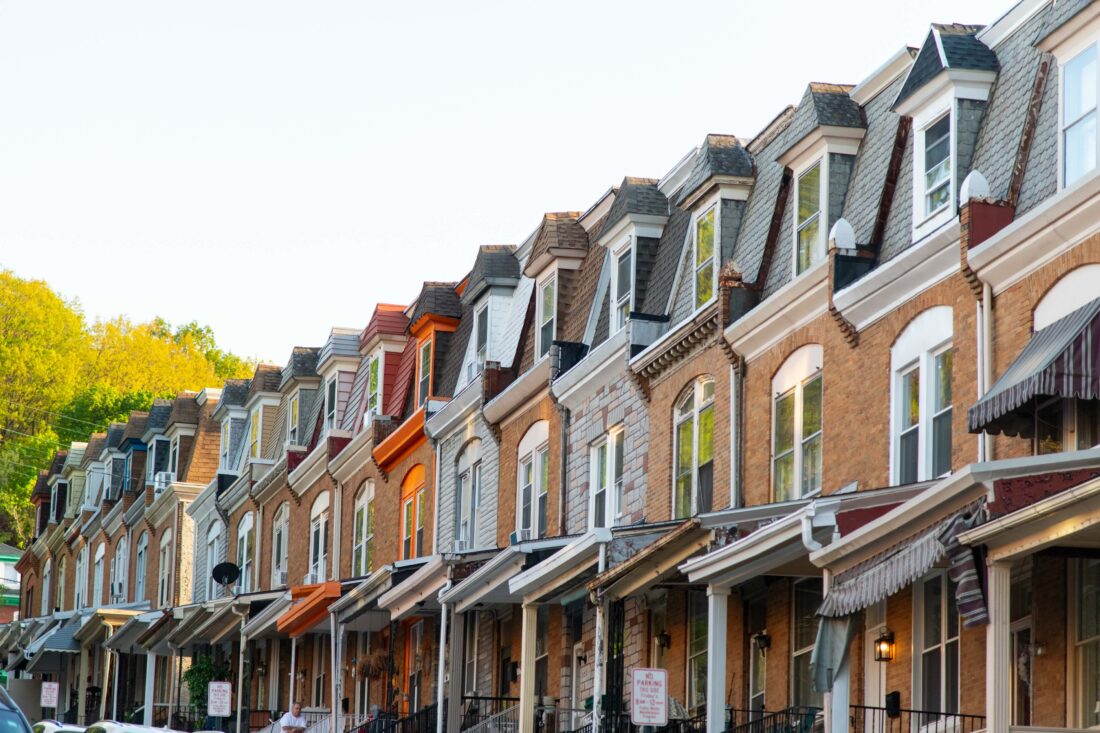
Row homes in Reading, Pa. Susan Angstadt for Spotlight PA
Spotlight PA is an independent, nonpartisan, and nonprofit newsroom producing investigative and public-service journalism that holds power to account and drives positive change in Pennsylvania. Sign up for our free newsletters.
HARRISBURG — Pennsylvania urgently needs to build more homes, Gov. Josh Shapiro said on Thursday as he unveiled a wide-ranging plan to tackle Pennsylvania’s housing shortage, expand protections for renters, and reduce homelessness.
In recent years, Pennsylvania has lagged almost every other state in adding new housing. At current rates, state officials estimate, Pennsylvania will be short 185,000 housing units by 2035.
Shapiro said his plan offers a coordinated long-term strategy to reverse this trend, which has led to soaring rental and home prices.
“If we execute, Pennsylvania will go from being at the bottom of the pack to a national leader on housing construction,” Shapiro said.
That’s a big “if.”
The plan recommends more funding for a swath of new and existing programs, but provides few specific dollar amounts. It offers a starting point for negotiations between the governor’s office and state lawmakers on an issue that is attracting increased attention in Harrisburg and across the country.
Dina Schlossberg, executive director of nonprofit law firm Regional Housing Legal Services, said she was grateful that housing is finally a top priority for state government. The governor’s plan, she said, combines a focus on the need for more construction with ambitious ideas to help vulnerable residents.
“It’s bold, it’s comprehensive, and it doesn’t sugarcoat the real issues.”
Between July 2024 and June 2025, more than half of states passed legislation aimed at increasing the supply of housing, according to an analysis by the Mercatus Center, a libertarian think tank.
Pennsylvania wasn’t one of them, although state lawmakers in both chambers have already proposed or introduced bills to advance several of the ideas outlined in Shapiro’s plan, particularly changing local zoning laws that often thwart new construction. Existing proposals include legalizing accessory dwelling units, spurring more development near public transit stops, and prohibiting minimum parking requirements for new buildings.
In his budget address, Shapiro also pitched lawmakers on a debt-funded, $1 billion investment in infrastructure that would span housing, energy generation, and school buildings. Shapiro said on Thursday that while details will be subject to negotiations, he hoped “the lion’s share” of the money goes toward housing.
Still, sweeping new investments could be a hard sell for Republican lawmakers determined to curb spending as Pennsylvania faces a structural budget deficit. And changes that would reduce local control over zoning decisions will likely face fierce opposition from municipal governments.
David Sanko, executive director of the Pennsylvania State Association of Township Supervisors, said proposals for statewide zoning changes overlook the fact that “every type of housing is good, but it’s not good everywhere.”
“Those decisions need to be left to local folks on the ground who know what the assets of that community are,” he said.
Still, he said he liked that the plan proposes a library of model land use laws and calls for more funding for home repair programs.
“There’s a lot of give and take to be had” on working towards solutions, he said.
The plan itself warns that it does not offer a “quick fix” and that change will take “sustained effort.”
Unmet demand
The housing plan stems from an executive order Shapiro signed in September 2024. The final product is the result of 18 roundtables, hundreds of phone calls, and almost 2,500 responses to a statewide survey, officials said.
From 2010 to 2019, the plan says, Pennsylvania’s housing production dropped by nearly 40% compared to the previous decade. That has left the supply of housing lagging far behind demand, driving up rents and home prices.
By 2023, more than a quarter of Pennsylvania households were spending more than 30% of their income on rent, mortgage payments, utilities, and other housing expenses.
The highest demand for new units over the next decade will be in the southeast and south-central regions, state projections show.
Shapiro’s plan doesn’t set specific goals for the number of units Pennsylvania should aim to add.
It does say that Pennsylvania will aim to outperform neighboring states at building new homes, lowering the cost of new development, and reducing homelessness. The plan counts Illinois, Indiana, and Massachusetts as “neighboring states,” alongside New Jersey and Ohio. A spokesperson said these states were chosen because they face broadly similar housing challenges to Pennsylvania, like aging infrastructure.
Need for more coordination
Although many of the proposed policies would require changing state law, there are more incremental steps the Shapiro administration can take on its own.
Responsibility for housing programs and policies is spread across several state agencies, the plan says, which leads to “decisions that are uncoordinated, inefficient, and sometimes conflicting.” At roundtables, residents, businesses, and nonprofits said they struggle to navigate Pennsylvania’s existing housing programs.
In response, Shapiro said, he has created a new senior position within the Department of Community and Economic Development focused on housing.
To encourage local governments to build more housing, the state will also update the selection criteria for some grant programs, to give priority to municipalities that proactively update their zoning rules in line with best practices.
The plan also calls for allowing grants issued under Pennsylvania’s massive Redevelopment Assistance Capital Program, which funds a wide range of commercial and municipal construction projects, to be used to build more homes. Under current rules, projects are generally not eligible for funding if housing is “the primary focus.” Changing that would require support from the legislature.
Other recommendations include expanded legal protections for tenants: capping rental application fees, sealing records of eviction cases that didn’t result in an actual eviction, and limiting when and how landlords can consider a prospective tenant’s criminal record.
BEFORE YOU GO… If you learned something from this article, pay it forward and contribute to Spotlight PA at spotlightpa.org/donate. Spotlight PA is funded by foundations and readers like you who are committed to accountability journalism that gets results.
Top News
Shapiro wants Pa. to be a ‘national leader’ on home construction
GT Thompson announces bid for 10th House term

More calls to bring skill games out of the legal ‘gray area’

DoorDash for alcohol? Not yet in Pennsylvania

Three dogs perish in Montgomery fire