Lawmaker serves role in managing opioid trust
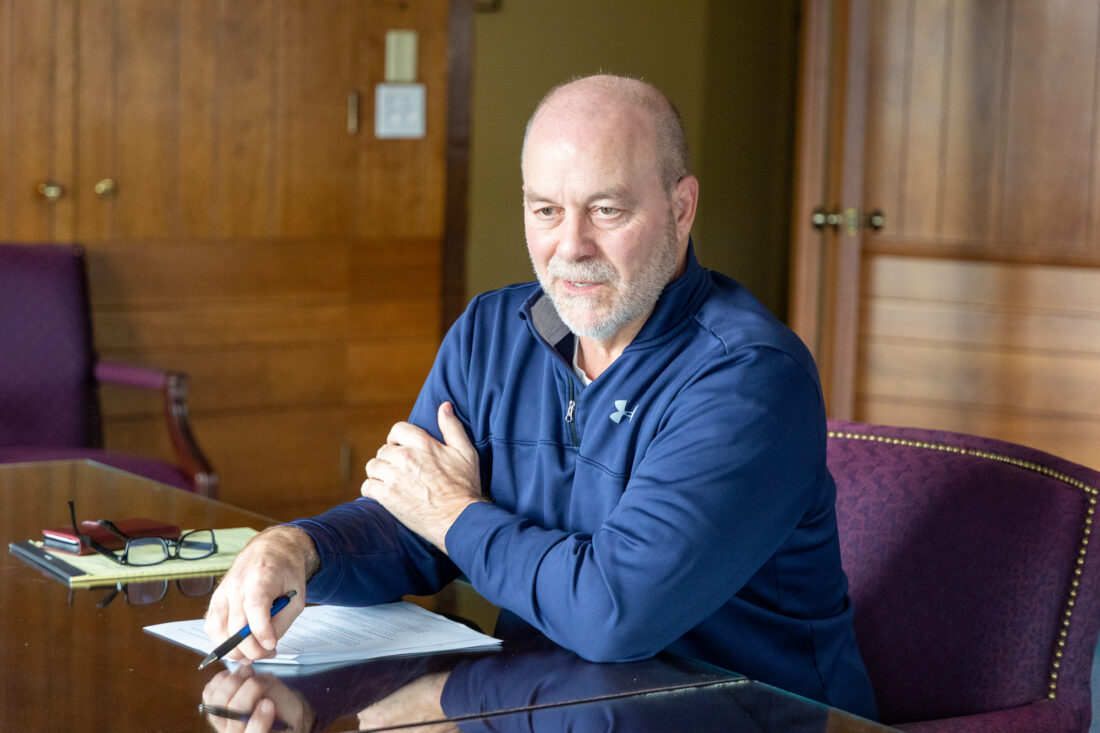
KAREN VIBERT-KENNEDY/Sun-Gazette State Rep. Jamie Flick, R-South Williamsport , talks about H.B. 1499, a bill for equal share custody for parents, that he had introduced.
When it comes to trying to prevent fentanyl use and other opioids from hitting the streets of Lycoming and Union counties, state Rep. Jamie Flick, R-South Williamsport, says he has led the way in Harrisburg, bringing back millions of dollars so experts can keep street narcotics out of innocent hands and from continuing to claim lives.
“I am one of only two state representatives on the Opioid Misuse and Addiction Abatement Trust,” said Flick, representing the 83rd House District including Lycoming County and Gregg and White Deer townships in Union County. Flick’s efforts on the trust was among many policy and legislative initiatives he briefed the Sun-Gazette editorial board on.
“This epidemic, no doubt, was fueled by Purdue Pharma’s manufacturing and deceptive marketing of OxyContin, a highly potent and addictive drug,” said said Attorney General Dave Sunday.
“Dependency on the drug ruined countless lives, while the Sackler family and Purdue made more than $35 billion from its distribution, profiting off of the suffering of others,” Sunday said.
“My job is to help oversee the distribution of nearly $2 billion over the next 15 years,” Flick said.
“They are responsible for killing thousands of Pennsylvania citizens and need to be held accountable,” Flick said of the Sackler family.
“We recently won a case in front of the U.S. Supreme Court which will bring another 200 million to the trust,” he said.
Last year, the Sackler family agreed to pay up to $6.5 billion over 15 years and their company, Purdue Pharma, will pay nearly $900 million.
This included a bipartisan coalition of states and other parties reaching a $7.4 billion settlement, in principle, with members of the family and their company, for their role in fueling an opioid crisis that continues to devastate families and communities across Pennsylvania.
No dollar amount could ever replace what has been lost due to the opioid epidemic, but this settlement will go a long way in bolstering treatment resources and helping Pennsylvanians achieve recovery, Sunday said.
“It is important to note this is not taxpayer money,” Flick said.
In terms of opioid prevention legislation, Flick highlighted three House bills he has co-sponsorship on, showing how opioid problems are bipartisan.
The legislation co-sponsorship includes that from state Rep. Arvind Venkat, D-Allegheny County, representing the 30th House District.
Venkat was an attending physician at Allegheny General Hospital, specializing in emergency medicine.
The bills are HB 1721, which is meant to prevent opioid overdose and support long-term recovery; HB 1974, which has moved out of committee for a contingency management support grant program; and HB 269, which is creation of opioid overdose awareness materials, which passed 195-8 in House, and is reported to Senate Health and Human Services Committee, according to Flick.
Flick, who serves on the Human Services Committee, also is the Republican chair of the subcommittee on Drugs and Alcohol.
Flick also is a member of the Pennsylvania Opioid Misuse and Addiction Trust, and noted that trust’s effectiveness on overdose deaths in Lycoming County, which are down 62 %, as of the latest data by the state Department of Health.
He credited the reduction in overdose deaths to the continuing work to educate the public done by Lycoming County Coroner Charles E. Kiessling Jr. and his staff along with the prevention services of West Branch Drug and Alcohol Commission and Shea Madden, commission executive director, and her team. The commission is a private non-profit human service agency dedicated to serving the prevention, intervention, and treatment needs of the individuals, families, and communities of Lycoming and Clinton counties and headquartered at 214 W. Fourth St., Williamsport.
Top News

Lawmaker serves role in managing opioid trust
Ludo the courthouse dog gets back to work
City of Williamsport OKs contract for interim consulting
The City of Williamsport has hired a familiar face for its financial consulting needs, a leader in her field at a ...

Opera House a community jewel in early 1900s

Airport wait times remain high as Congress considers a partial DHS funding deal