Muncy Township’s inaction prompts lawsuit
The law firm representing the developer suing Muncy Township lays out its case of arbitrary, vexatious and bad faith conduct claiming obstruction of timely processing of materials pursuant to the development of a Bass Pro in this Lycoming County community.
This civil action in county court is against the township and its board of supervisors.
The recently filed suit by Plaintiffs FAMVEST XII – Lycoming Mall LLC, FAMVEST XX, LMBB, LCC – State College – against the township and its board supervisors, is through their counsel, Stevens & Lee, P.C., of King of Prussia and attorney Nicholas H. Pennington.
Ambrose Heinz, also an attorney at that firm, in meetings urged the chair that through her actions leading the board she was inviting a lawsuit in county court.
FAMVEST is the equitable owners of property located at 115 Lycoming Mall Circle, which consist of about 11.665 acres.
The law firm’s action is a last resort to force this government agency to process a delayed application. It was signed on March 20 by Ara M. Kervandjian, authorized representative of FAMVEST XII, and it was served last Thursday.
The lawsuit lays out in chronological order what brought the township to this point.
On Oct. 1, 2025, as required by the township Subdivision and Land Development Ordinance (SALDO) and the Municipalities Planning Code, the developer filed a preliminary final plan showing minor add-on subdivisions of lands.
The plan identifies a tract labeled “new combined parcel” consisting of 11.665 acres. The plan was prepared by Mid-Penn Engineering Corp., which has a principal business address of Lewisburg.
On Dec. 3, 2025, the Lycoming County Planning Commission completed its review of the plan.
The same day, the plan received a certificate of survey accuracy, executed by a surveyor.
On Dec. 10, 2025, the board approved the plan subject to a single condition, the submission of consolidated deed(s) to the township Solicitor Scott T. Williams, for review and approval. Williams works at Perciballi & Williams, Williamsport.
On Dec. 11, 2025, pursuant to the SALDO, the developer received the board’s notice of conditional approval.
On Dec. 15, 2025, FAMVEST submitted their acceptance of conditional approval, complying with the allotted 15 day period to respond.
On Dec. 18, 2025, the developer circulated the draft special warranty deed and consolidated deed to Zachary DuGan, the associate township solicitor, as part of their efforts to satisfy the single condition of the plan approval.
On Dec. 19, 2025, the solicitor asked the plaintiffs for the proposed subdivision drawings associated with the deeds, as the township had not furnished them to him. On Dec. 22, 2025, the developer was sent the relevant drawings.
On Dec. 23, 2025, the solicitor acknowledged receipt of the drawings but requested a revised consolidation deed, as he desired a particular format that differed from the developer’s initial submission.
The next day, again in an effort to satisfy the board’s conditional acceptance, the developer provided the revised consolidated deed.
On Dec. 29, 2025, the solicitor acknowledged receipt of the plaintiff’s submission of the revised consolidation deed, writing, in part, “Yes, that looks good.”
On Dec. 30, 2025, the solicitor approved the consolidation deed, writing, “I have approved the consolidation deed for the FAMVEST subdivision,” thereby signaling plaintiffs satisfied the lone condition of approval. The solicitor further affirmed that the plan and accompanying deeds could be recorded, and the board could now sign the plan as required by SALDO if it had not done so already.
On Jan. 15, plaintiffs contacted the solicitor and associate solicitor, inquiring into the appropriate procedures to obtain the plan’s final required ministerial signatures for the plan.
The solicitor emailed the board that day, directing them to sign the plan and confirming the signing did not need to occur at a public meeting.
On Jan. 28, DuGan informed FAMVEST that he emailed the recently hired Secretary Treasurer Krista Rogers, about signing the plan, and asked her to coordinate directly with FAMVEST. However, on Feb. 2, Rogers was dismissed from her position.
On Feb.4, at a public board meeting, Chair Terri Lauchle and Denise Artley, the vice chair, refused to sign the plan, claiming they did not know where the plan was. The plan was later located in the township offices, according to the suit.
During the meeting on March 11, the chair again refused to sign the plan. This time, her refusal was echoed by Kathryn Harper, the newly appointed secretary. Lauchle demanded another revised plan that would only change the title block, a purely ministerial edit that frustrated the developers’ ability to proceed in a timely manner.
However, the SALDO, provides: “After receipt of Final Plan approval and compliance with all conditions of approval, the Board of Supervisors will execute the plan approval certification with one copy being retained by the Township.”
Following the satisfaction of all imposed conditions, the board must execute the Plan approval certification.
A final plan may not be recorded unless it is signed by the governing body following completion of conditions imposed for such approval, and the recorder of deeds shall not accept any plan for recording, unless such plan officially notes the approval of the governing body.
Defendances have no lawful justification for refusing to sign the Plan.
The plaintiffs are requesting a judgment in their favor. They contend the township, through the chair and vice chair or secretary of the board of supervisors, and the planning commission, be required to execute the plan, return it for recordation as required by law.
Based on its refusal to act without lawful justification, the township shall pay costs of this action, including attorneys fees to FAMVEST pursuant to the judicial code.
The plaintiffs asked for any other relief the court deems just and appropriate.
Top News

Firefighters extinguish Memorial Avenue fire in Williamsport
Identities in fatal Williamsport shooting released
City police have released the identities of those involved in a fatal shooting that occurred just before 12:30 a.m. ...
Muncy Township’s inaction prompts lawsuit
The law firm representing the developer suing Muncy Township lays out its case of arbitrary, vexatious and bad ...
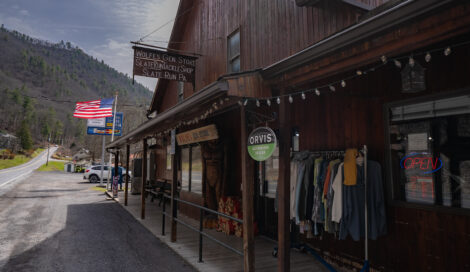
A happy place in the Pine Creek Valley — Slate Run store continues helping anglers, others
Security system upgrade for MDJ approved
An upgraded security system for Lycoming County Magisterial District Judge Deniese Dieter in Jersey Shore was ...