Opera House a community jewel in early 1900s
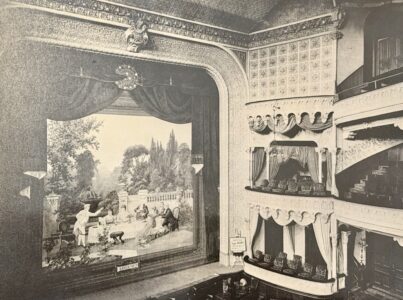
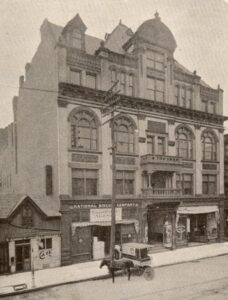
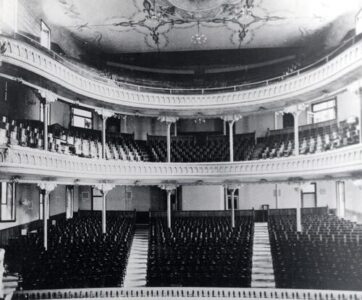
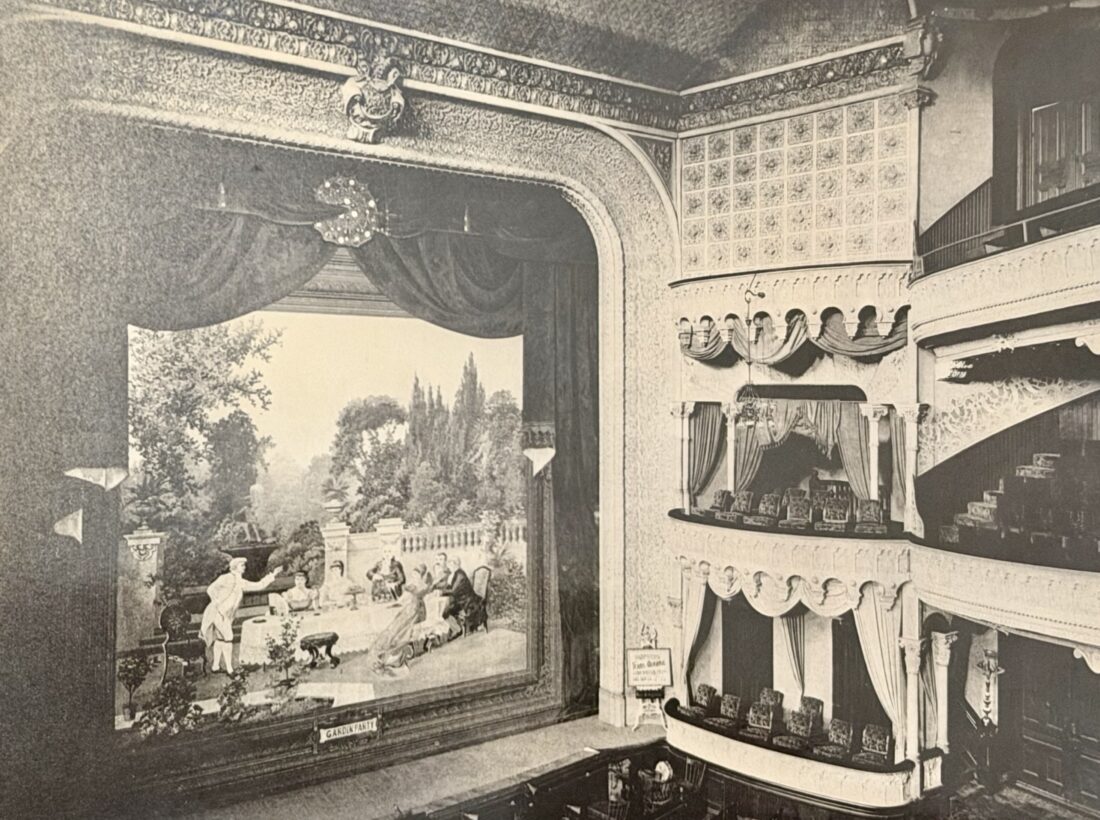
(From the Grit Sept. 9, 1979)
From 1892 to 1915, the Lycoming Opera House reigned as Williamsport’s “performing arts center.” The Opera House stood at 125 West Third Street, Williamsport.
John Philip Sousa, the “March King” himself, appeared there. So did Lillian Russell, the actress-friend of Diamond Jim Brady, and John McCormack, the most famous opera tenor of his day.
Vaudeville teams, opera and theater companies, even athletes, all performed at the Lycoming Opera House.
From its birth on Sept. 8, 1892 to its death in the flames of a 4:10 am fire May 31, 1915, the Lycoming Opera House was the grande dame of culture in Williamsport.
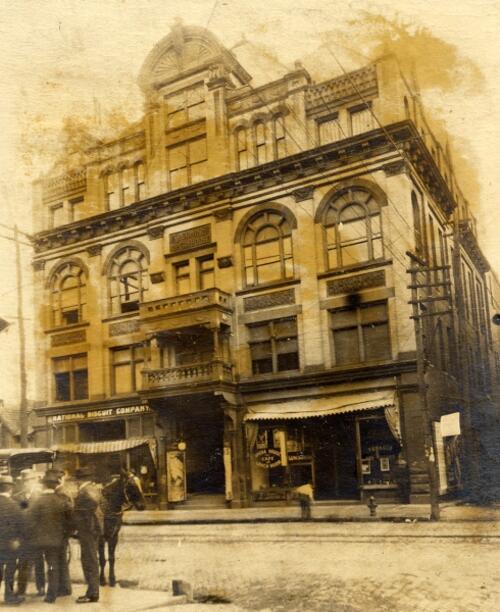
Dressed in four stories of brick decorated with a sign designed as a dragon, she flirted with all who passed by her West Third and Laurel Street address.
The Lycoming Opera House saved her brightest favors for those willing to pay for a visit through her portals.
Her fees were cheap by today’s standards. Prices ranged from $1 for the parlor chairs which occupied the four boxes in the $85,000 structure to 25 cents for the backless wooden chairs in the “peanut gallery,” which had its own Laurel Street entrance.
To those willing to pay her fare, the Lycoming Opera House offered the richest of visual and aural delights.
Seated 1,800
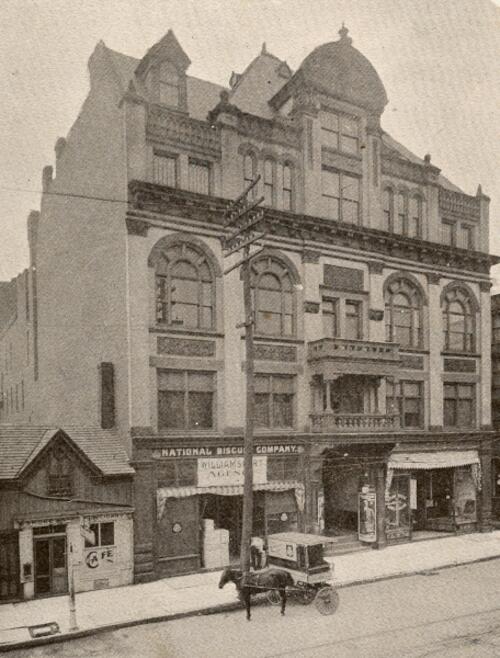
The 1,800 patrons who could crowd into the theater clambered out of their seats in horse drawn carriages or the Williamsport Passenger Railway Company’s trolleys. Then they sidled through opened doors to a spacious 30-foot-wide entrance hall and on into the elliptical lobby with its concave ceiling adorned with gold and sılver chandeliers which radiated reams of color.
The patrons walked to their seats in the main hall, which looked something like Philadelphia’s Academy of Music, on rich carpet supplied by L.L. Stearns and Sons, touched hardware installed by AB. Neyhart and Company, and on many occasions, settled in to hear a concert on a piano from D.S. Andrus and Company.
The Lycoming Opera House was glad to supply her guests with these material wonders as long as they agreed to abide by her rules: Performances started promptly at 2:15 and 8:15 p.m.
Laggards were unlikely to be seated. No one individual could purchase more than 10 tickets.
No Spitting
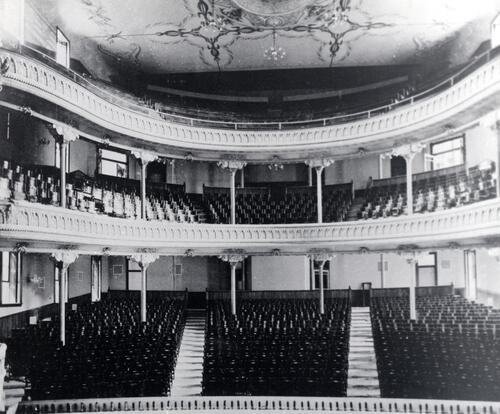
Moreover, the grand lady of Williamsport theaters told her guests in her performance programs that “children in arms will not be admitted under any circumstance,” and woe to the man who spits because “expectorating upon the floor is a violation of the city law which will be enforced.” The use of tobacco in any form was prohibited. Ladies were asked to remove their hats so folks behind them could see the show.
Performers loved to work on the lady’s 66 x 44-foot stage under the 150 red, green, and white theatrical lights.
So varied were the performances the Lycoming Opera House offered her audiences that they could suit their every mood.
Something for Everyone
House manager John L. Guinter promised as much when the theater opened
“It is proverbial,” he told patrons in a souvenir program dated Sept. 8, 1892, obtained from the Lycoming County Historical Society, “that there are many men of many mind,
and I therefore realize that it will require performances of different kinds to give the general public satisfaction.” He continued “I do not think anybody expects the theatre to teach metaphysics or physical geography But I assume that its friends believe its chief mıssion to be the giving of pleasure in an orderly, refined manner, as such as will prove in some measure intellectual.”
Mr Guinter promised to give the people their pleasure, but reports indicate management problems were rampant during the first years of the Lycoming Opera House’s existence.
She was apparently rescued from the ragged edge and dressed in the theatrical finery befitting her stature as the queen of area theaters by Fred M. Lamade, a Shakespearean actor and theater patron who purchased the establishment in December, 1903, for $150,000.
He immediately spent another $30,000 for cosmetic surgery And he began to inundate her with the best performers available.
Besıdes John McCormack, John Philip Sousa, and Lillian Russell starring in “In Search of a Sinner,” the Lycoming Opera House offered the Royal “Besses O’ the Barn Band.”
Patrons enjoyed “The Third Degree” by Charles Kelin, a play described as being about “certain abuses of power by the police, together with conditions which exist among the elect of the highest societal circles in New York City,” and “St. Elmo,” a play of Tennessee life by Vaughan Glaser, and motion pictures.
“Nothing finer has ever been seen in this city than these superb creations of the life-motion art,” enthused an ad for the movies The theater was home, too, to performances of “HMS Pinafore.”
“Little Women,” Richard L Sheridan’s “The Rivals,” Mendelssohn’s “St. Paul” by the Williamsport Oratorio Society with the Boston Festival Orchestra, Williamsport High School senior plays, and Williamsport Hospital auxılary shows
When she was 23 years old, the Lycoming Opera House gave a spectacular last performance – a fire which gutted the building.
Ironıcally, in that opening souvenır program of 1892, the opera house’s management had declared that “throughout the building special aim has been provided against accident by fire as well as perfect safety in case of panic
“On the roof are two tanks, each holding 5,000 gallons of water which are supplied by an artesian well in the basement. Pipes lead all over the building to which hose is attached and over the stage is an automatic safety sprinkling de-vIce.”
They were of no use that morning of May 31, 1915 Mr. Lamade at first said he would rebuild his beloved theater but he didn’t.
The once-brilliant hostess for the performing arts in Williamsport was replaced by Keeney’s Theater, a house for famous moving-picture shows. The theater later became known as the Keystone and then the State Theater.
Top News
Lawmaker serves role in managing opioid trust

Ludo the courthouse dog gets back to work
City of Williamsport OKs contract for interim consulting
The City of Williamsport has hired a familiar face for its financial consulting needs, a leader in her field at a ...
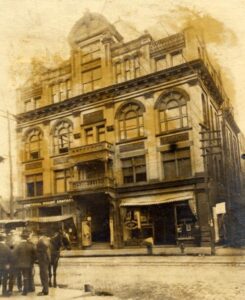
Opera House a community jewel in early 1900s

Airport wait times remain high as Congress considers a partial DHS funding deal