
Gardening camp in Williamsport grows more than vegetables
Trending
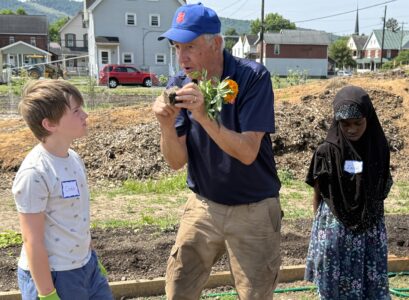
The Red Shield Garden was buzzing this week, not just with flying pollinators, but with young people learning where food comes from and how to grow it, as the garden's first ever youth camp kicked off.
A mission of the Salvation Army, the Red Shield Community Garden and Urban Farm is located on Park Avenue, giving area residents the opportunity to grow their own food and also to offer fresh produce to others in the community. Ever since it began in 2015, the garden has been expanding not only in size - it's now 45,000 square feet - but in the variety of things offered. The youth camp is just the latest way the garden is reaching the next generation of gardeners.
On day two, the kids, ranging in age from 8 to 13, were taking a break under a tent set up in the garden, enjoying a snack, journaling and just interacting with each other. After only one day, there is a sense of camaraderie among the group of what are newly made friends for most of them.
"This is day two and the kids really did not know each other and if you look around here, they are starting to gel, " said Friederike Bauer, a volunteer at the garden and one of the leaders at the camp.
She pointed out that what was noticeably absent were cell phones.
Besides the opportunity to connect with others over a shared interest in gardening, Bauer feels the camp helps kids understand that vegetables don't just come from grocery stores.
"They also need to see how vegetables are being produced, how they grow, what it takes for vegetables to grow, all the components. Hopefully, they will be doing some gardening themselves-some of them already are," Bauer said
"It is a good way to become self-sufficient with the way grocery store prices are right now, especially fruits and vegetables. It is beneficial to the kids to pick up on how to eat in a healthy way and not make it cost so much money," she added.
On this day, the kids were going to be putting plants, donated by a local greenhouse, into raised beds that have been divided into sections with each one getting their own section.
Earlier in the day, the campers got to taste onions and garlic, savoring their differences.
"We described them," said Claire Barth, adding, "they were kind of spicy-sweetish."
She also liked that they were allowed to just walk around the garden.
"It's very free-for-allish. It's kind of just like a play-while-you-learn type of thing," she said. And she was really excited about getting to plant in the raised beds.
Although she doesn't have a garden at home, Barth said that she will definitely come back to the Red Shield Garden, because she "feels really comfortable" there.
"I want to check on how my plants are in the next couple months, because I'm going to try to start it from a seed so I'll probably pop by and see what's happening with my seeds," she said.
Sid Furst, who manages the garden, said it is "exhilarating" to hear the questions the campers are asking.
"The passion that they're already showing about gardening interest is reflected in the questions we get," Furst said, adding that some of them are like "gardening college questions."
"This is really exhilarating to hear them be so intelligent, so inquisitive," he said.
Furst also commented on the next project in the works this summer at the garden, an edible walkway.
"That's a walkway or a small pocket park where you can go in and pick apples, pick blueberries, pick strawberries and sit and eat them," he explained.
As the kids moved to the raising beds, hands protected with gardening gloves, there was a flurry of activity as each chose what they wanted to plant. There were flowers, lettuce and of course a tomato plant, among the selections.
Furst showed them how to take the plants out of the pots and explained about the roots which were now visible and why they were important. The soil temperature was checked and the plants went into the soil. Water came next - only at the bottom of the plant, per Furst-and then they were done.
Although the camp is only running this week there will be a time in July when the kids can visit their plants, to see how they're growing.
"I have a feeling that some of them will pop up already next week or so and I will not discourage them from doing that. I'd be very happy if they do so," Bauer said.
There will also be a time set aside in August for the children to return and harvest what they have planted.
But, Bauer hopes that this week has sparked a lifetime interest in gardening for the campers.
"What I hope is that some of these kids will come back as adults to be volunteers here or even to get their own raised bed and raise vegetables themselves," she said.
"This is our future. If we don't grab the kids at this age, then there's not much of a future," she added.